Episodes

  • The Grammar of the Photo Booth
    Dec 6 2025

    On the photobooth’s 100th anniversary, its compact grammar of a fixed frame and timed shutter within a curtained chamber still teaches how machines choreograph behavior. Narrative intelligence decodes that language, turning affordances into hypotheses designers can test in the wild. If we want identity systems that permit verification without erasing improvisation, we must read these grammars and prototype the social scripts they encourage. What machine language are you listening to?

    Show More Show Less
    20 mins
  • A Generation Without Thresholds: The social rituals that once marked independence persist in social limbo
    Nov 8 2025

    Younger generations find rites of passage unfulfilling because public life has thinned, connection is often performed, and identity work has shifted into private rehearsal that turns anxiety into a shared code. By framing culture as a living story system, we can see where meaning is forming and design credible thresholds for belonging and responsibility. The result is clearer direction in ambiguous times. Solutions to these complex challenges require an open and layered approach to analyzing how culture is changing. Sensemaking that resists conclusions and opens up more questions and connections between points within the cultural system.

    Show More Show Less
    21 mins
  • The Year We Stopped Waiting for Normal: Revisiting 2025 Trend Themes
    Oct 26 2025

    We are revisiting the 2025 Trend Themes with a clearer lens. Flexibility became a perk for the few, not a standard for all. Big donors shaped politics while calling it populism. AI fakes moved from novelty to everyday content. Living alone became something cities must plan for. Cities focused on what was easy to count, while people demanded proof for every claim. October made this obvious: donors pushed court outcomes, newsrooms argued over how to label AI content, housing costs dominated local elections, and outside audits found emissions that city dashboards missed. These are not separate stories. They are parts of one system that now runs on constant pressure, not on quick recoveries.The intersections are plain. Hybrid work helped women where it lasted, while return to office policies hurt caregivers. Class decided who got paid leave and who kept real flexibility. Race and immigration status concentrated risk in frontline jobs. Age and access decided who smart tools helped and who got left out.This needs a different kind of foresight. Treat trust like infrastructure. Attach proof to every claim. Make governance opt in with clear consent, short data windows, and real ways to appeal. Design for belonging so solos, older adults, and young people in fractured media worlds can meet the rest of the city. Pair story with statistic. Set early warning signals. State what is known and what is not so choices in 2026 are clear and defensible.

    Show More Show Less
    42 mins
  • The Future Office: What Amazon’s Robots Are Really Telling Us About Work
    Oct 25 2025

    When Amazon announced plans to replace more than half a million jobs with robots, most reactions focused on automation and job loss. The deeper story is about how such decisions reshape the systems that define work itself. Automation changes not only what people do but how they relate to space, technology, and one another. Every change in workplace design, from surveillance dashboards to wellness pods, carries an underlying logic about trust, power, and purpose. To understand these changes, it helps to look beyond the headlines and ask what stories, assumptions, and structures are shaping them.

    A causal layered approach makes this possible. It starts with visible trends like return-to-office mandates and AI monitoring, then moves down through the systems that sustain them, the worldviews that justify them, and the deeper myths that give them meaning. This layered way of seeing shows how automation mirrors broader cultural choices about fairness, belonging, and control. It invites us to imagine multiple futures for work, some built around compliance and measurement, others around collaboration and care. Seeing these layers together gives a fuller picture of what is really being designed when machines and people share the same space.

    Show More Show Less
    15 mins
  • What Yogurt Bacteria Know About Innovation
    Oct 18 2025

    Biological and cultural evolution follow the same logic: survival depends on exposure, not avoidance. Bacteria that developed CRISPR did not eliminate infection; they learned from it, turning viral encounters into memory. Human systems work the same way. Adaptation happens when disruption is absorbed, translated, and reused. From the integration of mitochondria in early life to companies transforming crises into strategy, intelligence grows through the exchange of code, whether genetic, digital, or symbolic.

    The same principle shapes how meaning evolves. Ideas spread like genes, mutating as they move through networks of language, art, and technology. Movements such as cyberpunk and cypherpunk, or shifts in cultural codes like authenticity and productivity, reveal a pattern of recombination where friction becomes creativity and contradiction becomes coherence. Progress depends on maintaining selective permeability, open enough to let change in and structured enough to stay recognizable. The future belongs to systems that learn to metabolize disruption.

    Show More Show Less
    19 mins
  • From Wellville to the War Department
    Oct 9 2025

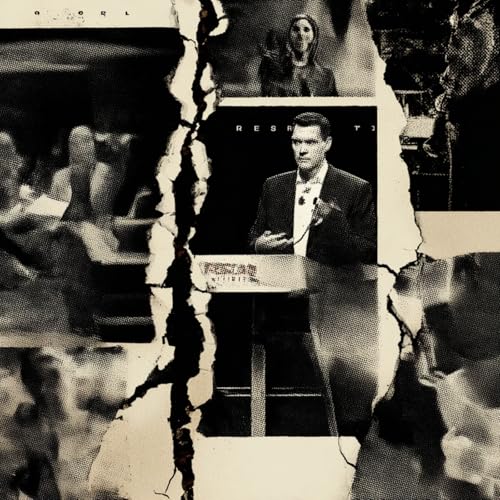
    From the disciplined routines of Wellville’s sanitariums to the cathartic ordeals of EST, from Robbins’ firewalks to TED’s fireside polish, American wellness has always been about performance as much as practice. What began as experiments in health and self-actualization gradually turned into spectacles of transformation and, later, commodities of influence. Today, the arc lands at Pete Hegseth’s War Department speech, where wellness codes of discipline, purity, and aesthetics become the language of governance itself. The journey reveals a nation that repeatedly seeks meaning through performance, yet risks confusing liberation with compliance. The question is no longer whether performance shapes identity, but whether America can redirect that performance toward collective flourishing rather than institutionalized control.

    Show More Show Less
    22 mins
  • Mapping the Next Television Era
    Sep 16 2025

    The 2025 Emmy Awards were more than a night of celebration. They offered a glimpse into where television might be headed. The winners reflected an industry that has moved past the height of Peak TV, when lavish budgets and endless new dramas defined the landscape. What we saw instead was a field in transition, adjusting to new financial realities and changing audience expectations. Television now sits between spectacle and sustainability. Prestige dramas still carry cultural weight, but they are harder to justify in an era of tighter margins. Meanwhile, leaner shows with reliable rhythms are earning recognition of their own. Alongside them, indie projects and new technologies are beginning to push against the edges of the medium. Taken together, these shifts suggest that television’s future will not be defined by a single model, but by the uneasy coexistence of many different ones.

    Show More Show Less
    19 mins
  • After the Social Network
    Sep 5 2025

    The internet began as a research network. It was built to move facts between people who needed to verify one another. The social era translated that spirit into a single public square and promised that connection would produce clarity. What it produced at scale was a feed. The feed made attention cheap and trust fragile. Today, trust in news sits around 40 percent and younger audiences reach for creators and closed groups before they reach for institutions. That is not a moral failure. It is a structural outcome of how we built discovery and reward.

    Show More Show Less
    14 mins