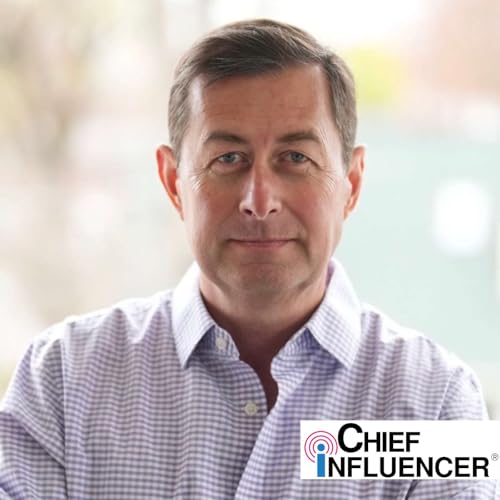
• Chuck Henderson on Influence as a Team Sport: Winning the Fight Against Diabetes (Re-Air)
    Jan 21 2026

    We are revisiting our impactful conversation with Chuck Henderson, CEO of the American Diabetes Association (ADA), whose mission-driven leadership is reshaping the fight against the diabetes epidemic. Since stepping into the role in early 2020, Chuck has leveraged his background in the private sector and athletics to champion critical initiatives, including insulin affordability, health equity, and expanded access to life-changing technologies. Throughout the interview, he offers a masterclass in authentic leadership, discussing the importance of staying accessible, fostering transparency, and utilizing modern platforms like LinkedIn to amplify a nonprofit’s mission. By sharing his personal connection to the cause and his strategies for navigating a shifting workplace landscape, Chuck delivers a powerful call to action that remains as urgent and relevant today as the day it was recorded.


    Takeaways:

    • Embrace a Team-Oriented Leadership Philosophy: Learning from Chuck's experience as an athlete, fostering an inclusive and team-centric environment is crucial. Ensure every member understands their role and how they contribute to the collective success.
    • Maintain a Mission-Driven Focus: Chuck's daily reflection on his impact highlights the importance of grounding leadership decisions in the organization’s mission. Regularly ask yourself what you've done to advance your mission and set clear, impactful goals.
    • Consistency in Communication: Regular touchpoints like monthly town halls, bi-weekly newsletters, and quarterly meetings are essential. This consistency keeps the team aligned, engaged, and informed about strategic directions and wins.
    • Be Intentional with Engagement: Whether it's giving out personal contact information, being active on social media, or responding to both positive and negative feedback, intentional engagement fosters authentic connections and builds trust.
    • Promote Organizational Brand: Use platforms like LinkedIn to share the organization’s achievements, highlight team members, and build new relationships. Prioritize showcasing the organization’s impact over self-promotion.
    • Show Up Authentically: Your presence, both online and offline, should reflect genuine commitment and transparency. Authenticity builds credibility and trust, encouraging open dialogue and collaboration.
    • Adapt and Innovate Continuously: Being proactive about adopting remote work, investing in training, and listening to stakeholder feedback are critical. Innovation and adaptation help in staying ahead and addressing emerging challenges effectively.

    Quote of the Show:

    • “No one person is greater than the team. It takes all of us; each one of us has a role to play in this fight.”


    Links:

    • LinkedIn: https://www.linkedin.com/in/charlesdhenderson/
    • Website: https://diabetes.org/


    Shout Outs:

    • Champion Fire and Security: https://championfiresecurity.com/
    • Cotton Bowl Athletic Associaton: https://www.cottonbowl.com/
    • Texas A&M’s Letterman Associaton: https://www.aggielettermen.org/
    • Charity Navigator: https://www.charitynavigator.org/
    • Tracey D. Brown: https://www.linkedin.com/in/traceydbrown/
    • Dions Dream: https://dionschicagodream.com/
    • Baxter: https://www.baxter.com/
    • Eli Lilly and Company: https://www.lilly.com/
    • Medicare:https://www.medicare.gov/
    • Medicaid: https://www.healthcare.gov/
    Show More Show Less
    55 mins
  • The Currency of Influence: Permission, Proximity, and Authentic Connection | Jean Accius
    Jan 14 2026

    Dr. Jean Accius, President and CEO of Creating Healthier Communities and a globally recognized authority on health equity and longevity, joins host Anthony Shop for a compelling conversation about what it truly takes to influence across sectors, build trust, and drive lasting social impact. Dr. Accius reflects on his Haitian upbringing and the guiding wisdom of his grandmother, who taught him “Tout moun se moun,” meaning every person is a human being. That simple but profound truth fuels his life’s mission to ensure that a person’s ZIP code no longer shapes their health, opportunity, or life expectancy.


    Grounded in data and lived experience, Dr. Accius discusses the stark reality that life expectancy can vary by decades between neighborhoods only a few miles apart. He challenges leaders to confront the forces that create these disparities and to recognize that the most pressing problems of our time do not respect boundaries. In an era defined by disruption, he urges leaders to get close to the communities they serve, collaborate beyond traditional silos, and build coalitions grounded in trust, accountability, and measurable action.


    Takeaways:

    • Influence Begins with Proximity and Permission: Jean reminds leaders that influence is not defined by a title but by the permission others give you to earn their trust. You cannot influence what you refuse to understand, and trust cannot grow from a distance. His message is clear: leaders must get close, listen deeply, lead with humility, and demonstrate consistency.
    • Health Equity Requires Cross-Sector Courage: Life expectancy can vary by 20 to 30 years between neighborhoods only a few miles apart. Jean emphasizes that these gaps are not biological. They are shaped by policy, power, and unequal access to opportunity. Since the most urgent problems ignore boundaries, the solutions must bring sectors together with intention and courage.
    • Every Leader Is Going Through a Fire: Across business, government, and community organizations, leaders are facing unprecedented disruption. Jean insists that the ones who succeed are those who acknowledge the fire, adapt with resilience, collaborate openly, and commit to moving forward with others.
    • Collaboration Must Be Measurable to Matter: Drawing on his experience building major coalitions, Jean reinforces a guiding truth: collaboration without measurement is simply conversation. Real impact requires shared goals, shared metrics, and shared accountability.
    • LinkedIn as a Leadership Room Without Walls: Jean views LinkedIn as one of his most powerful tools for influence. It allows him to elevate community voices, highlight innovation, inspire leaders, and build meaningful partnerships. His presence on the platform has led to new collaborations, new funding, and national engagement.
    • Rethinking Workplace Giving for a New Era: CHC now approaches corporate engagement as Workplace Solutions and Innovation. This model supports multigenerational workforces with programs that strengthen mental health, caregiving, volunteerism, and employee engagement. It also improves retention, productivity, and organizational trust.
    • Redefining Influence: From Success to Significance: Jean reflects on how his understanding of influence has evolved. Influence is not about doing more or accumulating more. It is about service, connection, and shared humanity. For him, significance begins with the belief his grandmother instilled in him: every person counts.


    Quote of the Show:

    • “Influence is about permission. And permission requires trust.”


    Links:

    • LinkedIn: https://www.linkedin.com/in/accius4/
    • Website: https://chcimpact.org/


    Shout Outs:

    • Dr. Johnny Parker
      • Frontstage Backstage Book: https://a.co/d/hyfK27T
    Show More Show Less
    45 mins
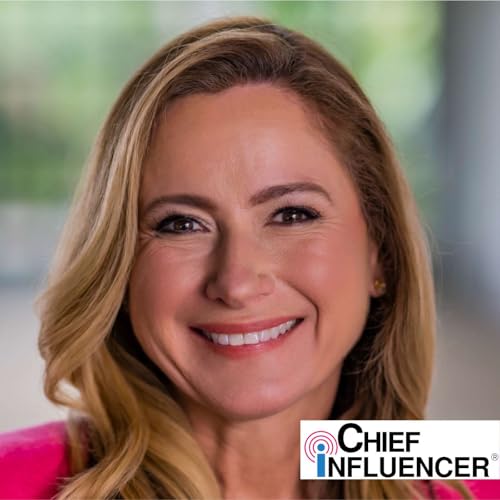
  • Where Influence Begins: Debbie Mucarsel-Powell on Empowering People to See What’s Possible
    Jan 7 2026

    Debbie Mucarsel-Powell, former Member of Congress and now the Executive Director of GW’s Graduate School of Political Management (GSPM), shares the deeply personal story of immigrating from Ecuador, watching her mother work multiple jobs, and discovering early the power of resilience, community, and education. These experiences shaped her leadership philosophy and her belief that influence begins with listening.


    Debbie reflects on her time representing Florida’s 26th District, how she navigated a diverse constituency from Miami to the Keys, and the critical role of bipartisanship in addressing issues like climate change, immigration, and criminal justice reform. She also offers an honest look at the realities of public service—balancing family, confronting disinformation, and facing electoral challenges—all while staying grounded in purpose.


    Today, at GSPM, she’s preparing the next generation of leaders to rise above partisanship, embrace critical thinking, and approach politics with integrity, curiosity, and courage. Her story is a testament to the power of personal narrative, the necessity of coalition-building, and the importance of inspiring others to recognize their own agency.


    Takeaways:

    • Influence Starts with Listening: Debbie shares that arriving in the U.S. as a teenager taught her “the art of listening,” a value that remains central to her leadership. Listening with curiosity—especially across difference—is what allows leaders to build trust, understand stakeholders, and create meaningful coalitions.
    • Navigating the Noise of Technology and Social Media: Social media plays a major role in how constituents communicate—but also poses risks. Debbie discusses how leaders must distinguish real community feedback from bots, misinformation, and AI-generated content, all while staying grounded in values and not getting distracted by the noise.
    • Turning Personal Stories Into Policy Impact: Her decision to run for Congress was sparked by seeing firsthand how the lack of access to healthcare harmed her community. Personal stories—like those shared by incarcerated women in a Judiciary Committee hearing—often have the greatest influence on policymakers, more than cable news or the loudest voices online.
    • The Power of Authenticity: Debbie reflects on the pressure to present a “perfect” front as an immigrant woman in politics, and how letting go of that was key to connecting with people more deeply. Authenticity, vulnerability, and showing one’s full self are essential to building trust.
    • Leading With Bipartisanship and Relationship-Building: Serving a swing district taught her that progress is impossible without cooperation. She shares how building relationships—across her own party and the other side—enabled her to address issues like environmental protection with colleagues who shared common concerns.
    • Preparing the Next Generation of Public Leaders: At GSPM, Debbie is shaping future leaders who can think critically, work across partisan divides, and address major challenges—from AI to international conflict—with integrity and courage. Students’ optimism and commitment give her hope for the country’s future.
    • Defining Influence Today: Debbie defines influence as the ability to remind people of their own power—bringing them together, helping them see their shared values, and catalyzing collective action toward a common purpose. She sees herself as a “vehicle” who helps activate that power in others.


    Quote of the Show:

    • “Influence is reminding people of the power they already have.”


    Links:

    • LinkedIn: https://www.linkedin.com/in/debbie-mucarsel-powell-0077437/
    • Website: https://gspm.gwu.edu/


    Show More Show Less
    41 mins
  • The New Playbook for Influence | Chief Influencer’s Best of 2025 Edition
    Dec 30 2025
    This special edition of the Chief Influencer podcast brings together some of the most powerful moments from conversations with seven remarkable leaders who are shaping the future of influence across public policy, mental health, women’s rights, technology, journalism, and social impact.Each guest: Jaymes Black, Patrick J. Kennedy, Kathryn Godburn Schubert, Craig Newmark, Frédérique Campagne Irwin, Steve Schwab, and Anna Palmer, approaches influence with authenticity, courage, and a deep commitment to service. Their stories illuminate how true influence is built: through connection, clarity, empathy, and a willingness to speak boldly for those who need it most.Takeaways:Lead with human connection, not organizational talking points: Jaymes Black demonstrates that influence grows when leaders start with why the mission matters personally before describing what their organization does, grounding conversations in shared humanity.Scale your impact by elevating others’ stories: Patrick J. Kennedy shows that amplifying raw, courageous personal stories can move audiences more powerfully than statistics or policy arguments, helping leaders expand their influence with authenticity.Start with education to drive advocacy: Kathryn Godburn Schubert underscores that many decisions rest on misunderstandings—like the assumption that women are routinely included in medical research—so leaders must illuminate gaps, share facts clearly, and build awareness before change can happen.Ground your leadership in core values—and expect resistance: Craig Newmark illustrates that influence is strongest when anchored in moral principles like service and honesty, while reminding leaders that doing good often invites pushback from those threatened by integrity.Use authenticity to connect across audiences: Steve Schwab emphasizes blending personal motivations with professional strategy—sharing family, emotions, and purpose—to build trust, unify stakeholders, and inspire people through both vulnerability and competence.Treat LinkedIn as a leadership responsibility, not optional homework: Multiple guests show that consistently posting, tagging partners, celebrating others, and sharing behind-the-scenes moments turns social media into a strategic engine for connection, credibility, and collaboration.Influence through a multichannel strategy, not a silver bullet: Anna Palmer highlights that meaningful influence requires using a mix of platforms—from social media to hometown newspapers to direct outreach—because different audiences pay attention in different places.Quote of the Show:“Influence today is a fragmented system—more people can be influential, and that’s a good thing for democracy. There’s no silver bullet. Influence requires a multi-platform, multi-audience strategy.” - Anna PalmerLinks:Kathryn Godburn SchubertLinkedIn: https://www.linkedin.com/in/kathryn-godburn-schubert-07352a7/ Website: https://swhr.org/ Steven SchwabLinkedIn: https://www.linkedin.com/in/steven-schwab7676/ Website: https://www.elizabethdolefoundation.org/Jayme BlackLinkedIn: https://www.linkedin.com/in/thejaymesblack/ Website: https://www.thetrevorproject.org/ Anna PalmerLinkedIn: https://www.linkedin.com/in/anna-palmer-124a295/ Website: https://punchbowl.news/ Patrick J. KennedyLinkedIn: https://www.linkedin.com/in/patrick-j-kennedy-6821ba165/ Website: https://www.patrickjkennedy.net/ Books: “Profiles in Mental Health Courage”: https://a.co/d/0kFiw9G “A Common Struggle: A Personal Journey Through the Past and Future of Mental Illness and Addiction”: https://a.co/d/2ObOEdP Frederique IrwinLinkedIn: https://www.linkedin.com/in/frederiquecirwin/ Website: https://www.womenshistory.org/ Craig NewmarkLinkedIn: https://www.linkedin.com/in/craignewmark/ Website: https://craignewmarkphilanthropies.org/
    Show More Show Less
    43 mins
  • Terry Szuplat on How to Say It Well and Find Your Voice (Re-Air)
    Dec 23 2025

    We’re excited to re-air this powerful conversation with Terry Szuplat, former White House speechwriter for President Barack Obama and author of Say It Well: Find Your Voice, Speak Your Mind. Inspire Any Audience.


    Originally released as an in-person discussion, this episode quickly became a listener favorite for its timeless insights into authentic communication. Terry explores why simplicity, clarity, and personal storytelling matter more than ever—especially in a noisy digital age. Whether you missed it the first time or are revisiting it for fresh inspiration, this conversation offers practical guidance for leaders, communicators, and anyone striving to speak with impact.


    Takeaways:

    • Talk Like a Human: Communicate with clarity and avoid jargon so your message resonates.
    • Know Yourself Deeply: Authentic influence starts with understanding your identity and values.
    • Utilize Personal Stories: Your unique experiences create connection and credibility.
    • Prepare Thoughtfully: Terry’s 50-25-25 rule helps craft messages that hit the mark.
    • Embrace Authenticity Over Perfection: Audiences value sincerity more than flawless delivery.


    Quote of the Show:

    "When you tell the stories that only you can tell, then no one can steal your words, ever."


    Links:

    • LinkedIn: https://www.linkedin.com/in/terry-szuplat-456914137/
    • Website: https://globalvoicescommunications.com/about/
    • Say It Well: https://www.harpercollins.com/products/say-it-well-terry-szuplat


    Shout Outs:

    • Former President Barack Obama
    • Tim Walz
    • The George Washington University College of Professional Studies
    Show More Show Less
    39 mins
  • Disability Is a Strength: How Business Leads the Future of Disability Inclusion | Jill Houghton
    Dec 17 2025

    In this powerful episode, Anthony Shop sits down with Jill Houghton, President and CEO of Disability:IN, the world’s leading nonprofit driving disability inclusion and accessibility across global business. With a career shaped by personal experience, public policy, and transformative corporate partnerships, Jill shares how she has helped build a global movement rooted in the belief that disability is a strength and a critical competitive advantage for companies.


    Jill brings more than leadership insights; she brings stories of CEOs, next-gen talent, global boards, and individuals who found their voice through disability inclusion. Together, these stories illustrate how influence fueled by authenticity, visibility, and data can create lasting change.


    Takeaways:

    • Disability as a Strength—and a Source of Innovation: Jill describes how her own learning disability shaped her understanding of disability inclusion and purpose. She explains why disability is not a deficit but a “natural part of the human experience” that brings insight, adaptability, and innovation to business.
    • From Policy to Business: Where Real Influence Happens: After early work supporting the Americans with Disabilities Act, Jill realized that legislation alone can’t change attitudes. Business, she says, has unmatched power to accelerate disability inclusion—especially when leaders see disability inclusion as good for business, not just good intentions.
    • The Rise of Cross-Industry “Frenemies”: Jill shares how competitors across tech, finance, and healthcare have become collaborators through Disability:IN—driving each other to improve, learn, and push the movement forward.
    • Inside the Disability Index: Jill breaks down the origins, purpose, and future of the Disability Index, now in its 12th year and undergoing a major modernization. She reveals why companies crave maturity models, benchmarking, and transparent reporting—and how measurement fuels momentum: “What gets measured matters.”
    • Visibility as a Strategy for Influence: Jill discusses why encouraging leaders to talk openly about disability—internally and publicly—is essential. Visibility creates momentum, breaks stigma, and empowers others to come forward.
    • Stories That Change Culture: From Microsoft’s Jenny Lay-Flurrie openly identifying as deaf, to a senior executive who uses captions in secret finally naming his disability, Jill shows how storytelling unlocks culture change.
    • Influence as Connection, Trust, and Listening: Jill closes with her personal definition of influence: using your power for good by listening first, building trust, and responding authentically to the needs of others.


    Quote of the Show:

    • “Disability is a strength and a natural part of the human experience.”


    Links:

    • LinkedIn: https://www.linkedin.com/in/jill-houghton/
    • Website: https://disabilityin.org/


    Show More Show Less
    44 mins
  • Why All Influence Is Personal: Darra Gordon on Leading With Heart
    Dec 10 2025

    Darra Gordon, CEO of Family Equality, is the national organization advancing legal and lived equality for LGBTQ+ families. Darra stepped into the role at a pivotal moment, when more than 600 anti-LBGTQ+ bills were introduced across the country, and she brings more than two decades of leadership at the intersection of advocacy, culture change, and community-building.


    Darra shares how Family Equality advances its mission through a simple but memorable framework: (ACE) Advocate, Connect, Educate. From fighting for policy protections at every level of government to convening the largest LGBTQ+ family gathering in the world, Family Equality is working to secure freedom, safety, and belonging for every family.


    Throughout the episode, Darra offers rich insights on the role of storytelling, coalition-building, and people-centered leadership, and how influence becomes strongest when leaders bring the personal and professional together. As a parent of three, Darra discusses her own experience navigating unequal family recognition in a hospital setting and how that fuels her fight for nationwide protections.


    This conversation reveals how influence today is less about transaction and more about trust, humanity, and bringing people along a shared journey.


    Takeaways:

    • Lead With Lived Experience to Build Trust: Influence deepens when you ground your message in what’s personal. Share the real stories—your own and those of your community—that reveal the stakes and human impact behind your mission.
    • Equip People to Tell Their Own Stories: Everyday advocates are powerful change agents. Provide families, supporters, and community members with tools and guidance to safely and confidently share their experiences, especially when those stories can influence policy.
    • Build Resilience Through People-Centered Leadership: Organizations can only move fast if their foundations are strong. Invest in your team’s wellbeing, listen deeply, and create a culture where people feel supported—so they can stay mission-focused even in challenging environments.
    • Use Community to Spark Collective Action: Connection is a catalyst for advocacy. Bring people together—in person or online—to create belonging, generate energy, and inspire them to take action on shared priorities.
    • Make Coalitions Your Force Multiplier: No one drives systemic change alone. Identify shared interests across sectors, movements, and political perspectives, then build coalitions that amplify each partner’s strengths and expand the impact beyond what any one group could achieve.
    • Be Nimble, Even When the Mission Is Steadfast: A fast-changing world requires operational agility. Build a strong organizational core while keeping systems flexible enough to pivot quickly in response to political, economic, or cultural shifts.
    • Influence Through Listening, Not Leverage: Persuasion in today’s climate isn’t about transactions—it’s about trust. Listen first, understand the concerns and motivations of the people you’re trying to reach, and bring them along by showing how your shared goals align.


    Quote of the Show:

    • “Storytelling shows people who we are—the joy, the laughter, the everyday parts of being a family. All influence is personal. It’s not transactional—it’s built on trust.”


    Links:

    • LinkedIn: https://www.linkedin.com/in/darra-gordon-99730243/
    • Website: https://familyequality.org/
    Show More Show Less
    41 mins
  • Influence Over Authority: President Ellen Granberg on Building Trust and Leading with Authenticity
    Dec 3 2025

    In this special live edition of the Chief Influencer podcast, recorded at The George Washington University’s College of Professional Studies, host Anthony Shop sits down with Dr. Ellen M. Granberg, the 19th president of GW and the first woman to lead the institution in its 200+ year history.


    President Granberg shares her journey from accidental leader to national influencer in higher education, offering candid insights on authenticity, influence, student success, and leading through historic change. She reflects on GW’s ambitious new strategic framework, Raising Higher: GW’s Path to Preeminence, and why she believes Washington, D.C., will remain the epicenter of influence for generations of students.


    This episode explores leadership rooted in purpose, community, and adaptability, hallmarks of a true Chief Influencer.


    Takeaways:

    • Lead Through Influence, Not Authority: President Granberg emphasizes that formal power rarely drives progress; informal networks, trust, and relationships do. Leaders should invest time in understanding how influence actually flows inside their organizations and use that knowledge to move initiatives forward.
    • Build Strategies With Your Community, Not For Them: The boldest parts of GW’s strategic framework originated from community feedback. Co-creation strengthens ownership, alignment, and ambition. Leaders should treat listening sessions not as a formality but as a genuine source of direction.
    • Stay Flexible: Use a Compass, Not a Checklist: In an unpredictable world, rigid multi-year plans quickly become obsolete. Granberg’s “strategic framework” approach shows that leaders should focus on direction and values, while leaving space for innovation, adaptability, and real-world changes.
    • Elevate Stories to Build Connection and Belonging: President Granberg repeatedly returns to the power of storytelling, highlighting research impact, student experiences, and interdisciplinary collaboration. Leaders can strengthen internal culture and external reputation by telling stories that make values tangible.
    • Cultivate Resilience Through Real-World Experiences: Creating opportunities for students to experiment, fail, adapt, and lead—such as internships, student government roles, and placements in humanitarian organizations—builds durable leadership skills. Any organization can apply this by giving people stretch roles and meaningful responsibilities, while providing the support they need to thrive.
    • Use Social Media Strategically Through Trusted Messengers: Posting alone isn’t enough. Granberg learned to partner with the Student Government Association to reach students effectively. Leaders should map who their audiences trust and work through those individuals or channels to amplify key messages.
    • Model Authenticity and Show When Your Mind Has Changed: President Granberg views authenticity as essential to trust, and she openly shares moments when community input changed her perspective. Leaders can strengthen credibility by showing vulnerability, admitting evolution in their thinking, and being consistent in how they show up.


    Quote of the Show:

    • “When I was younger, I used to believe that if you were going to lead, you had to change your personality. What I have learned over time is that to lead authentically is one of the most powerful ways to build trust because you show up on a consistent basis, and you start to build confidence among the folks you’re working with, among the community that you’re leading. And that has just been a wonderful lesson for me. It’s not about becoming someone different from who I am; it’s about becoming more of exactly who I am and then folding that into the way that I lead.”


    Links:

    • LinkedIn: https://www.linkedin.com/in/ellen-granberg-0b6b607/
    • Website: https://www.gwu.edu/
    Show More Show Less
    58 mins