• Handling Hospitals
    Jul 1 2023

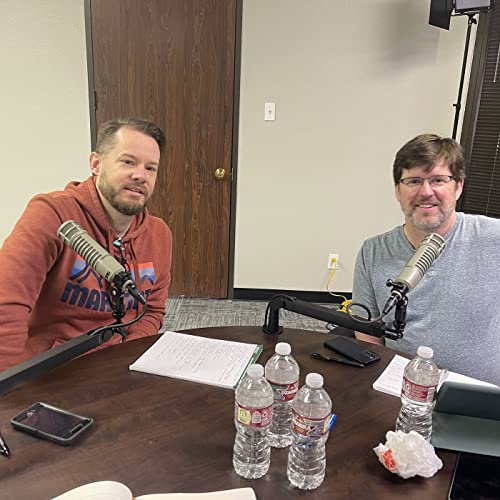
    In this episode, Dianne and Dr. Crossnoe discuss hospitals, and how patients should think about them.

    Show More Show Less
    41 mins
  • Dealing with Doctor's Offices
    Jun 15 2023

    In this episode, Dianne and Dr. Crossnoe discuss various strategies and insights for you to use when dealing with doctor's offices, including appointments and communication.

    Show More Show Less
    39 mins
  • Obsessing Over Obstetrics
    Jun 1 2023

    In this episode, Dianne and Dr. Crossnoe interview Dr. Kristen Patterson about the specialty of OB/Gyn.

    Show More Show Less
    42 mins
  • Talking about Training
    May 15 2023

    In this episode Dianne and Dr. Crossnoe talk to Dr. Jarred Riley about the process of training doctors.  They discuss the experience of medical school and residency, as well as beginning a medical practice.

    Show More Show Less
    31 mins
  • Learning about Locations of Care
    Apr 19 2023

    In this episode, Dianne and Dr. Crossnoe discuss what locations of care might be appropriate for what types of problems.  They discuss the emergency department, walk-in clinics, and doctor's offices, as well as virtual visits!  After reviewing each of these places, they play a game in which Dr. Crossnoe gives several different examples, and Dianne guesses which location of care is most appropriate for that problem.

    Email address:  dealingwithdoctors@gmail.com

    Show More Show Less
    35 mins
  • Healthcare Failure
    Apr 5 2023

    In Episode 5, Dianne and Dr. Crossnoe discuss the phenomenon of healthcare failure, when the healthcare system doesn't work as well as it should.  Dr. Crossnoe discusses the analogy of organ failure as a way to understand problems with the delivery of healthcare.
    In order to illustrate some of these problems, they use the case of Pauline, an elderly woman who is having some negative symptoms but has difficulty getting answers.  They discuss how things might go wrong in many locations of care, including ERs, walk-in clinics, and doctor's offices.  They consider how poor communication can be a major problem in healthcare. 
    Among other things, Dr. Crossnoe emphasizes the importance of bringing medications or a list to every office visit.  They also discuss trying to improve communication through patient portals.

    Show More Show Less
    27 mins
  • Examining the Evidence
    Mar 25 2023

    In episode 4, Dr. Brinker again joins Dianne and Dr. Crossnoe to discuss evidence-based medicine, and why patients should care about this.  Dr. Crossnoe suggests that it is important to understand the evidence in order to evaluate who a patient should listen to and how doctors make clinical decisions. 
    In order to have a context to discuss this, Dr. Crossnoe presents the case of a patient named Paul, who presents as a new patient who wants screening for prostate cancer.  Dr. Crossnoe and Dr. Brinker use this example as a way to discuss the evidence around screening for various medical conditions.  They also discuss other situations in which evidence has changed the standard of care in medicine, including tonsillectomies and peanut allergy. 
    Dr. Crossnoe and Dr. Brinker introduce the listeners to the United States Preventive Services Task Force (USPSTF), which gives evidence-based recommendations about screening for medical conditions.  They also discuss the importance of shared decision making and patient autonomy in medicine. 
    The group then discusses situations in which patients might want certain tests done, but evidence does not support doing the tests.  They discuss what makes good research, and that there are organizations and systems who screen and monitor these studies and make appropriate recommendations.  Dr. Crossnoe suggests that one major benefit of evidence-based medicine is to avoid clinical bias.
    They then return to the case of Paul, and discuss what other screening and health monitoring might be appropriate. 
    Dianne asks about what to think about recommended guidelines, particularly from the CDC, in the wake of COVID and the controversies during that time.  They discuss some of the lessons learned during the pandemic.
    The group then returns to the process of research, from initial studies through recommendations and guidelines.   As examples, they discuss cholesterol medications including statins and fish oil.  They also discuss what happens when new evidence overturns previous practice, such as in the case of the Women's Health Initiative and hormone replacement therapy and new recommendations on Pap smears.
    Dr. Crossnoe admits to initial skepticism about evidence based medicine while he was in medical school, and addresses the fact that not all decisions can be made directly on the evidence.  They again return to Paul and talk about some of the risks of screening for prostate cancer.  They also address screening for colon cancer.  They discuss appropriate skepticism in medicine, by patients and by physicians.


    Email address:  dealingwithdoctors@gmail.com
    Episode Links:  Home page | United States Preventive Services Taskforce (uspreventiveservicestaskforce.org)

    Show More Show Less
    44 mins
  • Focus on Family Medicine
    Mar 16 2023

    In this episode, Dianne and Dr. Crossnoe talk with their first guest, Dr. Jared Brinker, about the specialty of Family Medicine.  Dianne is excited to interview Dr. Brinker, as he is her own personal physician. 
    Dr. Crossnoe does a brief erratum from the first two episodes. 
    Dr. Brinker summarizes his residency at John Peter Smith Hospital in Fort Worth, including additional training in Maternal Fetal Medicine.  He discusses how his practice has become more comfortable in the last few years compared to the first few.  He discusses rounding on patients at the hospital.  Dianne reveals that Dr. Brinker delivered her second child and her experience with that. 
    Dianne asks how patients contact Dr. Brinker.  Dr. Crossnoe uses this opportunity to discuss how call works for physicians.  Dr. Brinker demonstrates how call works in his OB call group. 
    Dianne asks Dr. Brinker about his nurse practitioners, and he talks about how much his two NPs help him in the clinic.   She asks him about why people need a family medicine physician, and Dr. Brinker talks about the advantages of family-based care.  Dr. Crossnoe discusses why people need primary care doctors in the first place.
    Dr. Crossnoe and Dr. Brinker talk about the size of their practices, giving an idea of how many patients they see per day.  They discuss how much work they have to do outside of the exam room for each visit, and mention two journal articles (linked above) which have studied this.  They discuss the difficulty of balancing this clerical work with the needs of patients. 
    Dr. Brinker discusses what he wishes patients knew about medicine, and how he has experienced the system from the other side when his wife had a surgery.  They then discuss the difficulties that doctors also face in dealing with the system, often due to insurance requirements.  He discusses how his staff helps with this.
    Dr. Crossnoe asks Dr. Brinker his favorite and his least favorite things about his practice of medicine.  Spurred by Dianne's story, they discuss the importance but also the difficulty in giving patients the attention they deserve. 
    Dianne asks Dr. Brinker about "Dr. Google".  He discusses the pros and cons of the massive amount of information available on the internet.
    To end the episode, Dianne asks Dr. Brinker some "fun" questions, including what TV doctor he relates to and what he would like to do if he was not a physician.

    Email address:  dealingwithdoctors@gmail.com
    Episode Links:
    Tethered to the EHR: Primary Care Physician Workload Assessment Using EHR Event Log Data and Time-Motion Observations | Annals of Family Medicine (annfammed.org)
    Revisiting the Time Needed to Provide Adult Primary Care | SpringerLink

    Show More Show Less
    43 mins