• Optimizing Eye Health Before LASIK, PRK & Cataract Surgery
    May 6 2026
    Preparing for eye surgery isn’t just about the procedure, it’s about optimizing your eye health, tear film, and recovery before you ever step into the clinic. Whether you're considering LASIK, PRK, cataract surgery, or ICL, the steps you take before surgery can directly impact your results, healing time, and risk of dry eye complications.On the Dr. Eye Health Podcast, Dr. Joseph Allen breaks down the exact pre-surgery protocol he personally followed before his own ICL procedure. From eyelid hygiene and tear film optimization to supplements and lifestyle habits, this episode gives you a complete, research-backed guide to preparing your eyes for surgery.In This Episode You Will Learn✅ How to prepare your eyes before LASIK, PRK, cataract, or ICL surgery✅ Why eyelid hygiene and warm compresses improve surgical outcomes✅ How to optimize your tear film and reduce dry eye risk✅ The best supplements and habits to support healing and recoveryCheck out the eye surgery references here -https://doctoreyehealth.com/eye-surgery-referencesTimestamps00:00 Eye surgery preparation overview and why it matters02:15 Eyelid hygiene routine before eye surgery04:03 Warm compress benefits for dry eye and gland health05:26 How tear film affects surgical accuracy and healing06:21 When to stop wearing contact lenses before surgery07:12 Best artificial tears and how often to use them09:55 Prescription treatments for dry eye before surgery12:14 Supplements that support eye health and recovery15:36 Sleep, nutrition, and healing optimization tips16:48 Final thoughts and post-surgery prep previewKey Takeaways🔹 Preparing your eyes before surgery can improve accuracy, healing, and outcomes🔹 Eyelid hygiene and warm compresses support gland function and tear stability🔹 Dry eye treatment before surgery is critical, even if symptoms are mild🔹 Lifestyle habits like sleep, hydration, and nutrition directly impact recoveryRelated Episodes & ResourcesWant to go deeper into eye surgery prep, dry eye treatment, and recovery? Explore these related episodes from the Dr. Eye Health Podcast hosted by Dr. Joseph Allen:Having Eye Surgery? Do This First https://youtu.be/h5Hej-IL_0Q?si=D-kXRrcKcdTlMIatDoes LASIK Eye Surgery Wear Off With Time? https://youtu.be/m1toi6ZjsLI?si=o1jaT8MPBDwqxeKwLASIK Eye Surgery: The Good the Bad and the Ugly,https://www.youtube.com/live/nFB89TCUfik?si=-IeyIFl0UD2k1iWjShould You Get SMILE, LASIK, or PRK Eye Surgery?https://youtu.be/acowAvor738?si=WAXq4ntXhBlQZQnPGuest BioDr. Joseph Allen is a Doctor of Optometry and founder of the Dr. Eye Health Podcast. He specializes in eye health education, dry eye management, and vision care, helping patients better understand how to protect and optimize their vision through research-backed strategies.Resources & LinksWebsite: Doctor Eye Health https://www.doctoreyehealth.com/YouTube: Doctor Eye Health https://www.youtube.com/@DoctorEyeHealthInstagram: @doctoreyehealth https://www.instagram.com/doctoreyehealthTikTok: Doctor Eye Health https://www.tiktok.com/@doctoreyehealthFacebook: Doctor Eye Health https://www.facebook.com/DoctorEyeHealthLinkedIn: Dr. Joseph Allen https://www.linkedin.com/DISCLAIMER:This video is for educational purposes only and does not provide medical advice. Watching this content does not establish a doctor-patient relationship. Always consult your physician or eye care professional regarding any medical condition or treatment decisions. All content and information is for general information purposes only and does not replace a consultation with your own doctor or health professional. In addition, some of the links in this post may be affiliate links, meaning, at no cost to you, I will earn a small commission if you click through and make a purchase.eye surgery preparation, LASIK preparation, PRK surgery tips, cataract surgery prep, ICL surgery recovery, dry eye treatment before surgery, tear film optimization, eyelid hygiene, omega 3 eye health, eye health podcast
    Show More Show Less
    18 mins
  • Best Eye Allergy Relief at Home: Fix Red, Itchy, Watery Eyes Fast
    Apr 29 2026
    Struggling with red, itchy eyes, watery irritation, or puffy eyelids? Eye allergies can seriously mess with your day and even stop you from wearing contact lenses. The good news is there are simple, effective at-home remedies and over-the-counter solutions that can calm symptoms fast and help protect your eyes long term.Eye allergies are more common than most people realize, and they don’t just affect people who think they have allergies. In this episode, we break down exactly what causes eye allergy symptoms, how eye doctors diagnose them, and the best ways to treat red, itchy, and irritated eyes at home.From powerful over-the-counter antihistamine drops to preservative-free lubricating solutions and simple home remedies like cold compresses, you’ll learn how to reduce inflammation, soothe irritation, and prevent future flare-ups.If you’ve been dealing with dry, red, or uncomfortable eyes, this episode gives you clear, practical solutions you can start using right away.In This Episode You Will Learn✅ What actually causes red, itchy, watery eyes✅ The best over-the-counter eye drops for allergy relief✅ How to reduce eye inflammation without medication✅ Why some “get the red out” drops can make symptoms worse✅ Simple at-home remedies to calm irritation and swelling👉 Like the podcast? Stay updated with the latest eye health tips, treatments, and expert advice by signing up for the newsletter here: https://www.doctoreyehealth.com/👉Download the free Dry Eye Drop Guide - www.doctoreyehealth.com/eye-drop-downloadTimestamps00:00 Eye Allergy Symptoms: Red, Itchy, Watery Eyes01:41 Best Eye Drops for Eye Allergies (Antihistamine + Mast Cell Stabilizers)02:58 Over-the-Counter Allergy Drops: Cost & Accessibility03:14 Preservative-Free Eye Drops & Dry Eye Relief03:51 Oral Antihistamines & Dry Eye Side Effects04:18 Best Drops for Red Eyes (And What to Avoid)05:27 Why You Shouldn’t Mask Red Eyes Before an Eye Exam05:39 Eyelid Cleaning Wipes for Allergies06:08 Cold Compress for Eye Allergy Relief06:36 When to See an Eye Doctor for Eye Allergies07:22 Best Artificial Tears for Eye Irritation & DrynessWant to Learn More About Eye Drops? 👇If you’re still trying to figure out which eye drops are right for you or why your symptoms aren’t improving, check out these next videos:👉STOP Using the Wrong Eye Drops ! An Eye Doctor’s Guide to Dry Eye Dropshttps://youtu.be/DIac1PNQmBg👉 Why Do My Eyes Feel Worse After Eye Dropshttps://youtu.be/BsBxiQFx3oQ👉 5 Amazing Benefits of Manuka Honey Eye Dropshttps://youtu.be/cbxuLYLE28Q👉 The #1 Best Eye Drops for Itchy Eyes (Allergy Relief Guide)https://youtu.be/QYvhmQgQxyQDownload the free Dry Eye Drop Guide - www.doctoreyehealth.com/eye-drop-downloadKey Takeaways🔹 Eye allergies can affect people even without obvious allergy symptoms🔹 Antihistamine + mast cell stabilizer drops provide both fast and long-term relief🔹 Preservative-free eye drops are safer for frequent daily use🔹 Some redness drops can cause rebound redness and should be avoided🔹 Cold compresses can reduce swelling fast but should be limited to 10–15 minutesResources & LinksWebsite: Doctor Eye Health https://www.doctoreyehealth.com/YouTube: Doctor Eye Health https://www.youtube.com/@DoctorEyeHealthInstagram: @doctoreyehealth https://www.instagram.com/doctoreyehealthTikTok: Doctor Eye Health https://www.tiktok.com/@doctoreyehealthFacebook: Doctor Eye Health https://www.facebook.com/DoctorEyeHealthLinkedIn: Dr. Joseph Allen https://www.linkedin.com/DISCLAIMER:This video is for educational purposes only and does not provide medical advice. Watching this content does not establish a doctor-patient relationship. Always consult your physician or eye care professional regarding any medical condition or treatment decisions. All content and information is for general information purposes only and does not replace a consultation with your own doctor or health professional. In addition, some of the links in this post may be affiliate links, meaning, at no cost to you, I will earn a small commission if you click through and make a purchase.eye allergies, red itchy eyes relief, watery eyes treatment, eye allergy remedies, antihistamine eye drops, dry eye relief, puffy eyes treatment, eye irritation causes, allergy eye drops over the counter, eye care tips
    Show More Show Less
    8 mins
  • Omega-3 Fatty Acids Explained: EPA vs DHA, Testing, Dosing & Side Effects
    Apr 22 2026
    Most people are taking omega-3 supplements wrong… and don’t even realize it.In this expert-led episode, omega-3 fatty acids are broken down simply covering EPA vs DHA, real omega-3 benefits, proper dosing, testing your omega-3 index, and the truth about side effects.Dr. Joseph Allen sits down with leading researcher Dr. Bill Harris to explain how omega-3 works in the body, how much EPA and DHA you actually need, and how to know if your fish oil supplement is effective.You’ll learn why most people are underdosing, how to choose the right omega-3 supplement, and how omega-3 supports heart health, brain function, inflammation, and eye health with clear, evidence-based guidance you can actually use.In This Episode You Will Learn✅ The difference between EPA, DHA, and plant-based omega-3✅ Why most people are taking omega-3 incorrectly✅ How omega-3 affects heart health, inflammation, and brain function✅ How to test your omega-3 levels with the Omega-3 Index✅ The truth about fish oil supplements, dosing, and absorptionIf you want to test the omega 3 numbers in your own blood (Before and after) Save 5% with OmegaQuant https://omegaquant.com/ref/533Timestamps(00:00) Omega-3 Basics Explained: What They Are & Why They Matter (03:12) Types of Fats: Saturated vs Omega-3 vs Omega-6 (06:39) EPA vs DHA vs ALA: Key Differences Explained (11:05) Omega-3 Benefits for Heart, Brain & Inflammation (17:37) Omega-3 and Eye Health: Retina, Vision & Macular Degeneration (19:22) Omega-3 Deficiency: Are Most People Low? (22:00) Omega-3 Index Test: How to Measure Your Levels (26:43) How to Read Fish Oil Labels (EPA & DHA Explained) (29:17) Best Omega-3 Dosage: How Much Do You Need? (31:02) Why Some Omega-3 Studies Fail (Dose & Duration Issues) (32:04) Fish Oil Forms: Triglyceride vs Ethyl Ester (40:01) EPA vs DHA Ratio: Does It Matter? (42:07) Omega-3 Safety: Side Effects, Bleeding & Risks (48:04) Omega-3 and Atrial Fibrillation Risk ExplainedKey Takeaways🔹 Most people are underdosing omega-3 or taking the wrong type of supplement🔹 EPA and DHA (marine omega-3s) provide the most proven health benefits, not plant-based ALA🔹 Omega-3 can lower triglycerides, reduce inflammation, and support heart and brain health🔹 The Omega-3 Index (8–12%) is the optimal range for long-term health outcomes🔹 Proper dosing and consistency matter more than the brand or ratio of EPA to DHAWatch more on omega-3, fish oil, and EPA vs DHA:👉I Took Omega 3 Fish Oil for 90 Days, Here’s What Happened: https://youtu.be/UyiQINLdjDk👉Best Omega 3 Fish Oil for Dry Eyes: https://youtu.be/UQfD2mdKAl0👉I Tried Vegan Omega 3 for 3 Months – Is It as Good as Fish Oil?: https://youtu.be/WhHCOVivP_kGuest BioWilliam S. Harris, PhD Founder & President of the Fatty Acid Research Institute & Founder, OmegaQuant Analytics Dr. Harris has been a leading researcher in the omega-3 fatty acid field for 40 years. He has over 360 scientific papers on fatty acids and health, the vast majority on omega-3. He has been on the faculty of three medical schools (Universities of Kansas, Missouri (at Kansas City), and South Dakota), and has received 5 NIH grants to study omega-3. He was the co-author on three AHA statements on fatty acids and heart health. As the co-inventor of the Omega-3 Index (and other omega-3 blood tests) and founder of OmegaQuant Analytics, Dr. Harris has been ranked among the top 2% of scientists worldwide based on the impact of his research.Website links:Fatty Acid Research Institute: www.fareinst.orgOmegaQuant Analytics: www.omegaquant.comSocial Media Links/Handles:Facebook: @Omega3IndexInstagram: @OmegaQuantYouTube: @OmegaQuantLabLinkedIn: @OmegaQuant-AnalyticsTwitter: @OmegaQuantTwitter: @FariOmega3LinkedIn: @FattyAcidResearchInstituteResources & LinksWebsite: Doctor Eye Health https://www.doctoreyehealth.com/YouTube: Doctor Eye Health https://www.youtube.com/@DoctorEyeHealthInstagram: @doctoreyehealth https://www.instagram.com/doctoreyehealthTikTok: Doctor Eye Health https://www.tiktok.com/@doctoreyehealthFacebook: Doctor Eye Health https://www.facebook.com/DoctorEyeHealthLinkedIn: Dr. Joseph Allen https://www.linkedin.com/DISCLAIMER:This video is for educational purposes only and does not provide medical advice. Watching this content does not establish a doctor-patient relationship. Always consult your physician or eye care professional regarding any medical condition or treatment decisions. All content and information is for general information purposes only and does not replace a consultation with your own doctor or health professional. In addition, some of the links in this post may be affiliate links, meaning, at no cost to you, I will earn a small commission if you click through and make a purchase.omega-3 fatty acids, EPA vs DHA, fish oil supplements, omega-3 benefits, omega-3 dosing, omega-3 index test, eye health nutrition, inflammation reduction, heart health supplements, omega-3 side effects
    Show More Show Less
    59 mins
  • Do Sunglasses Cause Skin Cancer? The Truth From an Eye Doctor
    Apr 15 2026
    Do sunglasses cause skin cancer? Are sunglasses bad for your eyes or actually protecting you from UV damage? Eye doctor Dr. Joseph Allen breaks down the truth about sunglasses, UV light exposure, and skin cancer risk.With viral claims spreading online, this episode explains how UV radiation affects your eyes and skin, whether sunglasses block “beneficial” sunlight, and if sunglasses could increase your risk of skin cancer.Learn how UV exposure impacts eye health, vision, and long-term damage, including sunburn on the eye, photokeratitis, and skin cancer risks around the eyes.If you’ve ever wondered “are sunglasses bad for you?” or questioned UV protection, sunscreen, and eye health advice, this episode gives you the real, research-backed answers.Timestamps(00:00) Are Sunglasses Actually Bad for Your Eyes? (Hook)(01:10) Why Eye Doctors Recommend Sunglasses (UV Protection Explained)(03:31) Sunburn on the Eye: Photokeratitis & UV Damage(05:45) UV Light Risks: Cataracts, Skin Aging & Eye Growths(07:12) UVA vs UVB: What Actually Reaches Your Eyes(08:40) Why Kids Need More UV Protection Than Adults(10:20) Internet Claims: Do Sunglasses Cause More Harm?(11:08) New Research: UV Light Through the Eye & Body Effects(13:04) Can UV Exposure Improve Skin or Health? (Mouse Studies)(15:14) The Risks: UV Exposure Linked to Aging & Memory Issues(16:40) Why This Research Isn’t Proven in Humans Yet(18:00) Final Verdict: Should You Still Wear Sunglasses?👉 Like the podcast? Join our newsletter for more eye health tips and updates: https://www.doctoreyehealth.com/Key Takeaways🔹 Sunglasses are primarily recommended to protect your eyes from harmful UV radiation🔹 UV exposure can lead to eye damage, irritation, and increased risk of diseases like cataracts🔹 Some early research suggests UV light may trigger biological responses, but it’s not proven in humans🔹 Most evidence still strongly supports wearing sunglasses during peak UV hours🔹 Eye protection is especially important for children and high-exposure environments like snow or waterCheck out Why I ALWAYS Wear Sunglasses (why sunglasses are important): https://youtu.be/tIsd6ynG_OIAbout the HostDr. Joseph Allen is an optometrist and the creator of the Dr. Eye Health Podcast, where he educates listeners on vision care, eye health, and how to optimize overall wellness through better eye care practices.ResourcesReferences for this episode: https://doctor-eye-health.aweb.page/uv-light-research-accessWebsite: Doctor Eye Health https://www.doctoreyehealth.com/YouTube: Doctor Eye Health https://www.youtube.com/@DoctorEyeHealthInstagram: @doctoreyehealth https://www.instagram.com/doctoreyehealthTikTok: Doctor Eye Health https://www.tiktok.com/@doctoreyehealthFacebook: Doctor Eye Health https://www.facebook.com/DoctorEyeHealthLinkedIn: Dr. Joseph Allen https://www.linkedin.com/DISCLAIMER:This video is for educational purposes only and does not provide medical advice. Watching this content does not establish a doctor-patient relationship. Always consult your physician or eye care professional regarding any medical condition or treatment decisions. All content and information is for general information purposes only and does not replace a consultation with your own doctor or health professional. In addition, some of the links in this post may be affiliate links, meaning, at no cost to you, I will earn a small commission if you click through and make a purchase.sunglasses eye health, are sunglasses bad for your eyes, UV light eye damage, vision health tips, eye doctor advice, photokeratitis, UV protection eyes, cataracts risk UV, macular degeneration prevention, eye safety sunlight
    Show More Show Less
    21 mins
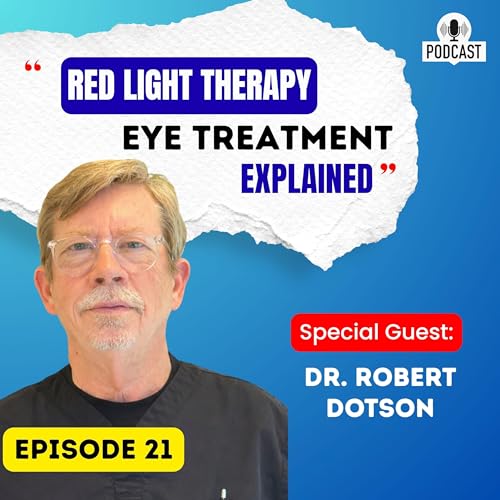
  • Red Light Therapy Eye Treatment Explained: What Actually Works? | Dr. Robert Dotson
    Apr 8 2026
    Red light therapy for eye health is everywhere right now, but what’s real, what’s hype, and what actually works? Dr. Joseph Allen sits down with ophthalmologist Dr. Robert Dotson to break down the science behind photobiomodulation, red light therapy, and how it may impact conditions like dry eye, macular degeneration, and more.With over 40 years of experience and decades researching light-based treatments, Dr. Dotson shares what the research really says about wavelengths, safety, dosing, and the growing number of at-home devices entering the market.In This Episode, You Will Learn:✅ What red light therapy (photobiomodulation) actually is✅ How red and near-infrared light affect eye health at a cellular level✅ The role of mitochondria and ATP production in healing✅ Why wavelength, power, and dosage matter more than you think✅ The truth about at-home red light devices like Arun Light✅ Safety concerns when using light therapy around the eyes✅ How red light therapy may support macular degeneration and dry eyeCurious about red light therapy for your eyes? The Arunlight device is designed with clinically studied wavelengths to support eye health and mitochondrial function.Learn more about Arun Light here:👉 https://arunalight.com/Timestamps (00:00) Red Light Therapy for Eye Health: What Is It & Does It Work?(03:30) How Dr. Robert Dotson Discovered Photobiomodulation(06:18) Early Macular Degeneration Research & Vision Improvements(08:42) How Red Light Therapy Works at the Cellular Level(11:34) Mitochondria, ATP & Why Light May Boost Healing(14:07) Red vs Blue vs Infrared Light: What’s the Difference?(16:02) Why Combining Wavelengths May Be More Effective(19:22) The Right Dose: Power, Joules & Eye Safety Explained(21:35) Sunlight, UV Exposure & Natural Red Light Benefits(25:05) At-Home Red Light Devices: What Works & What to Avoid(31:30) Pulsing vs Continuous Light: Does It Make a Difference?(37:45) Eyes Open vs Closed: What’s Safer & More Effective?(44:10) FDA Devices vs Consumer Devices: Key Differences(50:30) Who Should (and Shouldn’t) Use Red Light TherapyKey Takeaways🔹 Red light therapy works at a cellular level, helping regulate inflammation and healing🔹 The right dose matters too little does nothing, too much can reduce benefits🔹 Not all devices are created equal many lack transparency around wavelength and power🔹 Light therapy may improve mitochondrial function and ATP production, boosting energy in cells🔹 Clinical devices using multiple wavelengths may be more effective than single-wavelength tools🔹 At-home devices can be helpful, but they are not a replacement for medical treatment🎥 Want to Learn More About Red Light Therapy?👉Red Light Therapy: Eye Health Miracle? https://youtu.be/jnbGuZIPljs👉Red Light Therapy for Dry Eyes https://youtu.be/eTB6RGYQbTI👉Red light research https://www.doctoreyehealth.com/red-light-referencesAbout the Guest: Dr. Robert DotsonDr. Robert Dotson is a highly experienced ophthalmologist with over 40 years in medical practice and more than 20 years focused on photobiomodulation research. He has played a key role in developing light-based therapies for eye conditions and has contributed to innovations in FDA-approved devices for macular degeneration.LinkedIn: Dr Robert Dotson- https://www.linkedin.com/in/robert-dotson-md-8b9a7711/Sponsor:This episode is sponsored by Arunlight, a red light therapy device designed specifically for eye health and daily wellness.If you’re looking for a simple, at-home option backed by research, you can learn more here:👉 https://arunalight.com/Use code DREYEHEALTH10% for 10% off your order.Resources:Website: Doctor Eye Health https://www.doctoreyehealth.com/YouTube: Doctor Eye Health https://www.youtube.com/@DoctorEyeHealthInstagram: @doctoreyehealth https://www.instagram.com/doctoreyehealthTikTok: Doctor Eye Health https://www.tiktok.com/@doctoreyehealthFacebook: Doctor Eye Health https://www.facebook.com/DoctorEyeHealthLinkedIn: Dr. Joseph Allen https://www.linkedin.com/DISCLAIMER:This video is for educational purposes only and does not provide medical advice. Watching this content does not establish a doctor-patient relationship. Always consult your physician or eye care professional regarding any medical condition or treatment decisions. All content and information is for general information purposes only and does not replace a consultation with your own doctor or health professional. In addition, some of the links in this post may be affiliate links, meaning, at no cost to you, I will earn a small commission if you click through and make a purchase.red light therapy, eye health, photobiomodulation, red light therapy eyes, macular degeneration treatment, dry eye treatment, vision health, low level light therapy, mitochondrial health, ATP production, eye care technology, red light therapy benefits, is red light therapy safe for eyes, red light therapy for macular degeneration, how red ...
    Show More Show Less
    58 mins
  • STOP Using the Wrong Eye Drops - An Eye Doctor’s Guide to Dry Eye Drops
    Apr 1 2026
    Dry eyes won’t improve if you’re using the wrong artificial tears. Most people are making common dry eye mistakes that actually make symptoms worse. In this episode of the Dr. Eye Health Podcast, Dr. Joseph Allen breaks down how to choose the best eye drops for dry eyes, including preservative-free artificial tears, lipid vs aqueous drops, and key ingredients like hyaluronic acid. Learn how to treat dry eye symptoms, reduce eye irritation, and improve blurry vision with the right strategy. If you struggle with chronic dry eye, burning eyes, red eyes, or screen-related dryness, this episode will help you find real relief and protect your eye health long-term.In This Episode You Will Learn✅ Why preservative-free artificial tears are critical for eye health✅ The dangers of “get the red out” eye drops✅ How to match eye drops to your type of dry eye✅ Key ingredients to look for like hyaluronic acid and trehalose✅ Why consistency matters more than switching brands✅ When artificial tears can actually make dry eye worse✅ Why eye drops are only the first step in treating dry eye👉 Download the free Dry Eye Drop Guide -www.doctoreyehealth.com/eye-drop-downloadTimestamps(00:00) Dry Eyes Won’t Improve Until You Fix This(00:45) Tip 1: Go preservative-free eye drops(02:45) Tip 2: Avoid “get the red out” drops(04:10) Tip 3: There is no single best eye drop(05:15) Tip 4: Match the drop to your dry eye type(07:40) Tip 5: Key ingredients to look for(09:30) Tip 6: Why consistency is everything(12:30) Tip 7: Don’t rely only on symptoms(13:30) Tip 8: Use nighttime gel or ointment(14:35) Tip 9: Switch strategy, not just brands(15:20) Tip 10: Eye drops are not the full treatment(16:25) Final thoughts and next stepsWant to Learn More About Eye Drops? 👇If you’re still trying to figure out which eye drops are right for you or why your symptoms aren’t improving, check out these next videos:👉 Why Do My Eyes Feel Worse After Eye Dropshttps://youtu.be/BsBxiQFx3oQ👉 5 Amazing Benefits of Manuka Honey Eye Dropshttps://youtu.be/cbxuLYLE28Q👉 The #1 Best Eye Drops for Itchy Eyes (Allergy Relief Guide)https://youtu.be/QYvhmQgQxyQ🤩 Download the free Dry Eye Drop Guide -www.doctoreyehealth.com/eye-drop-downloadKey Takeaways🔷 Not all artificial tears are the same, choosing the right type matters🔷 Preservatives like BAK can worsen dry eye and damage the eye surface🔷 Dry eye is multifactorial, treatment must match the underlying cause🔷 Artificial tears help symptoms but don’t treat the root problemResources & LinksTFOS DEWS III: https://pubmed.ncbi.nlm.nih.gov/40467022/Ingredients; https://pmc.ncbi.nlm.nih.gov/articles/PMC8910031/Formulations: https://pubmed.ncbi.nlm.nih.gov/36769079/Evidence Based Guidance; https://pubmed.ncbi.nlm.nih.gov/33401019/Website: Doctor Eye Health https://www.doctoreyehealth.com/YouTube: Doctor Eye Health https://www.youtube.com/@DoctorEyeHealthInstagram: @doctoreyehealth https://www.instagram.com/doctoreyehealthTikTok: Doctor Eye Health https://www.tiktok.com/@doctoreyehealthFacebook: Doctor Eye Health https://www.facebook.com/DoctorEyeHealthLinkedIn: Dr. Joseph Allen https://www.linkedin.com/dry eyes, artificial tears, best eye drops for dry eyes, preservative free eye drops, dry eye treatment, eye health, blurry vision, eye irritation, lipid eye drops, aqueous dry eye, hyaluronic acid eye drops, eye doctor adviceDISCLAIMER:This video is for educational purposes only and does not provide medical advice. Watching this content does not establish a doctor-patient relationship. Always consult your physician or eye care professional regarding any medical condition or treatment decisions. All content and information is for general information purposes only and does not replace a consultation with your own doctor or health professional. In addition, some of the links in this post may be affiliate links, meaning, at no cost to you, I will earn a small commission if you click through and make a purchase.
    Show More Show Less
    18 mins
  • Protect Your Vision After 50: Macular Degeneration Explained + Early Warning Signs & Treatments
    Mar 25 2026
    Macular degeneration is a leading cause of vision loss after age 50, but most people miss the early signs of macular degeneration until it’s too late. On the Dr. Eye Health Podcast, Dr. Joseph Allen is joined by retinal expert Dr. Carolyn Majcher to break down age-related macular degeneration (AMD), including symptoms, causes, and treatment options like anti-VEGF injections, OCT imaging, and red light therapy. Learn how to detect macular degeneration early, protect your central vision, and slow progression with lifestyle changes, nutrition, and modern eye care technology.In This Episode You Will Learn✅ What macular degeneration is and why it often goes undetected after age 50✅ Early warning signs like drusen, pigment changes, and vision loss✅ The difference between dry vs wet macular degeneration✅ How OCT imaging and advanced eye scans detect AMD early✅ Treatment options including anti-VEGF injections and new therapies✅ How lifestyle, diet, and smoking impact your risk of vision lossSubscribe to the Doctor Eye Health Podcast for trusted vision care education and expert insights that help you understand the powerful connection between lifestyle choices and your eye health.Timestamps(00:00) Protect Your Vision After 50: Macular Degeneration Explained (01:05) What is macular degeneration and who is at risk (03:10) Early signs including drusen and pigment changes (07:05) Dry vs wet macular degeneration explained (09:55) Vision loss symptoms and real patient impact (12:45) Advanced imaging like OCT and autofluorescence (15:05) Detecting wet macular degeneration early (20:50) Anti-VEGF injections and how they work (24:45) New treatments for geographic atrophy (30:55) Red light therapy and emerging treatments (38:10) Lifestyle changes to slow macular degeneration (43:50) Blue light vs UV light and eye health (47:05) Key advice for doctors and patientsWant more information on Macular Degeneration? Check out these videos 👇👉5 Natural Ways toPrevent and Treat Macular Degeneration: https://www.youtube.com/live/if-fytdsYoI?si=uZHFDp6tDfFbL3sv👉Dry VS Wet Macular Degeneration - Age Related Macular Degeneration (AMD) Explained: https://youtu.be/USIG_KjlvNs?si=-OL8c1qJYTW3UsCN👉Testing Macular Degeneration Symptoms - Dark Adaptometry with the AdaptDx Pro https://youtu.be/mR6d4QjN6KE?si=tKNQwTVn2w7u_fmxKey Takeaways🔷 Macular degeneration is a leading cause of blindness but often develops without early symptoms🔷 Early detection using OCT and imaging can preserve vision and prevent severe damage🔷 Wet macular degeneration requires urgent treatment with injections to stop vision loss🔷 Lifestyle choices like diet, smoking, and UV protection play a major role in progressionGuest BioDr. Carolyn Majcher, OD, FAAO, FORS is a professor at Northeastern State University Oklahoma College of Optometry and a leading expert in retinal disease. She has published extensive research on macular degeneration and retinal imaging, lectures internationally, and works with companies developing new technologies and treatments for vision preservation.LinkedIn : https://www.linkedin.com/in/dr-carolyn-majcher-od-faao-fors-15b7b17bWebsite: Carolyn Majcher, OD, FAAO • Intrepid Eye SocietyResources Review of AMD: https://pubmed.ncbi.nlm.nih.gov/38193957/Lightsite III Trial: https://pubmed.ncbi.nlm.nih.gov/37972955/Blue Blocking IOL research referenced: https://pubmed.ncbi.nlm.nih.gov/40659110/https://pubmed.ncbi.nlm.nih.gov/32717342/Website: Doctor Eye Health https://www.doctoreyehealth.com/YouTube: Doctor Eye Health https://www.youtube.com/@DoctorEyeHealthInstagram: @doctoreyehealth https://www.instagram.com/doctoreyehealthTikTok: Doctor Eye Health https://www.tiktok.com/@doctoreyehealthFacebook: Doctor Eye Health https://www.facebook.com/DoctorEyeHealthLinkedIn: Dr. Joseph Allen https://www.linkedin.com/DISCLAIMER:This video is for educational purposes only and does not provide medical advice. Watching this content does not establish a doctor-patient relationship. Always consult your physician or eye care professional regarding any medical condition or treatment decisions. All content and information is for general information purposes only and does not replace a consultation with your own doctor or health professional. In addition, some of the links in this post may be affiliate links, meaning, at no cost to you, I will earn a small commission if you click through and make a purchase.macular degeneration, age related macular degeneration, AMD symptoms, vision loss after 50, eye health, retina disease, OCT eye scan, wet vs dry AMD, anti VEGF treatment, geographic atrophy, eye doctor advice, vision protection, macular degeneration symptoms, early signs of macular degeneration, how to prevent macular degeneration, macular degeneration treatment options, vision loss after 50 causes, how to protect eyesight as you age, central vision loss causes, what is macular degeneration, blurry vision center of eye
    Show More Show Less
    54 mins
  • The Myopia Epidemic Is Getting Worse (and how to stop it)
    Mar 18 2026
    Myopia is rising fast and the global myopia epidemic is becoming a serious public health concern. In some regions, nearly 90% of the population is now myopic, with rates of myopia in children increasing every year. But myopia isn’t just about needing glasses earlier in life. Progressive myopia significantly increases the risk of serious and potentially blinding eye diseases like retinal detachment, glaucoma, cataracts, and myopic maculopathy, making myopia prevention and myopia control more important than ever.On the Dr. Eye Health Podcast, Dr. Joseph Allen is joined by pediatric ophthalmologist Dr. Rupa Wong to unpack the global myopia epidemic. Together they explore why myopia is increasing, the lifestyle factors driving it, and the science-backed strategies that can slow its progression in children.From low-dose atropine drops to special myopia-control glasses and contact lenses, this conversation breaks down what parents, patients, and eye care professionals need to know about protecting long-term vision.In This Episode You Will Learn✅ Why myopia is increasing rapidly around the world✅ The serious long-term eye disease risks associated with high myopia✅ How lifestyle habits like screen time and indoor living affect children’s vision✅ Evidence-based treatments that can slow or prevent myopia progression✅ Why outdoor time may be one of the most powerful prevention tools👉 If you enjoy evidence-based eye health education from real doctors and researchers, follow the Dr. Eye Health Podcast so you never miss an episode.Timestamps00:00 The growing global myopia epidemic03:50 Why nearsightedness is more than just needing glasses08:00 The long-term risks of high myopia and eye disease13:40 Why children today are becoming nearsighted earlier17:00 Signs a child may be developing myopia19:20 Can myopia be reversed? What the science says20:00 Low-dose atropine drops for myopia control26:00 Special myopia control glasses and new lens technology30:00 Myopia control contact lenses and orthokeratology37:00 Emerging treatments like red light therapy41:00 Combining treatments to slow myopia progression44:40 Lifestyle tips for parents to protect children’s visionWant to learn more about Myopia check out these other episodes:👉 Children's Eye Health: Essential Tips and ... 👉 How to Slow & Stop Myopia - The Ultimate Myopia Management Guide👉Myopia Management with MiSight® 1 Day Contact Lenses!👉This will affect over 50% of people - the Myopia PandemicKey Takeaways🔹 Myopia is a growing global health issueNearsightedness is increasing worldwide, with some countries reporting up to 90% prevalence among young adults.🔹 The real concern is long-term eye healthHigh myopia dramatically increases the risk of retinal detachment, glaucoma, cataracts, and myopic maculopathy.🔹 Lifestyle plays a major roleIncreased near work, screen use, and reduced outdoor time are key drivers behind rising myopia rates in children.🔹 Prevention and early intervention matterLow-dose atropine drops, specialized glasses, and myopia-control contact lenses can significantly slow progression.🔹 Outdoor time is one of the best natural protectionsResearch shows that at least two hours of outdoor light per day can help reduce the risk of developing myopia.Guest BioDr. Rupa Wong is a board-certified pediatric ophthalmologist specializing in strabismus surgery and childhood eye diseases. She treats both pediatric and adult patients and has extensive experience in myopia management and prevention strategies.Dr. Wong frequently lectures on pediatric eye health and is passionate about helping families understand how to protect children’s vision in a screen-driven world.Myopia, myopia management, myopia epidemic, myopia control, nearsightedness in children, pediatric eye health, low dose atropine, myopia prevention, eye health podcast, vision science, childhood vision problems, screen time and eyesightDISCLAIMER:This video is for educational purposes only and does not provide medical advice. Watching this content does not establish a doctor-patient relationship. Always consult your physician or eye care professional regarding any medical condition or treatment decisions. All content and information is for general information purposes only and does not replace a consultation with your own doctor or health professional. In addition, some of the links in this post may be affiliate links, meaning, at no cost to you, I will earn a small commission if you click through and make a purchase.
    Show More Show Less
    57 mins