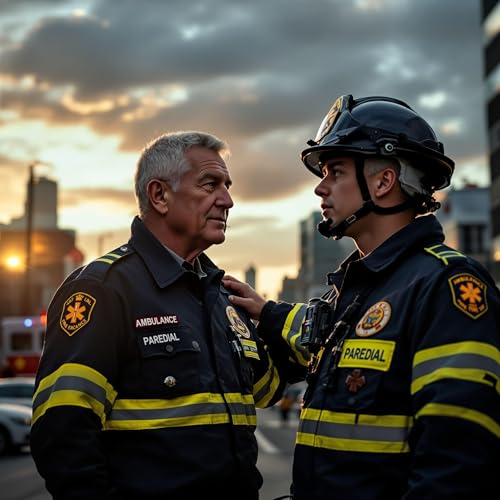
• The Hidden Power of FTOs: Creating Consistency and Retention in EMS
    Apr 17 2026

    The conversation begins with an introduction and discussion about the podcast landing page, followed by an in-depth exploration of the importance of the Field Training Officer (FTO) in EMS. The hosts then delve into the significance of mentorship and FTO program development, concluding with a focus on the role of seasoned medics in the FTO program. The conversation delves into the critical role of Field Training Officers (FTOs) in training and developing new employees in the EMS industry. It explores the challenges and responsibilities of FTOs, the importance of culture, and the need for a structured FTO program. The discussion concludes with a call to action for engagement and interaction from the audience.

    Takeaways

    • Importance of FTO in EMS training
    • Significance of mentorship in EMS FTOs play a crucial role in training and developing new employees in the EMS industry.
    • A structured FTO program is essential for creating a positive culture and ensuring retention and recruitment in the EMS industry.

    Chapters

    • 00:00 Introduction and Podcast Landing Page
    • 13:29 Mentorship and FTO Program Development
    • 21:53 The Role of FTOs in Training and Development
    • 44:55 Conclusion and Call to Action
    Show More Show Less
    46 mins
  • Why Your BVM Technique Is Probably Dangerous, BVM: Does Not Mean Basic Ventilatory Maneuver!!
    Apr 9 2026

    The episode discusses the complexities of using a bag valve mask (BVM) in emergency medical situations, emphasizing the importance of proper training and technique. It also explores the challenges of feedback interpretation, the impact of device design on performance, and the role of ventilation in patient care. The conversation delves into the complexities of bag valve mask (BVM) ventilation, emphasizing the critical thinking, technique, and training required for effective BVM use. It also highlights the importance of understanding respiratory distress versus failure and the need for continuous training and feedback in the pre-hospital setting.

    Takeaways

    • BVM training and technique are crucial for effective use in emergency medical situations.
    • Interpreting feedback and recognizing the nuances of BVM use are essential skills for medical professionals. BVM ventilation is a complex procedure that requires critical thinking, technique, and continuous training.
    • Understanding respiratory distress versus failure is crucial for effective patient care.

    Chapters

    • 00:00 Introduction and Feedback Interpretation
    • 07:06 Device Design and Performance
    • 17:19 Ventilation and Patient Care
    • 26:50 The Complexity of BVM Ventilation
    • 36:17 The Importance of Critical Thinking in BVM Ventilation
    Show More Show Less
    52 mins
  • On-Scene Stabilization: The Key to Survival
    Mar 26 2026

    The conversation covers the primary assessment approach in emergency situations, emphasizing the importance of observing movement, purposeful actions, and assessing airway and communication.

    Takeaways

    • Primary assessment: Yes, No, Fix it
    • Observing movement and purposeful actions
    • Assessing airway and communication

    Chapters

    • 00:00 Primary Assessment Approach
    Show More Show Less
    49 mins
  • Pre-Hospital Ventilators: Volume, Pressure, and Getting Buy-In
    Mar 19 2026

    The conversation begins with a discussion about St. Patrick's Day plans and transitions into an in-depth exploration of the topic of ventilators in the 911 setting. Kyle and Rob share their perspectives and experiences, leading to a comprehensive understanding of the subject. The conversation covers a wide range of topics related to ventilator training, implementation, and the evolving role of EMS in the healthcare system. It also delves into challenges, advancements, and future considerations for EMS practices and protocols. The podcast launch and future topics are also discussed, highlighting the enthusiasm for industry advancements and the desire to move pre-hospital EMS to new heights.

    Takeaways

    • St. Patrick's Day plans and celebrations
    • Introduction to the topic of ventilators in the 911 setting Ventilator training and implementation are critical for improving patient outcomes in pre-hospital care.
    • The evolving role of EMS in the healthcare system requires advancements in protocols, training, and recognition.

    Chapters

    • 00:00 St. Patrick's Day Plans
    • 26:55 Ventilator Training and Implementation
    • 33:35 EMS as Part of the Healthcare System
    • 41:30 Evolution of EMS Practices
    • 46:36 Advanced EMS Units and Specialty Care
    • 53:01 Simulation Training and Core Competencies
    • 59:14 Podcast Launch and Future Topics
    Show More Show Less
    1 hr and 2 mins
  • Transport Speed Doesn't Equal Better Outcomes | EMS Reality Check
    Mar 19 2026

    Most EMS systems prioritize response times, but what about transport times? Could focusing more on treatment in the first 15 minutes save more lives than rushing to the hospital? If you're a provider, leader, or part of the community invested in better patient outcomes, this episode will challenge everything you thought you knew about EMS timing.
    Join Rob Moyers and Kyle Goodknight as they dissect the critical balance between response, treatment, and transport. These seasoned professionals with over 55 years of combined experience share real-world insights from systems with vastly different logistics: one with lightning-fast city responses, the other navigating longer rural journeys.
    You'll discover:
    How shorter response times can sometimes be less critical than advanced on-scene care
    The evolving role of on-scene interventions like 12-lead ECGs, pediatric CPAP, and whole blood in pre-hospital care
    Which metrics truly matter when measuring EMS effectiveness—and who’s actually tracking them
    The impact of transport mode, resource allocation, and training on patient survival in time-sensitive emergencies
    Practical strategies for optimizing response and transport in both urban and rural settings
    Understanding the true priority—response versus transport—can transform EMS protocols, training, and ultimately, patient outcomes. If you're looking to upgrade your approach, make smarter resource decisions, or just challenge conventional wisdom, this episode is essential listening. Whether you lead an EMS agency or are simply passionate about emergency medicine, you'll leave with a new perspective on saving lives faster and smarter.

    Rob Moyers is an experienced EMS provider and educator with specialized knowledge in ventilators, EMS protocols, and system optimization, bringing decades of practical expertise from Ohio’s dense urban and rural systems.
    Prepare to rethink what you know about EMS timing—because in emergency medicine, every second counts, but sometimes, where and how we spend those seconds makes all the difference.

    Kyle Goodknight is a paramedic, respiratory therapist, educator, and national advocate for improving respiratory care in EMS. With nearly 30 years of combined experience in hospital ICU care, level 1 trauma center respiratory therapy, and frontline 911 EMS, he brings a rare dual perspective of hospital and prehospital medicine. Kyle is widely recognized for helping advance the pediatric CPAP initiative in EMS, working to bridge respiratory science with practical field implementation.

    Show More Show Less
    51 mins