• The Physician Associate Who Cold Emailed Her Way Onto a Founding Team with Helen Tanner
    Nov 12 2026

    Healthcare startups have a certain shine to them. When you're tired of seeing thirty patients a day in ten-minute slots, the pull toward something newer is real. But most clinicians are built to be careful, and most startups are built to move fast and break things. Those two instincts do not always sit together.

    Helen Tanner is a Physician Associate (PA) who went from a decade in public health to a founding executive role in a health tech startup, and now runs The Early Hires, a community for clinicians leading inside startups.

    We explore

    • The worry that your career looks scattered when it never followed a plan
    • The trade-off of taking a lower-status or underpaid role for what it might teach you
    • Whether reaching out directly makes you memorable or makes you pushy
    • What happens to your sense of your own worth when it is tied to where you work
    • What actually tells you whether a startup is right for you before you leave stable work
    • What it means to want to leave work you genuinely love

    Timestamps:

    • 00:58 Meet Helen Tanner, physician associate
    • 01:14 Leaving public health to become a PA
    • 03:07 Going back to school as a new mum
    • 05:39 Choosing paediatrics and an extra year of clinical training
    • 08:56 How clinical confidence opens leadership doors
    • 11:51 Stepping into healthcare startups and sitting with the ambiguity
    • 16:02 Being proactive, and why memorable beats qualified
    • 22:01 Building a personal brand that outlasts your employer
    • 25:50 Making bold career decisions and staying open to change
    • 34:23 Building a health tech startup from scratch
    • 41:18 The real risks of healthcare startups for clinicians
    About Helen Tanner

    Helen Tanner is a physician associate who spent a decade in public health and clinical research before moving into direct patient care, then into startup leadership as a founding executive in home-based primary care for seniors with complex chronic conditions. She now runs The Early Hires, a podcast and community for clinicians leading inside health tech startups, advises startups on working well with clinical staff, and still practices one day a week. Her perspective is useful because she has sat on both sides of the table, as the clinician being recruited and the leader doing the hiring.

    Connect with Helen
    • Helen Tanner on LinkedIn: https://www.linkedin.com/in/helenltanner/
    • The Early Hires podcast, newsletter and resources: earlyhires.com

    Mentioned in the episode:

    • Lauren Curtis, founder of Hey Health Tech, who focuses on the move from clinical work into health tech
    • On Brand by Aliza Licht, the book Helen referenced on building a personal brand
    Career Cliniq Resources

    If this conversation has you wondering whether to optimise where you are, adapt into something adjacent, or build something new, StreamAhead maps which workstream direction fits you before you make a move. https://careercliniq.com/streamahead

    Join the conversation

    LinkedIn: https://www.linkedin.com/in/drruthvo/

    Instagram: https://www.instagram.com/drruthvo/

    Show More Show Less
    57 mins
  • How a Renal Dietitian Built a Business Teaching the Skill Her Degree Missed with Stephanie Notaras
    Oct 29 2026

    Most of us finish our training knowing exactly what to recommend and almost nothing about how to help someone actually do it. Stephanie Notaras noticed that gap in her first year as a dietitian, and rather than sit with it, she spent the next decade closing it.

    Stephanie is a renal dietitian, researcher and founder of a training business that teaches other dietitians the counselling skills their degrees skipped.

    This one is for anyone weighing more study, sitting on a research question that will not leave them alone, or doing the real maths of starting something while life is already full. Stephanie walks through building a framework from scratch, taking a clinic with a 50% no show rate and turning it into one patients kept returning to, and learning to speak the language of funding when good patient outcomes were not enough on their own. She is also honest about the cost: what a PhD, a business and two kids asked of her, and how she worked out what to let go.

    If you have ever sensed you have outgrown your job description, start here.

    We Explore
    • Noticing a gap in your skill set early and deciding whether to sit with it or close it
    • What post graduate study gives you when you do it with years of practice behind you
    • Taking full ownership of a role you might only hold for twelve months
    • Building something on the side without betting your livelihood on it before it is ready
    • Staying consistent when there are no results yet to tell you it is working
    About Stephanie Notaras

    Stephanie Notaras is an Australian Accredited Practising Dietitian who specialises in renal nutrition and the behaviour change side of client care. Her PhD examines the association between seeing a dietitian and time to dialysis, along with the cost savings for the health system, work that helped grow renal dietitian funding across her district. She teaches these counselling skills to other dietitians through her own business and guest lecturing.

    • Instagram: https://www.instagram.com/dietitiancounsellingskills/
    • Training and courses for dietitians and nutritionists: https://stephanienotaras.com/program/
    Show More Show Less
    1 hr and 8 mins
  • The dietitian who built Australia's first sustainable food systems unit with Liza Barbour
    Oct 15 2026

    Liza Barbour on planetary health, dietetics and building a career with room for yes and no

    Liza Barbour trained as a dietitian and now teaches planetary health to the next generation of nutritionists and dietitians at Monash University. She also runs a pickle business with her husband and works the farmers markets on weekends. Ruth Vo speaks with Liza about how she holds three kinds of work together without it draining her, and what keeps the mix feeling meaningful rather than scattered.

    Her view is especially useful for listeners thinking about non-clinical dietetics, transferable skills and destination roles beyond private practice or hospital work. She also speaks from lived experience of combining academic work, small business ownership and family life.

    We Explore:

    • Why Liza builds her roles around energy rather than a job title
    • How she treats remote dietetics, overseas work and academia as moves, not destinations
    • Why saying yes early built her breadth, then became something she had to limit
    • Why planetary health sits at the centre of her work now, and the planetary empathy she wants dietitians to carry
    • How to get a foothold in planetary health work as a dietitian or allied health professional
    • How shared systems at home and a team culture at work make room to be less than optimal

    00:00 - Liza Barbour introduces her many hats
    01:33 - Systems that keep work and family running
    05:14 - Sharing the mental load at home
    07:19 - Team culture, brain fog and not being optimal all the time
    12:11 - Teaching in the age of artificial intelligence
    13:33 - First remote dietetics role in Western Australia
    18:33 - Pressure to do a PhD and waiting for the right topic
    22:56 - What the PhD taught her about being a project manager
    25:22 - Building Australia's first sustainable food systems unit
    37:13 - Finding a North Star in climate leadership
    54:00 - Where planetary health skills can lead next
    57:21 - Missing client-facing community dietetics

    About Guest

    Liza Barbour is an Advanced Accredited Practising Dietitian and senior lecturer at Monash University, where she teaches planetary health, sustainable food systems and public health nutrition. Her background runs across remote and community dietetics in Australia, a year with the Ministry of Health in Tonga, and national food insecurity work at SecondBite. She also co-founded Dillicious, a small-batch pickle business on the Mornington Peninsula.

    Connect with Liza - https://www.linkedin.com/in/liza-barbour/

    Check out her Pickle business - https://www.dillicious.com.au/

    Career Cliniq Resources

    If this episode has you thinking about where your energy and your direction meet, StreamAhead is the place to start.
    https://careercliniq.com/streamahead

    Join the Conversation

    Liza guards her time against a clear North Star. What’s yours? Tell Ruth on LinkedIn - https://linkedin.com/in/drruthvo or Instagram -https://instagram.com/drruthvo


    Show More Show Less
    58 mins
  • How an Introverted Exercise Physiologist Came to Lead Regulation for Her Profession with Carly Ryan
    Sep 21 2026

    Carly Ryan spent seven years as a clinical exercise physiologist before a job assessing accreditation applications took her somewhere she never pictured. That was thirteen years, five roles and an executive seat ago, and she now leads the regulatory function at Exercise & Sports Science Australia (ESSA). She says she fell into every one of those roles.

    If you're an allied health professional around the seven-year mark, wondering where your clinical skills fit beyond treatment, Carly's move from EP into healthcare leadership shows what a career transition into regulation and professional standards actually involves. That includes the move to a desk job, the trade-offs of stepping back from hands-on work, and the introvert's dread of networking.

    Great for folks interested in professional association work, professional standards, strategy and quality and safety workstreams.

    We Explore
    • How Carly went from assessing accreditation applications to leading ESSA's regulatory function
    • How Carly gets career advice as a self-confessed introvert who dreads the cold open
    • How to see the transferable skills in your clinical work, using the lens Carly applies to professional standards
    • How Carly uses the goal-setting skills from clinical practice to get buy-in for system-level change
    • The trade-off Carly made moving from doing the work to leading it

    Timestamps

    01:54 Why Carly Chose a Career in Exercise Physiology

    03:11 Building Confidence and Value in the EP Profession

    14:24 Career Pivots: Moving Beyond Clinical Practice

    18:58 Mentors, Networking and Creating Career Opportunities

    24:51 From Clinical EP to Regulation and Professional Standards

    28:45 Transferable Skills for Health Professionals

    32:22 Transitioning from Clinical Work to Leadership

    39:36 Leadership, Stakeholder Engagement and Listening

    49:40 The Future of Exercise Physiology Career Pathways

    54:47 Values, Burnout and Knowing When to Move On

    59:00 Ethical Practice, Client Feedback and Better Healthcare

    65:00 Career Mapping Support for Health Professionals


    About Carly Ryan

    Carly Ryan is an exercise physiologist and executive at ESSA, leading professional standards, university program accreditation, and ethics and disciplinary work. She is also a board director of the National Alliance of Self Regulating Health Professions (NASRHP). Seven years of clinical work in lifestyle programs, education and group exercise give her a practitioner's view of what regulation looks like on the ground.

    • LinkedIn: https://www.linkedin.com/in/carly-ryan-a4482192/
    • ESSA: https://www.essa.org.au
    • NASRHP: https://nasrhp.org.au
    Career Cliniq Resources

    Carly's roles only made sense once she was in them. StreamAhead maps where your interests and experience sit across the wider spectrum of healthcare work, so you can see your options before you fall into them. https://careercliniq.com/streamahead

    Join the Conversation

    What's a role you only understood once you were in it? Connect with Ruth on LinkedIn or Instagram.

    Show More Show Less
    1 hr and 6 mins
  • From Hospital OT Clinical Educator to Online Edupreneur with Clare Batkin
    Aug 20 2026

    Ten years of clinical seniority, and Clare Batkin still chose to start again on a junior wage in a sector she knew very little about.

    Clare Batkin is an occupational therapist and founder of Your OT Tutor. She and Ruth explore the decisions that have taken Clare from the ideal part-time job share Clinical Educator role in a hospital to what can be seen as starting all over again. We get underneath the drivers for running your own business and what helps you avoid the traps of comparing whether you are doing enough.

    This one's for any health professional who has a strong interest in the education workstream but needs to hear the less traditional ways you can apply your skills to help clients and patient's get the best service. Press play if you're weighing up a move that looks illogical on paper.

    We Explore
    • Why do some OTs thrive on hospital structure while others feel boxed in by it?
    • What made trading a decade of seniority for a new grad wage feel like the safe option, not the risky one?
    • At what point does unpaid, after-hours work stop being generosity and start being a business plan?
    • How do you know your business is "enough" when you're the only one deciding what that means?
    • Why team up with the OT teaching the exact same course as you?

    Timestamps

    00:42 Introduction to Clare Batkin's career journey

    02:42 Finding your path in OT

    06:43 Choosing the right early-career role

    13:11 Career experimentation and self-awareness

    17:02 From hospital clinician to educator

    20:08 A move that changed the career path

    26:48 Starting a solo education business

    31:14 Finding a niche in OT education

    37:37 Building a healthcare education business on your own terms

    44:40 Helping OTs build lasting careers

    About Clare Batkin

    Clare Batkin is an occupational therapist and the founder of Your OT Tutor, an education business supporting OTs working across Australia's hospital, private practice and NDIS sectors. After close to two decades spanning hospital rotations, senior clinical roles and university teaching, she now runs webinars, memberships and clinical education resources focused on the transferable OT skills that hold up across any setting, alongside a growing podcast library.

    • Connect with Clare on LinkedIn: https://www.linkedin.com/in/clare-batkin/
    • Join Clare’s free Learning Library: https://yott.au/learninglibrary
    • Become a Your OT Tutor Connector or Alliance member: https://yott.au/membership
    • Listen to the “How to be a better OT” podcast: https://yott.au/podcast or on your favourite podcast platform
    Career Cliniq Resources

    If this episode has you questioning whether your current role still fits, the StreamAhead Assessment is a good place to start figuring out what would actually suit you better. Learn more about StreamAhead HERE

    LinkedIn: https://www.linkedin.com/in/drruthvo

    Instagram: instagram.com/drruthvo

    Show More Show Less
    55 mins
  • Self-Leadership for Health Professionals Who Want More Influence with Ruth Andermatt
    Jun 10 2026

    Plenty of capable people learn to lead by copying whoever's already in charge. It works for a while, right up until it leaves you running on someone else's fuel and still not quite yourself.

    Ruth Andermatt is a Canadian self-leadership coach who has spent more than two decades working with executives and emerging leaders, most of them introverts. She was often the only woman in the room, and she has thought hard about what it costs to keep conforming to a style that was never going to fit.

    If you're in a non-titled role wishing you had more influence, or eyeing a step into management because it looks like the only way to have impact, this conversation is for you. Ruth draws a clean line between managing people and leading them, and she begins where most leadership advice skips ahead: how you lead yourself. Expect plenty on holding your ground without conforming, guiding the people above you, and what to do when the version of success you've been chasing quietly stops fitting.

    We Explore

    • Why conforming to get into leadership tends to run out of road
    • The difference between managing people and actually leading them
    • Leading the people above you, not only the ones who report to you
    • What self-leadership asks of you long before any title arrives
    • The cost of staying in survival mode and calling it dedication

    Timestamps

    01:15 Being the only woman in the room and the pull to conform

    05:45 Masculine and feminine leadership, and why most workplaces pick one

    08:48 The exhaustion of dancing to someone else's tune just to get hired

    13:40 Why a title doesn't make you a leader, and what self-leadership actually means

    16:44 Hitting a plateau and shifting your perspective instead of walking away

    29:05 The blind spot that holds capable people back, women especially

    33:08 Leading the people above you, not just the ones who report to you

    41:25 Survival worn as a badge of honour, and the price every choice carries

    45:09 Untangling your identity from how you got here and redefining success

    55:48 Outgrowing your manager and repositioning without burning the bridge

    About Ruth Andermatt

    Ruth Andermatt is a self-leadership coach and consultant and the founder of Andermatt Consulting Experience (A.C.E. Inc) in Canada. A former national-level paddler and UBC graduate, she has coached executives, business owners and emerging leaders for more than twenty years, with a particular focus on women and introverts who lead quietly but effectively. Her view, useful for anyone in a hierarchical field like healthcare, is that leading yourself is the foundation everything else is built on, title or no title.

    • LinkedIn: https://www.linkedin.com/in/coachruth/
    • Website: https://andermattconsulting.com

    Career Cliniq Resources

    If this conversation has you wondering where your influence and interests actually sit, the StreamAhead Assessment maps your experience across the full spectrum of healthcare work, not just the path you trained for: https://careercliniq.com/streamahead

    Connect with Ruth on LinkedIn or Instagram

    Show More Show Less
    1 hr and 1 min
  • From Project Officer Dietitian to a Portfolio Career in Strategy with Bree Murray
    May 28 2026

    Bree Murray has never seen a patient. She'll still put "dietitian" on every form she fills in.

    She's spent 15 years in professional associations, food industry, health profession regulation, and a job-shared CEO role and has never once questioned whether that makes her a real dietitian. This conversation is for anyone who has.

    We Explore
    • Building a dietitian career entirely outside clinical practice
    • What personal life seasons reveal about what you actually value
    • How a project officer becomes a job-sharing CEO
    • The real cost of a portfolio career when you've come from a for-purpose background
    • The difference between a career compass and a career plan
    About Bree Murray

    Bree Murray is an Australian dietitian with over 15 years of experience spanning professional association work, food industry consulting, health profession regulation, and executive leadership. She currently serves as executive officer for a Council of Deans of Nutrition and Dietetics, supports governance work with self-regulating health professions, and sits on the National Alliance of Self-Regulating Health Professions board. Her career has been built through relationships, referrals, and a consistent willingness to move into unfamiliar territory when the fit is right.

    Connect with Bree Murray

    https://www.linkedin.com/in/bree-murray-44193528/

    Career Cliniq Resources

    If this conversation got you thinking about what's actually guiding your career decisions, the StreamAhead Assessment maps your interests and experience across the full spectrum of healthcare work - not just the path you trained for. 👉 Take the StreamAhead Assessment

    Join the Conversation

    What's the moment you realised the shape of your days didn't match what you actually cared about? I'd love to hear it. LinkedIn | Instagram

    Show More Show Less
    1 hr and 14 mins
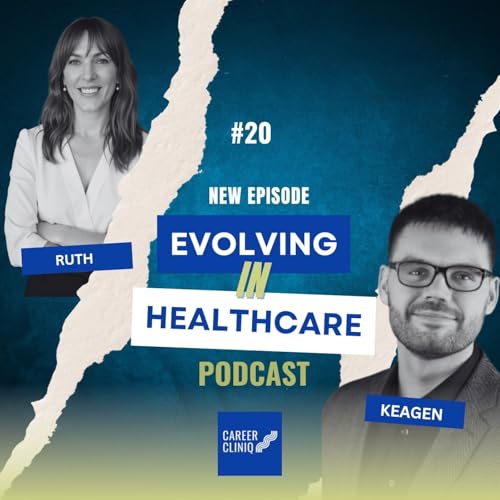
  • From North Dakota to Biotech: How an OT Found Regulatory Writing with Keagen Hadley
    May 12 2026

    You're halfway through a degree or deep into a career you're not sure you'll stay in and the loudest fear isn't about what's next. It's that everything you've already invested might be wasted. Keagen Hadley finished an entire OT doctorate he wasn't sure he'd use and it was the very thing that gave him room to build a completely different career.

    Keagen Hadley is a regulatory medical writer for a large biotech company. He holds a doctorate in occupational therapy and has spent over a decade in the biotech and pharmaceutical space.

    We Explore

    • How geographic limitation can become a catalyst for unconventional experience
    • Why the financial variable in career decisions deserves more honesty in the helping professions
    • How your cognitive wiring reveals itself early and what to do when it doesn't match the clinical path
    • Why "regulatory medical writer" misrepresents the actual work of the role
    • How credibility gets built in an industry where your healthcare credential doesn't automatically count

    Chapters

    00:00 Meet Keagen Hadley - regulatory medical writer and OT

    03:22 How a small-town CRO in North Dakota opened the door to biotech

    08:50 $96K in student loans and the decision to finish anyway

    14:14 The lecture that reframed scale and patient impact

    19:25 Remote work, flexibility, and family life in biotech

    24:48 Starting before you feel ready and selling yourself as a novice

    35:56 Why recruiters matter more than applications in this field

    45:10 Wrangling physicians who disagree

    47:28 AI and regulatory writing

    57:25 Why clinicians won't say the money part out loud

    Connect with Keagen

    • LinkedIn: Keagen Hadley
    • Newsletter: https://cliniciansguide.substack.com/
    • What Regulatory Writers Actually Make - https://thecliniciansguide.myflodesk.com/uegisjcpq9
    • 6-Month Roadmap to Becoming a Regulatory Medical Writer - https://thecliniciansguide.myflodesk.com/nx48w16db8

    Career Cliniq Resources

    If you're trying to get clearer on what actually drives your next step, the StreamAhead Assessment will map your interests within healthcare.

    👉 Take the StreamAhead Assessment

    Connect with Ruth on LinkedIn and Instagram.

    Show More Show Less
    1 hr