Episodes

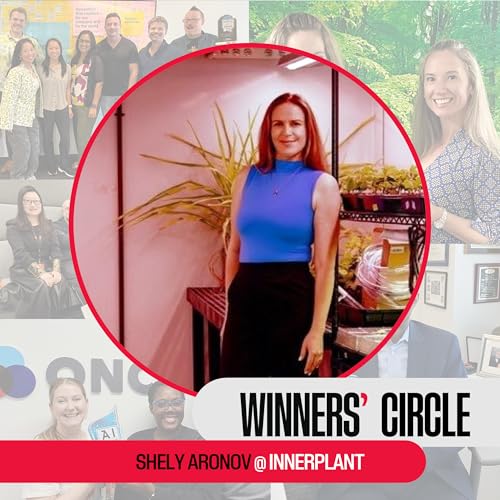
  • Plants That Talk Back: The Future of Farming with InnerPlant’s Shely Aronov
    Feb 17 2026

    Imagine a world where crops can text their farmers when they’re feeling sick—weeks before a human eye can spot a single symptom. In this episode, we sit down with Shely Aronov, the visionary CEO and co-founder of InnerPlant, to discuss how her company is turning crops into living sensors. By tapping into a plant's natural immune system and adding a "line of code," InnerPlant enables soybeans and corn to emit optical signals that tell farmers exactly what they need, from fungal defense to nutrient boosts.

    Shely shares the "sci-fi" journey of building a deep-tech startup, the reality of "building the plane while flying it" during their first commercial launch in 2025, and why the future of agriculture looks like individualized healthcare for every single plant in the field.

    Key Takeaways:
    • The "CropVoice" Revolution: InnerPlant’s first commercial product allows crops to communicate stress, such as fungal pressure, via fluorescent signals.
    • Early Detection is Everything: Plants can signal an infection weeks before symptoms appear, allowing farmers to act while the "cancer is at stage one" rather than stage four.
    • The Tech Stack: InnerPlant uses hyperspectral cameras, drones, and satellites to read non-native fluorescent signals across millions of acres.
    • Scaling Deep Tech: Shely explains why traditional 15-year biotech development cycles are fatal for startups and how she utilized the CropVoice launch to validate demand sooner.
    • Partnership for Success: InnerPlant integrates with the John Deere platform to ensure the technology is easy for farmers to adopt within their existing machinery and workflows.
    Featured in this Episode:
    • Shely Aronov: CEO and Co-founder of InnerPlant. A serial entrepreneur with a Stanford MBA, she is leading the charge in the first real-time plant disease detection network.
    • InnerPlant: Winner of the 2026 Big Innovation Award for their work in enabling plants to communicate their needs to humans.
    Notable Quotes:

    "The reality is... we've been farming around the plant, not with them. That creates a lot of inefficiencies." — Shely Aronov

    "You only know what something's worth when you ask for money." — Shely Aronov

    Connect & Support:
    • Visit InnerPlant: To learn more about the future of "talking" crops, visit innerplant.com.
    • Subscribe to the Pod: To stay updated on the intersection of biology and AI, subscribe to our feed at bintelligence.com/podcast.
    • Join the Circle: If you enjoyed this episode, please like, rate, and subscribe! Your support helps us bring more innovators like Shely into the Winners' Circle.
    Show More Show Less
    24 mins
  • The Handoff Problem: Making AI & Humans Work Together in 2026
    Feb 11 2026

    In this episode, host Russ Fordyce of the Business Intelligence Group brings together a powerhouse panel to tackle one of the most urgent challenges in modern customer experience:

    How do we make AI and humans work together without losing context, connection, or quality?

    With AI now embedded in every touchpoint—from call centers to underwriting to enterprise-scale CX—organizations are struggling with the “handoff problem”:
    👉 What happens when a conversation moves from AI to a human, or from a human back to AI?
    👉 How do we preserve context, reduce friction, and keep both customers and employees happy?

    Our guests share real-world insights from the front lines of AI deployment across telecom, insurance, and global CX operations.

    Chapters

    00:00 — Welcome & Framing the Handoff Problem

    Russ introduces the panel and sets the stage: AI is transforming customer experience, but the transitions between AI and humans are breaking down. The stakes are high—context, connection, and customer trust.

    02:20 — Jason Valdina: What Businesses Get Wrong About AI Handoffs

    Jason from Varen explains why companies still treat AI as “done” once a human takes over. He breaks down the critical role of context, how routing should evolve, and why losing bot‑collected data destroys efficiency.
    “Businesses undervalue context—and it’s costing them.”

    07:00 — The Hidden Power of Context in Routing & Prioritization

    Jason dives deeper into how AI can route conversations based on behavior, sentiment, language, and history. Real examples show how smarter routing improves CX and reduces cost.

    11:20 — New Metrics for the AI Era

    Containment rate, AHT, and the surprising metric that matters most:
    employee attrition.
    As AI handles simple tasks, humans inherit the hardest cases—raising burnout risk.

    15:40 — Emily McGinn: AI in Regulated Industries (Insurance)

    Emily from Vertafore explains why regulated industries must use AI differently. Instead of making decisions, AI accelerates intake, summarization, and pattern recognition so underwriters can make better calls faster.

    18:00 — Workflow First, AI Second

    Emily shares a crucial lesson:
    You can’t layer AI on top of broken workflows.
    Teams must map processes, identify human checkpoints, and insert AI intentionally—not everywhere.

    21:50 — Increasing Human Capacity Without Replacing Humans

    AI isn’t eliminating underwriters—it’s multiplying their capacity. Emily explains how niche insurance markets are exploding and why human expertise is still essential.

    25:30 — Advice for Small & Regulated Businesses

    Start with low‑risk workflows. Add human checkpoints. Treat AI as a tool, not the operating model.

    26:50 — Jamie Timm: Scaling AI Across 80,000 Employees

    Jamie from TELUS Digital describes deploying 70,000+ AI solutions across global CX teams. She explains how TELUS built a secure, trusted AI backbone and what they’ve learned from real-world implementation at massive scale.

    29:30 — The Future of AI + Human Collaboration

    Jamie reflects on rapid changes in AI, the rise of autonomous agents, and why data quality and trust are the foundation of every successful AI deployment.

    This episode is a masterclass in operationalizing AI responsibly and effectively. From preserving context in customer interactions to redesigning workflows in regulated industries to scaling AI across tens of thousands of employees, the panel delivers practical, grounded insights for leaders navigating AI transformation.

    Show More Show Less
    1 hr and 5 mins
  • Democratizing Data Insights with Verint’s GenieBot and Daniel Ziv
    Feb 10 2026

    In this episode of the Winners' Circle, host Russ Fordyce sits down with Daniel Ziv, Global VP of AI and Analytics at Verint, to discuss the revolutionary impact of Generative AI on the customer experience (CX) landscape.

    Verint recently took home an award from the Business Intelligence Group for GenieBot, a tool that is turning decades of "bottlenecked" call center data into actionable business intelligence in seconds. Daniel shares his 23-year journey from pioneering speech analytics to leading the charge in "agentic" AI.

    We dive deep into why the specific data you feed your AI is your ultimate "behavioral moat" and how companies are seeing multi-million dollar ROI within days—not months—of deployment.

    🎧 In This Episode, We Cover:
    • The Death of the Data Bottleneck: How GenieBot democratizes insights, allowing users to ask natural language questions of their organizational data.

    • The "Behavioral Moat": Why generic AI models are a commodity, but your unique customer interaction data is your true competitive edge.

    • Eliminating Hallucinations: How Verint ensures AI trust by automatically linking every insight back to specific source quotes from customer interactions.

    • Real-World Impact: Examples of organizations saving between $2M and $6.5M almost immediately by identifying website bugs and operational inefficiencies.

    • The Future is Agentic: A sneak peek into the roadmap where AI won't just find problems—it will proactively take action to fix them with human oversight.

    ⏱️ Chapters:

    00:01 – Meet Daniel Ziv & Verint Introduction to Verint’s mission in CX automation and Daniel’s history in the speech analytics market.

    03:33 – The "Behavioral Data Moat" Why the AI model matters less than the data you feed it. Using unique customer behavioral data as a competitive shield.

    04:04 – Rapid ROI: From Weeks to Seconds How GenieBot crunches hundreds of interactions instantly, turning what used to be a week-long manual task into a "split second" result.

    06:41 – Solving the Hallucination Problem The importance of validation and how GenieBot provides direct citations from the actual source of the interaction.

    09:34 – Will AI Replace Analysts? Debunking the myth that AI eliminates jobs. Like radiologists in healthcare, AI allows analysts to focus on high-level strategic thinking rather than just pulling reports.

    11:56 – Operationalizing Insights Moving from raw data to action. Automating executive PowerPoints and identifying million-dollar cost-saving opportunities in finance and utilities.

    17:17 – Finding the "Invisible" Friction A real-world case study on how GenieBot discovered a specific website payment bug that was causing massive customer churn before they even officially became customers.

    19:13 – The Biggest GenAI Misconception Why "wait and see" is a dangerous strategy. Adopting AI is now a survival tactic, comparable to the mobile internet revolution.

    23:42 – Roadmap: Agentic Analytics What’s next for Verint? A look at "Spikebot" and the transition toward AI that can autonomously suggest and monitor operational changes.

    🔗 Resources & Subscribe:
    • Learn more about GenieBot: Verint.com
    • Subscribe and Like: To hear more from product leaders like Daniel, visit bintelligence.com/podcast to subscribe and stay updated on the latest in business innovation.
    Show More Show Less
    27 mins
  • Navigating Career Change and M&A Transitions with Executive Coach Ruth Redding
    Feb 12 2026

    Going through a merger, restructure, or career transition? Executive coach Ruth Redding has survived eight major M&As and now helps leaders navigate organizational change with confidence. In this episode, Ruth shares her new Change Accelerator program designed to help executives thrive during uncertainty—not just survive it.

    Discover Ruth's three-circle framework for managing anxiety during change, why visibility matters more than keeping your head down, and how understanding your strengths can position you for the role you actually want. Plus, learn how Ruth's partnering with Cambridge Management Consulting to help companies get ROI from transformation programs by addressing the human side of change.

    🎧 CHAPTERS

    00:03 - Introduction and Ruth's Journey Through Eight M&As
    05:22 - Understanding Fight or Flight in Corporate Change
    08:12 - The Change Accelerator Program Explained
    12:13 - Why You Need to Lean In, Not Push Back
    13:43 - Building Confidence Through Group Coaching
    16:55 - Helping Companies Drive Transformation ROI
    20:29 - AI's Impact on Workplace Change
    26:15 - Ruth's Top 3 Tips for Managing Through Transition
    29:42 - The Power of Recognition During Change

    💡 KEY TAKEAWAYS

    The Three Circles Framework:

    • Circle of Control: Focus on what you CAN control daily (your attitude, punctuality, work quality)
    • Circle of Influence: Build relationships and visibility with decision-makers
    • Circle Beyond Control: Minimize time spent worrying about the unknowable

    Ruth's Essential Change Survival Tips:

    1. Stay visible—don't hide during uncertainty
    2. Know your strengths and communicate where you want to go
    3. Build resilience for the long game (restructures can take 6+ months)

    📚 RESOURCES

    About Ruth Redding:
    Ruth is an executive coach specializing in organizational change management with 25+ years of corporate experience. She's also an advisory board member and co-creator of the Herizon Awards, recognizing women making extraordinary impact.

    🌐 Visit: ruthredding.com
    🏆 Learn about Herizon Awards: herizonawards.com
    📅 See upcoming award deadlines: bintelligence.com/award-deadlines

    Tools Mentioned:

    • Cloverleaf: AI-powered coaching platform for understanding team strengths and psychological profiles

    🎙️ ABOUT THE WINNER'S CIRCLE

    The Winner's Circle celebrates leaders who are making extraordinary impact in their industries. Hosted by Russ Fordyce, Chief Recognition Officer at Business Intelligence Group.

    👍 ENJOYED THIS EPISODE?

    Yes, you should absolutely push like and subscribe! Here's why it matters:

    • Subscribe so you never miss conversations with innovative leaders
    • Leave a 5-star review to help others discover these insights
    • Share this episode with someone navigating career change

    Your support helps us bring more valuable conversations to leaders facing today's workplace challenges.

    Show More Show Less
    29 mins
  • Designing Trustworthy AI for Invisible Healthcare Work with Tasneem Chital of Simplify Healthcare
    Feb 3 2026

    In this Winners Circle episode, host Russ Fordyce sits down with Tasneem Chital, Head of Product at Simplify Healthcare, to unpack how her team is reinventing one of the least glamorous yet most critical parts of healthcare operations: regulated member documentation. Tasneem explains why documents like summaries of benefits and evidence of coverage are not just “paperwork” but high stakes legal communications that drive coverage decisions, CMS audits, and member trust, and why they have historically depended on brute force efforts, weekend marathons, and siloed tools instead of a true system of record. She walks through the fragmented reality many payers face today, from juggling compliance changes and plan materials to managing translations, accessibility formats, and multiple vendors, all without a single source of truth or an automated end to end lifecycle.

    Tasneem shares how Simplify Docs was designed to treat documentation as invisible infrastructure and a strategic asset rather than a last mile chore. She and Russ dive into how the team built AI into translation, validation, and quality checks while keeping human judgment and accountability at the center, especially in a domain where 90 percent accuracy is not good enough. Tasneem describes their human in the loop approach to building trust in AI, starting with zero assumed trust, validating every output, then gradually allowing teams to delegate more repetitive detection and cross checking tasks as the system proves repeatable accuracy at scale. Along the way, she offers concrete results, from cutting turnaround time in half and reducing translation costs by roughly 45 percent to giving exhausted teams their evenings and even golf weekends back during open enrollment season.

    The conversation also explores why compliance and innovation are not opposites, but constraints that, when considered from day one, actually speed future change instead of creating tech debt and painful retrofits. Tasneem outlines how thinking about audit history, versioning, and validation flows up front let Simplify Docs move beyond lab experiments and into live use for member facing documents in its first year, earning recognition as Product of the Year in the process. Looking ahead, she and Russ discuss how payer organizations can shift from treating documentation and translation as afterthoughts to embedding them strategically in workflows, and why governance, trust, and process design will become key differentiators as AI moves from pilots into core operations. For anyone interested in practical AI in regulated industries, or in turning messy, invisible work into a source of advantage for both teams and members, this episode offers a grounded, story driven look at what it takes to modernize healthcare documentation without sacrificing trust.

    Show More Show Less
    23 mins
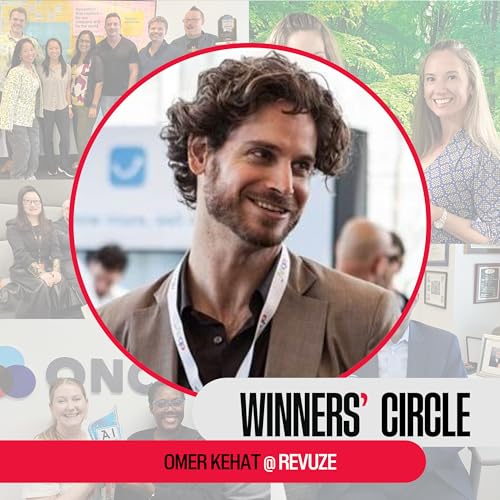
  • Listening to the Customer in the Age of AI with Omer Kehat of Revuze
    Jan 27 2026

    In this Winners Circle episode, host Russ Fordyce sits down with Omer Kehat, VP of Product at Revuze, to explore how AI is transforming voice of the customer from static dashboards into an always on decision engine. Omer shares the journey of evolving a decade old SaaS platform into an AI powered system that helps brands understand not just what is happening in their business, but why it is happening and what to do next.

    He explains how Revuze ingests product reviews, social conversations, support tickets, and other signals to uncover patterns at a granular SKU level so brand and product teams can see the real drivers behind sales spikes, slumps, and reputation shifts. Omer walks through concrete examples, from uncovering a hidden product defect by detecting complaints about a strange smell, to helping teams prioritize fixes, messaging changes, and roadmap decisions based on what customers actually say rather than internal guesses.

    The conversation digs into what makes specialized, category aware AI different from generic LLMs. Omer breaks down Revuze’s category context models that understand nuance like what “good battery life” means for a phone versus a drone, and why that matters when millions of dollars in marketing and product investment ride on the insights. He and Russ also tackle the rise of generative engine optimization, and how brands need to think about making their products legible not only to humans, but to the AI systems customers now ask for purchase advice.

    Omer offers a candid look at the internal product journey as well. He shares the tradeoffs of moving from analyst centric dashboards to natural language interfaces everyone in the company can use, the challenge of making AI outputs visual and engaging rather than walls of text, and the constant question of proving value beyond “I could just ask a public chatbot.” He also talks about pricing and access, and why Revuze chose unlimited seats and a more accessible model to democratize voice of the customer across organizations, not keep it locked with a few analysts or agencies.

    For leaders wrestling with how to bring AI into existing products, Omer outlines a mindset of embracing speed, experimentation, and fast course correction rather than waiting for perfect plans. He and Russ connect this to a bigger shift away from survey only listening and toward a world where reputation, loyalty, and growth depend on continuously mining the real conversations customers are already having across the web.

    If you care about brand reputation, product strategy, or the future of customer insights in an AI first world, this episode offers a practical, story rich look at what it takes to build meaningful, trustworthy AI on top of messy human feedback.

    Show More Show Less
    28 mins
  • Powering AI at the Edge: Samantha Clarke on VDURA and Data at Scale
    Jan 20 2026

    In this Winners Circle episode, host Russ Fordyce sits down with Samantha Clarke, Head of Partnerships at VDURA and 2025 Herizon Award winner, to talk about what it really takes to feed the GPU hungry world of AI and HPC.

    Samantha shares how her journey from hands on engineer in New Zealand, designing and launching electronic ovens, to global partnerships leader in high performance data has shaped the way she solves problems and builds ecosystems. She explains why she sees sales and partnerships as engineering with people, and how that mindset helps her co create solutions with customers, integrators, and cloud providers.

    The conversation dives into:

    • How HPC and AI now converge to accelerate breakthroughs in drug discovery, weather analysis, autonomous systems, and even electric air transport
    • Why VDURA focuses on moving data as fast as possible to GPUs and what “feed the beast” means in real workloads
    • The shift from big consulting led transformations to nimble technology partnerships that can deliver near cloud experiences on prem and at the edge
    • How petabyte to exabyte scale organizations can think about cloud, edge, and on prem storage as one continuum rather than either or choices

    Samantha breaks down why proximity to data and compute matters so much for AI performance, what it means to make on prem feel like cloud, and how VDURA designs for multi site architectures, replication, and ease of use so customers can get from purchase to productivity fast. She also talks about working with partners like server, networking, and GPU vendors to deliver validated solutions that can be deployed quickly instead of stitching everything together from scratch.

    On the go to market side, Samantha walks through the transformation she has led from transactional selling to solution led, partner centric growth. She shares concrete lessons on:

    • Picking a small number of strategic channel and integration partners and investing deeply in them
    • Enabling partners with training, marketing, and tools so they can independently position and deliver the solution
    • Overcoming internal resistance from field sellers who are used to owning every deal and showing them how strong partners actually expand territories and revenue

    Looking ahead, Samantha offers a pragmatic view of how enterprises should approach AI adoption. She recommends using cloud and AI focused neoclouds to experiment quickly, while always architecting with an exit plan so data, workloads, and economics can shift to on prem or hybrid models when scale, cost, or performance demand it. The key is to think about step one, but design for steps three and four from the start.

    The episode closes on a powerful note about leadership and representation. As a Herizon Award winner, Samantha talks about why she actively champions women in industry, the importance of mentors and sponsors, and her simple challenge to everyone listening: find at least one woman who could use encouragement, mentoring, or validation and invest an hour a month in her growth.

    If you care about AI infrastructure, edge architectures, partner ecosystems, or building a more inclusive tech industry, this conversation delivers a rare blend of deep technical perspective and human centered leadership.

    Subscribe to Winners Circle for more conversations with leaders who are transforming business, technology, and the future of work.

    Show More Show Less
    26 mins
  • Franck Leveiller on Alcon's Unity VCS & the Future of Eye Care Innovation
    Jan 15 2026

    Join host Russ Fordyce as he sits down with Franck Leveiller, Chief Scientific Officer and Global Head of R&D at Alcon, the 2026 BIG Innovation Awards Overall Winner.

    Discover how Alcon's Unity VCS console is revolutionizing operating room efficiency by combining two separate surgical systems into one modular platform with over 12 first-ever innovations. Franck shares insights on co-creating with 2,500 surgeons worldwide, leading a 2,000-person R&D organization, and addressing the global eye care capacity crisis.

    In this conversation, you'll learn:

    • How Alcon developed the Unity VCS through extensive surgeon collaboration
    • The eye care crisis: demand for cataract procedures will triple by 2050
    • Why patient-centered innovation requires discipline, talent, and heart
    • Alcon's approach to balancing internal innovation with strategic partnerships
    • What it takes to maintain scientific rigor while scaling breakthrough products

    Whether you're in product development, healthcare innovation, or leadership, Franck's approach to human-centered R&D offers valuable lessons on creating meaningful impact.

    Subscribe to Winner's Circle for conversations with business leaders driving real innovation.

    SHOW NOTES

    Guest: Franck Leveiller, Chief Scientific Officer & Global Head of R&D, Alcon

    About Alcon:

    • $10 billion revenue company
    • Global leader in eye care
    • Serves 140+ countries
    • 2026 BIG Innovation Awards Overall Winner

    Key Topics Discussed:

    • Unity VCS Console Innovation [2:15]
    • The Global Eye Care Capacity Crisis [6:30]
    • Co-Creation Model with 2,500+ Surgeons [9:13]
    • Leading 2,000-Person R&D Organization [22:03]
    • Balancing Internal & External Innovation [24:29]
    • Patient-Centered Product Development Philosophy

    Featured Innovation: Alcon Unity VCS

    • First console combining front-of-eye and back-of-eye procedures
    • 12+ first-ever innovations
    • Improved workflow efficiency for surgeons and OR nurses
    • Physiological intraocular pressure reduces patient pain
    • Modular design for rapid maintenance

    Key Statistics Mentioned:

    • 1.6 billion patients suffer from dry eye
    • 1.8 billion people affected by presbyopia
    • Current demand: 30 million cataract procedures annually
    • By 2050: 100 million procedures needed (projected)
    • U.S. surgeon workforce declining 12% by 2035
    • 90% of people need cataract surgery after age 60


    https://www.bintelligence.com/news

    TAGS/KEYWORDS

    Innovation, Healthcare, Medical Devices, R&D Leadership, Product Development, Eye Care, Alcon, Business Awards, BIG Innovation Awards

    EPISODE CHAPTERS/TIMESTAMPS

    0:00 - Introduction & Welcome
    0:11 - Meet Franck Leveiller, Alcon's Chief Scientific Officer 2:15 - What is the Unity VCS Console?
    6:30 - The Eye Care Capacity Crisis
    9:13 - Co-Creating with 2,500 Surgeons Worldwide
    15:39 - Managing Portfolio of Innovation Projects
    22:03 - Leading a 2,000-Person R&D Organization
    24:29 - External Innovation & Startup Partnerships
    26:35 - The Importance of Recognition & People
    27:33 - Closing Thoughts

    Show More Show Less
    24 mins