• Why Your ADHD Got Worse After Childhood Stress
    May 7 2026

    ADHD and childhood trauma can create a cycle that a lot of people live through, but very few people talk about clearly.

    This video explores how ADHD can be heritable, passed down through generations not just genetically, but also through family stress and emotional regulation challenges. We discuss key findings on ADHD in children and parents, highlighting repeating patterns and coping mechanisms within families. Understanding these dynamics is crucial for effective stress management and parenting strategies.

    This isn’t about blaming parents, teachers, or anyone else. It’s about understanding the cycle so we can finally break it.

    ADHD is not caused by bad parenting. Trauma is not a character flaw. And struggling as a kid does not mean you were broken. It may mean your nervous system was overwhelmed, your needs were misunderstood, and your brain was trying to survive the best way it knew how.

    In this video, we’ll talk about:

    How ADHD and trauma symptoms can overlap

    Why childhood criticism can hit ADHD kids so hard

    How shame and masking can follow people into adulthood

    Why emotional dysregulation is often misunderstood

    How understanding the cycle can help us heal, grow, and respond differently

    This is a personal and educational discussion, not medical advice. If you are struggling with ADHD, trauma, anxiety, depression, or emotional distress, please consider reaching out to a licensed mental health professional.

    Let’s look at it together.

    #ADHD #ChildhoodTrauma #ADHDAwareness #TraumaHealing #MentalHealthAwareness #Neurodivergent #EmotionalDysregulation #RejectionSensitivity #ADHDInAdults #HealingJourney

    Show More Show Less
    9 mins
  • New 2026 ADHD Brain Study Found 3 Biotypes… It’s Not What You Think
    Apr 30 2026

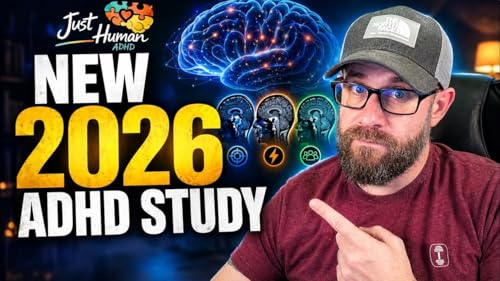
    A new 2026 JAMA Psychiatry brain imaging study found that ADHD may not be one single brain pattern. Researchers identified three ADHD biotypes linked to different brain-network patterns, including emotional dysregulation, hyperactive/impulsive symptoms, and inattentive symptoms.

    In this video, I break down what the study actually found, why this does not mean ADHD now has three official new diagnoses, and why it may help explain something many of us already know: one-size-fits-all ADHD advice often fails.

    We’ll talk about:

    The 3 ADHD biotypes identified in the study

    Why emotional dysregulation may be a major part of ADHD for some people

    How hyperactive/impulsive ADHD may involve the brain’s “brake system”

    Why inattentive ADHD can be quiet, internal, and easy to miss

    Why planners, routines, and productivity hacks don’t work the same for everyone

    What this research could mean for future ADHD treatment personalization

    This is not medical advice, and you cannot diagnose your ADHD subtype from a YouTube video. But this research may help us better understand why ADHD looks so different from person to person — and why the right support has to match the actual struggle.

    If you’ve ever felt like ADHD advice didn’t fit your brain, this one is worth watching.

    Study discussed:

    JAMA Psychiatry — Mapping ADHD Heterogeneity and Biotypes by Topological Deviations in Morphometric Similarity Networks

    #ADHD #ADHDResearch #AdultADHD #Neurodivergent #ADHDBrain #ADHDAwareness #MentalHealth #ExecutiveFunction #EmotionalDysregulation #InattentiveADHD

    Show More Show Less
    13 mins
  • Why the DSM-5 Definition of ADHD Never Defined Me
    Apr 23 2026

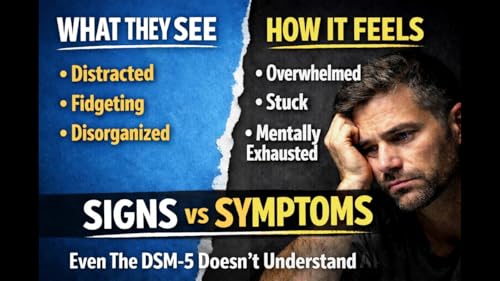
    Most people only see ADHD from the outside. The DSM-5 is the same way. It defines ADHD by “symptoms” that are actually medical signs, things other people can observe, instead of the internal symptoms we actually live with.

    In this video, I break down the difference between signs and symptoms, show how the DSM-5 quietly rewired ADHD into a list of “bad behaviors,” and explain why that creates so much confusion, shame, and the “everyone’s a little ADHD” takes.

    If you’ve ever felt like the official definition of ADHD unfairly defined you, or like people around you just do not get it, this one’s for you.

    Show More Show Less
    7 mins
  • ADHD Is Not An Excuse, It’s My Shield
    Apr 16 2026

    ADHD excuse or explanation? Let’s talk about how ADHD becomes a shield to avoid vulnerability.

    People tell us we “use ADHD as an excuse.”

    In this video, I’m admitting something hard: they’re not totally wrong… but not in the way they think.

    I walk through how a lot of us use ADHD as a shield, not to dodge responsibility, but to dodge something way scarier: being fully seen. If you grew up feeling “too much,” “not enough,” or only loved when you were useful, it can feel safer to hide behind symptoms, jokes, or productivity than to risk real closeness.

    We’ll talk about:

    – The difference between context and excuse with ADHD

    – How masking turns into a full-time performance

    – Why letting people see the real you feels “fatal”

    – The quiet belief underneath it all: “I’m not worthy of being loved as I am”

    I’m Bill, and this is Just Human ADHD. I make honest videos about what ADHD actually feels like so you don’t have to feel like the only one.

    Scattered Minds: The Origins and Healing of Attention Deficit Disorder, by Gabor Maté: https://a.co/d/07kzig5o

    Show More Show Less
    7 mins
  • ADHD Hack: Stop the Shame Spiral in Seconds
    Apr 9 2026

    ADHD can turn one small mistake into a full-on shame spiral.

    - You’re late once…

    - You forget something…

    - You misread a text…

    And your brain instantly goes:

    - “I’m a failure.”

    - “I’m the worst.”

    - “I always do this.”

    In this video, I’ll show you a simple ADHD mindset shift that stops that spiral fast:

    Think like a GPS.

    When you miss a turn, your GPS doesn’t shame you.

    It doesn’t bring up every mistake you’ve ever made.

    It just says: “Rerouting.”

    That’s the tool.

    What you’ll learn:

    - Why ADHD turns mistakes into identity attacks

    - The 3-step “Rerouting” method (Pause → Understand → Adjust)

    - How to stop the spiral in real time

    - Real examples from relationships, work, and everyday ADHD struggles

    Try this today:

    Next time ADHD trips you up, don’t say “I suck.”

    Say:

    “Okay… rerouting.”

    Then take one small next step.

    That’s it.

    Comment below:

    What’s your most common “shame spiral” trigger?

    - Being late

    - Forgetting things

    - Overthinking

    - Misreading people

    Subscribe for more:

    Real ADHD content. No shame. Just tools that actually help.

    Show More Show Less
    6 mins
  • If you think everyone has ADHD… Listen To This First
    Apr 3 2026

    If you think everyone has ADHD… watch this first.

    A lot of people say ADHD feels like distraction, procrastination, or losing focus — and yeah, those things are part of it.

    But the hardest parts?

    The parts that actually affect people every day?

    You don’t see those.

    In this video, we break down:

    The hidden struggles most people miss

    Why ADHD isn’t just “being distracted”

    What it actually feels like behind the scenes

    If you’ve ever thought “everyone has ADHD these days”…

    this might change how you see it.

    👍 Like & subscribe for real conversations about ADHD

    💬 Comment — what’s something people don’t understand about it?

    Show More Show Less
    7 mins
  • Comparison is the thief of joy, and for ADHD brains, that comparison can feel brutal.
    Apr 1 2026

    In this video, we talk honestly about how ADHD can make you feel like you’re constantly falling behind… even when you’re trying your hardest. Many people with ADHD grow up carrying shame from inconsistency, overwhelm, and feeling like they should be doing better, and social media only amplifies that pressure by showing curated “perfect” lives you can never measure up to.

    We explore why comparison hits ADHD brains so hard, how shame gets wired into the experience, and how to step out of the cycle so you can start measuring success in ways that actually make sense for your brain.

    This isn’t about productivity hacks or pretending everything is easy. It’s about understanding your brain, letting go of unrealistic standards, and reclaiming your joy.

    If you’ve ever felt like a failure because you don’t match someone else’s timeline… this video is for you.

    Topics covered:

    ✔ ADHD and shame

    ✔ The comparison trap

    ✔ Social media distortion

    ✔ Emotional overwhelm

    ✔ Self-compassion and reframing

    ✔ Measuring real progress

    You’re not broken. You’re human with an ADHD brain navigating a world that rarely explains how that brain works.

    Subscribe for more honest ADHD conversations focused on support, understanding, and real-life tools.

    Show More Show Less
    24 mins
  • 10 Things I’d Tell My Childhood Self After Being Diagnosed with ADHD Late in Life.
    Apr 1 2026

    Being diagnosed with ADHD later in life can feel like someone finally handed you the missing piece to your story.

    In this video, I share 10 things I would tell my childhood self if I could go back in time, things I wish someone had explained when I was growing up feeling behind, confused, or like I just couldn’t keep up. From understanding why focus is inconsistent, to learning that struggling doesn’t mean you’re incapable, this conversation is about replacing shame with clarity and compassion.

    This isn’t about fixing who you are — it’s about understanding how your brain works and realizing that ADHD is part of being human, not a personal flaw.

    Whether you were diagnosed recently, years ago, or are still figuring things out, this video is a reminder:

    👉 You’re not broken

    👉 You’re not lazy

    👉 You’re not alone

    👉 And your brain deserves understanding, not judgment

    If any of this resonates with you, welcome — this is a space built around support, inclusion, and honest conversations about ADHD.

    Show More Show Less
    18 mins