• E87: Nick Such - The Human Side of AI in Small Businesses
    Nov 10 2026
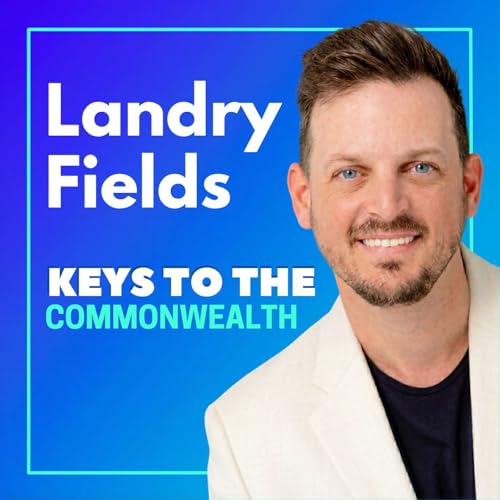
    Send us Fan MailSUMMARY: In this episode, Landry Fields speaks with Nick Such of APAX Software about how AI is lowering the cost of building custom software and what small businesses still need to manage it securely. They also explore changing career paths, human-centered work, entrepreneurship, and how Kentucky's Entrepreneur Hall of Fame grew from a desire to recognize the state's business builders.DETAILS: Host Landry Fields sits down with his longtime friend Nick Such, whom he’s known since their freshman year at the University of Kentucky. Nick traces his path from Omaha, Nebraska, to UK’s mechanical engineering program and the student-run solar car team. That team taught him how to translate between technology and business. Graduating into the 2009 recession, Nick co-founded Awesome Inc. to support local entrepreneurs, and today he helps lead APAX Software, a Lexington custom software firm that predates Awesome Inc. and once nearly sold to Facebook. Along the way they look back on the Facebook and iPhone era, building websites with Microsoft Publisher, and APAX building Papa John’s very first mobile app.From there they turn to what AI means for small businesses. Landry compares this moment for software to the LimeWire and Napster era of music. Nick explains that the “software” part of software-as-a-service has gotten much easier to build, while the “as a service” part (security, upkeep, keeping it running) is still hard. They talk about how many separate software tools a typical business now uses, and about people whose jobs amount to copying data between systems. Nick points to IKEA, which retrained its customer service staff as design consultants instead of replacing them. Both agree that AI should take over the grunt work so people have more time to spend with each other. The episode closes on entrepreneurship as a core career skill for the next generation, along with the “portfolio career” and the Kentucky Entrepreneur Hall of Fame,CONNECT WITH NICK:APAX Software: https://www.apaxsoftware.com/ Awesome Inc: https://awesomeinc.org/ KY Entrepreneur Hall of Fame: https://entrepreneurhof.com/ KEYWORDS:Small business, technology, custom software, AI and business, software-as-a-service (saas), entrepreneurship, Kentucky Entrepreneur Hall of Fame, APAX SoftwareKEY TOPICS:Nick Such traces his path from mechanical engineering studies and the University of Kentucky solar car team to co-founding Awesome Inc. and working at APAX Software.APAX builds custom software for organizations that cannot find a suitable off-the-shelf product, with work spanning public-sector clients, the University of Kentucky, and other organizations.AI is making the software-building process easier and faster, but delivering software as a maintained, secure online service remains difficult.Businesses often outgrow spreadsheets when complexity, integrations, or live data become essential; custom software may be a fit when existing products no longer serve the workflow.AI and automation can reduce repetitive data-copying and routine customer-service tasks, while opening a path to more advisory, creative, and human-centered work.Nick describes entrepreneurship as an increasingly important career skill and points to portfolio careers that combine different abilities and areas of expertise.The Kentucky Entrepreneur Hall of Fame began in 2010 after the Awesome Inc. team realized there was no existing list celebrating the state's entrepreneurs; early leaders including John Y. Brown helped build its community.TIMESTAMPS:(00:00) Setting up a conversation on entrepreneurship and local policy(01:09) College friendship and the value of a nonlinear career(04:07) Engineering, small-business roots, and the solar car team(12:05) How the Great Recession led to Awesome Inc. and Apex(15:03) Apex’s custom software work and the shift to cloud services(18:40) AI disruption and the changing economics of software(21:42) Why building software is easier than maintaining it securely(23:42) When spreadsheets break and custom tools make sense(24:44) AI as a work partner, not a replacement for human judgment(28:29) Fewer disconnected apps and more valuable customer-service roles(31:53) Human connection, career skills, and portfolio careers(34:26) The Kentucky Entrepreneur Hall of Fame and its founding story(36:01) Adapting to change and looking ahead to the Silver Tsunami Support the show
    Show More Show Less
    38 mins
  • E86: Mike Sebastian - Building the Hideaways in the Red River Gorge
    Oct 20 2026

    Send us Fan Mail

    SUMMARY:

    In this episode, finance and operations director of The Hideaways, Mike Sebastian, shares his journey from digital marketing to luxury Airbnb investments, focusing on the unique opportunities in the Gorge area of Kentucky. Discover insights on market research, building relationships, and creating high-end experiences that attract discerning travelers.


    DETAILS:

    Mike Sebastian joins host Landry Fields on the “Keys to the Commonwealth” podcast to talk about building luxury short-term rentals in Kentucky’s Red River Gorge.

    Mike sold his digital marketing agency in 2023 after losing his passion for the work. His first real estate deal was a house he bought for his mom, with her employer paying the rent. After some rough early short-term rentals in Spokane, he joined a real estate mastermind, met his partner Jordan, and used market research tools to pick the Gorge out of the entire country.

    Today The Hideaways owns or manages 29 properties in the Gorge, Hocking Hills, and Blue Ridge. Mike’s core strategy is to be in the top 10% of the market: when the economy tightens, luxury properties can lower prices and still win bookings while dated “grandma’s cabins” fall out. His marketing background helps in an industry that’s often behind on technology, but he says the product has to come first. Build a place people want to stay, capture it well, and the marketing gets easy.

    He shares the story behind their first ground-up project, a $2.1 million, six-house development that took 77 lender conversations to finance. He also describes a cliffside cabin reached by 102 steps that’s on track to bring in nearly $300,000 this year, and a simple Georgia build that grosses over $260,000 thanks to its view.

    Mike and Landry close by talking about the Gorge’s future: infrastructure problems, the national park debate, and why the market hasn’t peaked but needs more restaurants and things to do to keep up with the new cabins.


    CONNECT WITH MIKE:

    Search “Discover The Hideaways” on any social platform or visit Thehideaways.co.


    KEYWORDS:

    Airbnb, luxury rentals, Kentucky, market research, real estate, short-term rentals, tourism, investment strategies, hospitality, gorge area


    KEY TOPICS:

    • Mike Sebastian's background and journey into real estate
    • Market research techniques for short-term rentals
    • Building relationships with local builders and communities
    • Designing luxury and experiential Airbnb properties
    • Adapting to market shifts and economic challenges
    • Creating visually appealing and Instagram-worthy spaces
    • Managing properties efficiently with local partners
    • Future opportunities in Kentucky tourism and real estate


    TIMESTAMPS:

    (00:00) Welcome, introducing Mike Sebastian and luxury Airbnbs in the Red River Gorge

    (01:15) Mike’s background: From Virginia P to San Diego to Seattle to Kentucky

    (02:27) Running and selling his digital marketing agency

    (04:08) First real estate deal: Buying a house and moving his mom in as a tenant

    (05:17) Moving into short-term rentals in Spokane

    (06:52) Long-term vs. short-term rentals: What’s the difference

    (07:28) Finding the Gorge: The mastermind group and meeting partner Jordan

    (09:47) Using AirDNA to pick the best market in the U.S.

    (11:40) Core values: Hiring locally and creating opportunity

    (13:25) The Hideaways brand: Owning vs. managing properties

    (15:27) Picking the right videographer and how great content boosts bookings

    (17:50) After the 2020 Airbnb boom: Why the experience matters

    (18:44) Marketing psychology: How to grab attention

    (21:34) Managing 30 properties and aiming for the top 10% of the market

    (23:44) How a Zillow purchase turned into a builder partnership

    (26:00) A $2.1M development, and calling 77 lenders before landing a loan

    (27:00) The cliffside cabin on track for $300K a year

    (27:39) Insuring unusual properties

    (28:28) A-frames, mirror houses, and domes: What really draws guests in

    (30:48) The simple Georgia build that grosses $260K+ a year

    (31:35) 23 new lots in Campton

    (34:40) Infrastructure problems and the national park debate

    (36:05) How the Gorge market changed from 2023 to 2026, and whether it has peaked

    (39:10) Where to find Mike and The Hideaways, and wrap-up

    Support the show

    Show More Show Less
    42 mins
  • E85: Quint Tatro - Investing & Teaching Money to the Next Generation
    Oct 6 2026

    Send us Fan Mail

    Quint Tatro on investing, financial discipline, and teaching money to the next generation

    Landry Fields sits down with Quint Tatro, founder of Jewel Financial and host of DIY Money, for a wide-ranging conversation about markets, family background, and why investing is really about owning pieces of great businesses. Quint traces his path from a multigenerational Wall Street family to launching his own fee-only advisory firm in Kentucky, then reflects on how markets, technology, and investor expectations have changed.They discuss why patience and discipline matter more than chasing hot stocks, how broad market investing can help build wealth over time, and why financial education should start early. Quint also shares his work with Kentucky Young Investors and his goal of bringing investing education to public high schools across the state.

    Key topics

    • Quint’s family history in finance, including his great-grandfather’s experience in the 1929 crash and his decision to rebuild.
    • How owning McDonald’s stock at age 12 helped Quint understand that stocks represent ownership in real businesses.
    • The experiences that brought Quint from upstate New York to the University of Kentucky.
    • An early lesson in risk after the 1987 market crash.
    • Quint’s path from commission-based brokerage work to founding a fee-only advisory firm in 2001.
    • Why he believes personal financial advisors will continue to matter, even as technology and AI develop.
    • How index investing can give people exposure to businesses they might otherwise overlook.
    • Quint’s Palantir investment story and how he thought about its potential, risk, and reward.
    • Why lasting wealth may be less visible than it looks—and how compounding can make a difference over time.
    • The difference between investing in businesses and treating the market like a game of quick trades.
    • Quint’s financial curriculum for high schools and his mission with Kentucky Young Investors.

    Timestamps

    00:00 – Introducing Quint Tatro and DIY Money
    01:48 – A family legacy in finance and the 1929 crash
    04:31 – Quint’s first stock and an early lesson in ownership
    05:31 – Why he chose the University of Kentucky
    07:59 – The 1987 crash and Quint’s first personal lesson in risk
    09:26 – Working at Finger Lakes racetrack
    11:01 – Learning the importance of having an edge
    12:30 – From commission broker to fee-only advisor
    15:34 – How the financial advice business is changing
    16:43 – Selling his interest in Jewel Financial and stepping away
    18:43 – Why human advisors will continue to have a role
    21:37 – ETFs, new asset classes, and long-term investing
    23:06 – The strengths of the U.S. capital markets
    25:39 – Bringing financial education to Kentucky high schools
    27:06 – The Palantir investment story
    30:02 – Thinking through risk and potential reward
    32:13 – Compounding, investing, and building wealth
    33:28 – The “millionaire next door” and appearances
    35:44 – What younger people should know about money
    37:19 – Easier access to investing—and the risk of treating it like gambling
    38:18 – Why investing is about businesses, not ticks on a screen
    41:56 – Discipline, coaching, and learning the right process
    43:15 – Staying focused through difficult markets
    46:06 – Asking questions and learning from others
    48:19 – Kentucky Young Investors and Quint’s vision for the program

    Support the show

    Show More Show Less
    51 mins
  • E84: Blazer Smith - Business Owners Generosity, Taxes, and Exit Planning
    Sep 22 2026
    Send us Fan MailGenerosity, Taxes, and Exit Planning for Business OwnersThis episode of Keys to the Commonwealth Podcast features Landry Fields in conversation with Blazer Smith of National Christian Foundation, breaking down how charitable giving can do far more than move money. They talk through donor advised funds, appreciated assets, business exits, and how generosity can strengthen culture, family conversations, and long-term planning.If you own a business, are thinking about an exit, or want to give more strategically, this one is a practical look at how tax efficiency and generosity can work together.Key topicsBlazer Smith shares his background as a seventh-generation Kentuckian, former Capitol Hill staffer, and founder of a safety products company before moving into his current work with National Christian Foundation.NCF helps people and families grow in generosity through charitable solutions, especially around estates, inheritances, business exits, and major gifts.The conversation centers on the idea that many business owners want to be generous but struggle to balance taxes, cash flow, and timing.Blazer explains donor-advised funds, which he describes as a charitable checking account that can simplify giving, provide one receipt, and support anonymous gifts.A major theme is using appreciated assets, not just cash, to give more efficiently and reduce capital-gains exposure.The hosts discuss how charitable planning can also support employees, culture, and community impact inside a business.Blazer gives an example of a multifamily owner who used a fund creatively to help tenants in crisis while also improving operations and finances.Exit planning comes up repeatedly as one of the most important financial moments in a business owner’s life, especially when done before a binding agreement is in place.The episode emphasizes that giving decisions are deeply tied to values, family, marriage, and legacy—not just taxes.Landry and Blazer both highlight the importance of having the conversation early, because most people do not know what they do not know.Timestamps00:00 — Introduction, sponsor mentions, and welcoming Blazer Smith 00:27 — Blazer’s Kentucky roots and path from Capitol Hill to entrepreneurship 01:28 — Why tax season and generosity became a personal tension 03:31 — What National Christian Foundation does for givers and charities 04:48 — Serving families, business owners, and people clarifying their values 06:54 — Business owners, families, and the role of clarity in generosity 08:36 — Why values matter more as wealth and freedom increase 09:57 — How charitable solutions work beyond simply writing a check 10:20 — Donor-advised funds as a charitable checking account 10:54 — Using appreciated assets to increase giving and improve liquidity 11:30 — Real-estate example: solving tenant hardship while helping operations 13:53 — How donor-advised funds differ from setting up a nonprofit 14:18 — Advisory control versus direct ownership of the fund 15:25 — Saving time on taxes while streamlining multiple gifts 16:30 — Clarifying what a foundation is and what NCF actually provides 17:33 — Why NCF is the easy button for charitable giving 19:21 — Building a giving strategy around a business, team, and culture 20:00 — Stories of extreme generosity and its effect on family and employees 21:09 — Relational complexity around large gifts and inherited wealth 22:29 — Giving as part of culture, communication, and leadership 23:40 — The balance between simply giving cash and teaching values 24:26 — Why exit planning is one of the biggest financial moments for owners 25:50 — Why planning before a sale can save time, taxes, and stress 26:39 — Thinking long term about legacy, vision, and life after the exit 27:48 — The scale of wealth transfer and why timing matters now 28:18 — Why early conversations create better outcomes for exits 29:19 — Generosity, like insurance, is not one size fits all 30:00 — Why business owners should talk through their options before they act 31:25 — The danger of waiting until a sale or major change is already underway 32:09 — Why people often discover unexpected benefits after they start planning 33:06 — Friends do not let friends give cash when appreciated assets may be better 34:04 — Closing thoughts and how to connect with Blazer SmithNotable quotesCopy“I think everyone I know loves generosity.”Copy“The easy button for people that want to give.”Copy“Friends don’t let friends give cash.”Action itemsIf you own a business, think about whether your giving should involve cash, appreciated assets, or a donor-advised fund.If you are considering an exit, start the conversation before a sale is locked in.Review whether your charitable giving is costing you unnecessary time at tax season.Talk with your spouse or family about what generosity and legacy should look like long ...
    Show More Show Less
    36 mins
  • E83: Steve Straub -The Power of Partnership, Rocket Fuel, and Building a Business That Can Scale
    Sep 1 2026

    Send us Fan Mail

    www.theairockstars.com
    www.novainsurancegroup.com

    The Power of Partnership, Rocket Fuel, and Building a Business That Can Scale

    Landry Fields returns with a new season of the Keys to the Commonwealth Podcast to explain what changed over the past year and why bringing in longtime friend and business partner Steven Straub reshaped the business. This conversation is about moving from solo grind to shared ownership, using the EOS idea of visionary plus integrator, and building a healthier, faster-growing company in an AI-driven world.We discuss how the partnership came together, why the book Rocket Fuel helped define their roles, and what changed in the agency after the acquisition and merger. Landry also shares what he sees as the future of entrepreneurship, team culture, and the skills businesses will need most over the next decade.

    Key topics

    • In this episode, Landry explains why the podcast returned after a long hiatus and how a major change in his insurance business set up the new season.
    • Steven Straub joins as the guest and co-owner, bringing an operator’s perspective to the conversation and helping frame the partnership story.
    • They trace their relationship back to shared work time, friendship, and a trip to the inaugural Las Vegas Formula 1 race that strengthened their connection.
    • Landry shares how Rocket Fuel and the EOS model helped him recognize he is the visionary type, while Steve fits the integrator role.
    • The episode breaks down why they believe partnerships work best when roles are clearly defined and the friendship is protected with upfront expectations.
    • The conversation makes a strong case that solopreneurship is getting harder because one person can no longer effectively carry every hat, especially with AI and automation accelerating change.
    • They discuss workplace culture, hiring, and the goal of building an environment where employees can bring ideas, use technology well, and grow with the company.
    • Landry and Steve close by looking ahead to their growth goals, including expansion, ownership opportunities for agents, and a long-term legacy they can point their kids to one day.

    Timestamps

    (00:00) Storm update and the podcast returns after a long hiatus
    (00:24) Why the new season starts with Steven Straub
    (01:50) How Landry ended up in Kentucky through insurance
    (02:47) The Formula 1 trip that helped spark the partnership
    (04:34) From friendship to “what if” business conversations
    (05:02) Why solo business ownership can become exhausting
    (05:32) Rocket Fuel and the visionary plus integrator model
    (07:21) Why they believe partnerships need a “divorce agreement” upfront
    (08:20) Shared burden, better ideas, and less isolation as partners
    (09:15) The June 13 lunch that restarted the deal conversation
    (10:14) How the agency buy-in moved from LOI to close so fast
    (11:43) Why the speed of the merger still feels unreal
    (12:13) The Captain Planet joke: “our powers combined”
    (13:10) Why their opposite skill sets work so well together
    (14:35) AI as an accelerator for partnership-led businesses
    (15:33) Why one person can’t wear every hat anymore
    (16:51) Building a workplace people actually want to join
    (18:19) Hiring success, ownership paths, and growth mode
    (19:15) Revenue growth, team expansion, and agency scale
    (20:40) Competing against themselves, not other agencies
    (21:37) Celebrating milestones instead of only chasing the summit
    (22:38) What the next layer of growth could unlock
    (23:34) High-fives, new ideas, and the joy of seeing plans work
    (24:33) Why flexibility and adaptability are becoming essential skills
    (25:25) Refusing to hide behind “we’ve always done it this way”
    (26:26) Steve’s upcoming podcast, Easy Millionaire
    (27:21) The meaning behind Easy Millionaire and harder choices that pay off
    (28:19) Why ownership feels exciting, not scary
    (29:16) Creating a legacy and showing their kids what bold moves look like
    (30:40) Reiterating Rocket Fuel and the importance of visionary plus integrator alignment

    Support the show

    Show More Show Less
    33 mins
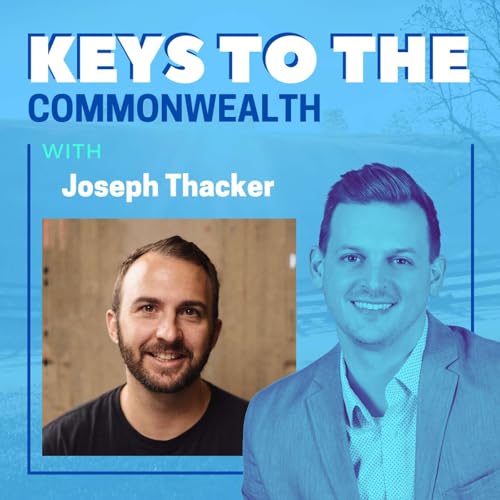
  • E82 - Joseph Thacker, Leveraging AI's Impact in a Changing World
    Sep 8 2025

    Send us Fan Mail

    As a security researcher who specializes in application security and AI, Joseph Thacker shares his knowledge on the growing influence of AI in various aspects of our culture. He's the principal AI Engineer at AppOmni and has helped multiple Fortune 500 companies find vulnerablities that could have cost them millions. He is incredibly knowledgable and offers great insight into this growing industry.

    _______________________________

    Find Joseph Thacker on
    LinkedIn:
    https://www.linkedin.com/in/josephthacker?original_referer=https%3A%2F%2Fwww.google.com%2F

    His New website and course for parents:

    https://aisafetyforparents.com/

    X:
    @rez0__

    Instagram:
    @thackandforth

    Website:
    https://josephthacker.com/

    _______________________________

    Show hosted by Landry Fields

    https://www.x.com/landryfieldz

    'https://www.linkedin.com/in/landryfields/

    https://www.instagram.com/landryfields_

    https://www.youtube.com/@landryfields_

    www.novainsurancegroup.com

    859-687-2004

    Support the show

    Show More Show Less
    1 hr and 4 mins
  • E81 - Garrett Fahrbach, Awesome Inc. A Launchpad for Bigger Things
    Aug 18 2025

    Send us Fan Mail

    As Fellowship Director of Awesome Inc, Garrett is prompting and encouraging the future entrepreneurs of Kentucky. His job accelerates Kentucky's high tech start ups through the mentor-driven program.

    _______________________________

    Find Garrett on

    LinkedIn:

    https://www.linkedin.com/in/garrett-fahrbach

    Facebook:

    https://www.facebook.com/garrett.fahrbach/

    Instagram:

    @awesomeinclex

    https://www.instagram.com/awesomeinclex/?hl=en

    Awesome Inc Website:

    https://awesomeinc.org/

    _______________________________

    Show hosted by Landry Fields

    https://www.x.com/landryfieldz

    'https://www.linkedin.com/in/landryfields/

    https://www.instagram.com/landryfields_

    https://www.youtube.com/@landryfields_

    www.novainsurancegroup.com

    859-687-2004


    Support the show

    Show More Show Less
    47 mins
  • E80 - Jonathan Kellogg, Understanding Bitcoin's Impact and Future
    Aug 4 2025

    Send us Fan Mail

    Jonathan holds a B.S. in Civil Engineering and an M.B.A. from the University of Kentucky. Based in Lexington, KY, he practices engineering while dedicating his personal time to writing about Bitcoin’s philosophy, adoption, and protocol through his series, The Bitcoin Essays. His work reflects a deep commitment to the original Bitcoin protocol as defined by Satoshi Nakamoto.

    _______________________________

    Find Jonathan on:

    His blog:

    https://thatbitcoin.blog/about/

    _______________________________

    Show hosted by Landry Fields

    https://www.x.com/landryfieldz

    'https://www.linkedin.com/in/landryfields/

    https://www.instagram.com/landryfields_

    https://www.youtube.com/@landryfields_

    www.novainsurancegroup.com

    859-687-2004

    Support the show

    Show More Show Less
    1 hr and 3 mins