• Successful on Paper, Stuck in Life?
    Nov 18 2026

    What do you do when your career looks successful from the outside but no longer feels right? Executive coach and author Chad Betz joins Joe to talk about redefining success and finding a more fulfilling direction without walking away from the life and responsibilities you've built.

    Chad shares how a difficult moment in a parking garage prompted him to rethink his path. He explains how small experiments—like coaching, speaking, and writing—helped him discover what gave him a stronger sense of purpose. They also discuss why working harder can keep you moving in the wrong direction, how to make room for change while keeping your day job, and why it's never too late to learn, adapt, and pursue new goals.

    In this episode:

    • Why success can look right on paper but feel wrong
    • The "frustration energy cycle" and how to recognize it
    • How to explore a new direction without quitting your job
    • Why health, family, and purpose belong in your definition of success
    • Staying curious and adaptable as technology and work change
    • Building simple systems to manage your time, tasks, and ideas
    • How to learn from failure and keep moving forward

    Chad's message: You still have something to give. You're not too old, and it's not too late.

    Learn more about Chad and his book, An Authentic Success: You're Not Too Old and It's Not Too Late:

    • Find the book on Apple Books
    • Visit Chad's website
    Show More Show Less
    35 mins
  • What Cancer, Loss, and Golf Taught Michael Riso About Living
    Nov 15 2026

    When life changes in an instant, how do you find peace in the present? Author Michael Riso joins Joe to talk about his book, Finding Joy in Daily Living, and the experiences that shaped it: his cancer diagnosis, the loss of his wife Nancy, and the daily choices that help him live with more simplicity, gratitude, and connection.

    They also discuss friendship, golf, meditation, mentoring, and how adults can model compassion and presence for younger generations. Michael shares his personal perspective on cancer and treatment; this conversation reflects his experience and views.

    In this episode

    • How a cancer diagnosis changed Michael's relationship with time
    • The story behind the book's 72 themes for finding peace
    • What Michael learned from Nancy about listening and love
    • How golf can teach patience and humility
    • Staying present and simplifying everyday life
    • The value of lasting friendships and being a role model
    • Michael's reminder to focus on the choices we can make

    Timestamps

    • 01:06 — Living in the present after a cancer diagnosis
    • 05:32 — Mentoring through small acts of kindness
    • 07:12 — How the book's 72 themes took shape
    • 10:08 — Michael's perspective on cancer treatment
    • 13:57 — Nancy's influence and their life together
    • 16:56 — Truth, humility, and lessons from golf
    • 23:49 — What simplicity means in daily life
    • 28:17 — Friendship and meaningful connection
    • 34:50 — Meditation, compassion, and leading by example
    • 36:25 — The choices we can control
    • 37:42 — Where to find Michael and his resources
    • 39:02 — A Picasso quote that stays with him

    Learn more: findingjoydaily.com

    Show More Show Less
    31 mins
  • Always the Strong One? The Hidden Cost of Holding Everything Together | Anette DeMattio
    Oct 26 2026

    Everyone counts on you. But what happens when you're running on empty?

    In this episode of No Sitting on the Sideline Dad, I talk with Anette DeMattio, author of Too Strong for Your Own Good, about the pressure to keep going, take care of everyone else, and put your own needs last.

    Anette shares her experience as a six-time cancer survivor and how it shaped her understanding of strength. We talk about asking for help, making room for yourself, and what our kids learn from watching how we handle life's challenges.

    If you're the person who always says, "I've got it," this conversation gives you a reason to pause and ask how you're actually doing.

    In this episode:

    • How being "the strong one" can become an exhausting role.

    • Recognizing when you've pushed your own needs aside.

    • Why accepting help can feel uncomfortable.

    • What parents model when they keep pushing through.

    • Taking small steps toward caring for yourself.

    Connect with Anette

    Website: anettedemattio.com

    Take the Too Strong Quiz: toostrongquiz.com

    Book, Too Strong for Your Own Good: Find it on Amazon

    LinkedIn: Anette DeMattio

    If this conversation made you think of someone who's carrying too much, share the episode with them. Follow No Sitting on the Sideline Dad for more conversations about fatherhood, personal growth, and showing up for the people who matter, including yourself.

    Show More Show Less
    39 mins
  • Why Does Calm Feel Unsafe? Childhood Trauma and Survival Mode
    Oct 21 2026

    Everything is going well. So why are you waiting for something bad to happen?

    My sister, Carrie Long, joins me for a personal conversation about childhood trauma, codependency, and the habits we carry into our relationships and parenting.

    We grew up in the same family. We didn't experience it the same way.

    Carrie shares her perspective as a social worker and a mother. Together, we talk about learning to read the room, trying to keep everyone happy, and growing up feeling responsible for other people's problems.

    What happens when those habits follow you into adulthood? How do you recognize when helping someone is leaving you drained? And how do you show up for your kids while you're still working through your own past?

    In this episode, we discuss:

    • Why calm can feel unfamiliar after growing up around chaos.

    • Codependency and the pressure to rescue everyone.

    • How childhood experiences can shape parenting and relationships.

    • Setting boundaries without losing your compassion.

    • Forgiveness, gratitude, and finding someone you can talk to.

    If you've ever thought, "I know what I don't want to repeat with my kids, but I'm still figuring out what to do instead," this conversation may feel familiar.

    Connect with Carrie:

    Castleheart Counseling on Facebook

    Carrie Long on Headway

    More from No Sitting on the Sideline Dad:

    Podcast website and more episodes

    Follow on Apple Podcasts

    Follow the podcast on Instagram

    Know a parent who might connect with this conversation? Send them this episode.

    Content note: This episode includes discussion of childhood trauma, family addiction, mental health, and strong language.

    Show More Show Less
    28 mins
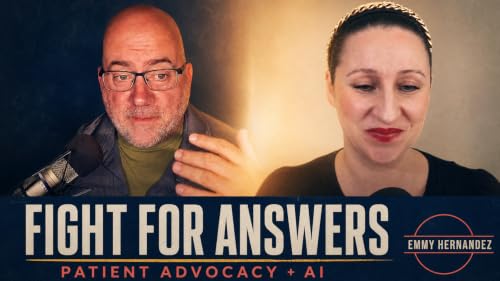
  • AI Plus Doctors: Becoming Your Own Patient Advocate with Emmy Hernandez
    Aug 22 2026

    What happens when several doctors, specialists, and test results still fail to reveal the full picture?

    In this episode, Emmy Hernandez shares the story of a serious health crisis that left her bedbound, in severe pain, and searching for answers. After struggling to get her medical history connected across different specialties, Emmy created a custom AI assistant called Dr. Clara to help organize her symptoms, test results, and questions for her care team.

    Emmy explains how she used AI as a research and organization tool while continuing to rely on medical professionals for diagnosis and treatment. We talk about patient advocacy, caregiving, privacy, medical misinformation, and the importance of using AI alongside doctors rather than instead of them.

    We also discuss how to learn AI without the jargon, how to ask AI to improve your own prompts, and why Emmy believes people can approach AI with cautious optimism instead of fear.

    Content note: This episode includes discussion of serious illness, severe pain, caregiving, suicidal thoughts, and assisted suicide.

    In this episode, you'll hear about:

    • Emmy's experience navigating a complex health crisis

    • The vital role her husband, Matt, played as her caregiver

    • How Dr. Clara helped organize medical information

    • Using AI to research symptoms and prepare questions for doctors

    • Protecting private information when using AI tools

    • Why AI should support medical care, not replace it

    • Becoming a more informed and active patient advocate

    • Learning basic AI skills without technical jargon

    • Asking AI to create stronger prompts

    • Moving from fear of AI toward cautious optimism

    Chapters

    00:00 — Introduction: AI plus doctors
    01:05 — When the medical system missed the pattern
    04:15 — The caregiver beside her
    08:25 — What Dr. Clara does
    09:52 — AI plus doctors
    16:41 — Becoming your own patient advocate
    20:54 — A cautiously optimistic view of AI
    21:28 — Learning AI without the jargon
    25:20 — A more hopeful way to look at AI
    29:18 — Where to learn more

    Important Note

    This episode shares Emmy's personal experience and is not medical advice. AI tools can make mistakes. Do not use AI to diagnose yourself, choose medication, or replace care from a licensed medical professional. Discuss medical questions and treatment decisions with your healthcare team.

    Connect with Emmy

    Learn more about Emmy's work, find free resources, and join the waitlist for the medical app she discusses at:

    https://startmyaijourney.com/

    Learn more about the System and Soul AI Institute through Emmy's website.

    IMPORTANT NOTE

    This episode shares Emmy's personal experience and is intended for education and conversation. AI should not replace qualified medical advice, diagnosis, or treatment. Always discuss medical questions and decisions with a licensed healthcare professional.

    Show More Show Less
    32 mins
  • What Would You Love? Rebuilding Your Life After 50 with Dr. Kim Nugent
    Aug 10 2026

    Have you ever reached the end of the day, handled everything you needed to handle, and still felt like something was missing?

    You go to work. Pay the bills. Take care of your family. Do what people count on you to do.

    From the outside, everything may look fine.

    Inside, you may feel stuck, worn down, or like you are living on autopilot.

    In this episode of No Sitting on the Sideline Dad, Joe talks with Dr. Kim Nugent about what happens when you know you want something different from your life but are not sure how to begin.

    Kim shares her own story of reaching the top of her career in hospitality while still feeling pulled toward something else. She eventually went back to school, earned her doctorate, became a university faculty member, and later served as a university president.
    Joe and Kim talk about limiting beliefs, fear, getting comfortable, and the stories people tell themselves about why they cannot make a change.

    They also dig into a question many people face as they get older:

    Is it too late to start something new?

    Kim talks about learning Latin dance at 50, writing her first book at 60, and meeting a 92-year-old woman who was writing her first book. Her message is simple: age does not automatically close the door.

    Joe also shares something many working adults may relate to. You can have a good job, pay your bills, and still feel like you want something with more meaning.

    In this conversation, you will hear about:

    • How to recognize when you are living on autopilot
    • What limiting beliefs actually sound like in everyday life
    • Why fear often shows up when you try to change
    • The difference between setting a goal and creating a bigger vision for your life
    • Why taking one small step each day can matter
    • How parents can help their kids challenge the words "I can't"
    • The three simple words Kim uses to interrupt limiting thinking: "Up until now"
    • Why it may not be too late to try something you have been putting off

    Kim also explains the four areas she uses when helping people think about the life they want to build:

    • Health and well-being
    • Love and relationships
    • Vocation and self-expression
    • Freedom with time and money

    If you have been thinking, "There has to be something more than this," this conversation may give you a place to start.

    You do not need to have the entire plan figured out.

    Sometimes the first step is simply asking yourself:

    What would I love?

    Connect with Dr. Kim Nugent

    Learn more about Dr. Kim Nugent and her work at DrNugentSpeaks.com.

    Show More Show Less
    33 mins
  • Will It Matter That You Lived? A Conversation with Todd Malloy
    Aug 4 2026

    What happens when survival mode follows you into adulthood?

    In this episode, Joe talks with Todd Malloy, a licensed marriage and family therapist, certified sex therapist, and founder of Inner Peace Counseling Center.

    Todd shares what it was like growing up without his father, feeling like he had to become an adult too soon, and learning how those early experiences shaped his work, relationships, and sense of identity.

    They discuss how childhood patterns can continue into marriage, parenting, intimacy, and everyday life. Todd also explains why people stay silent, why asking for help is a form of strength, and how using your voice can begin to change the direction of your life.

    The conversation also explores Toddism, Man Cave Conversations, and one question that can make anyone stop and think:

    Will it matter that you lived?

    In this episode, you will hear:

    • How childhood survival patterns follow us into adulthood
    • Why familiar pain can feel safer than change
    • How silence can damage relationships
    • Why asking for help is not weakness
    • How men can create space for honesty and vulnerability
    • What it means to move from surviving to truly living

    Learn more about Todd Malloy at toddmalloy.com.

    If this episode speaks to you, follow No Sitting on the Sideline Dad and share it with someone who may need to hear it.

    Show More Show Less
    43 mins
  • You Did Everything Right (And It Still Didn't Work)
    Jun 30 2026

    My son had the right rod, the right reel, and knew how to work the bait better than I do. He still didn't catch a single fish. And he was ticked off about it.

    In this solo episode, I talk about that afternoon at the lake — and why it turned into one of the most important conversations I've had with him. Because here's the truth: sometimes you do everything right, and it still doesn't work out. I learned that the hard way myself, long before that fishing trip.

    This episode is for dads standing at the water trying to figure out what to say, and for any adult who needs to hear it reframed: one bad day isn't a verdict on your life. Failing well is a skill. And it's one nobody teaches.

    In this episode:

    • Why Sean got upset even though he did everything right
    • What I told him, and why I didn't try to fix it
    • The lesson I learned the hard way in my own life
    • Why doom-and-gloom "I quit because it didn't go my way" thinking drives me crazy
    • What it actually looks like to fail well and move forward

    If this one hits home, send it to another dad who needs it. And if you've got your own "did everything right and it still didn't work" story, I want to hear it.

    Until next time — keep showing up.

    Show More Show Less
    11 mins