also viewable on Substack:
https://open.substack.com/pub/palestinebookshelf/p/the-eyes-of-gaza-a-diary-of-resilience
Copy of the summary:
https://docs.google.com/document/d/1KiBSLYqj5qd2TXU4cE9pLfRGg3Pdis7rd5fwQxwx-Tw/edit?tab=t.v06zeiwl7ec0
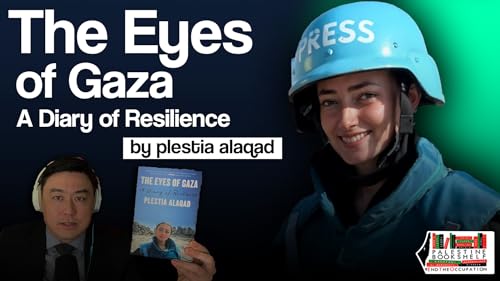
OVERVIEW The book chronicles her experiences as a young journalist in Gaza starting October 7, 2023, through intense bombing, displacement, evacuation to Australia, and relocation to Lebanon amid continued attacks. The presenter describes it as a powerful, concise (under 200 pages) testament to Palestinian resilience amid what he terms genocide, highlighting everyday humanity, fear, creativity, and survival. He reads key passages aloud, sharing emotional reactions while praising the work's poetic and humanizing quality.
MAIN THESIS The book and the presenter's commentary emphasize that, despite systematic destruction, displacement, and loss in Gaza since October 2023, Palestinians maintain extraordinary resilience, humanity, love, faith, and creativity. Alaqad's diary serves as evidence that people "refuse to let the losses... dictate our future," turning trauma into meaning and survival. The host positions this as inspiration for global advocates in comparatively easier circumstances to support Palestinian causes, while critiquing the normalization of what he calls calculated ethnic cleansing and the world's failure to act justly.
HISTORICAL CONTEXT The discussion centers on the escalation from October 7, 2023, onward, described as a "genocidal period" involving bombing of homes, hospitals, universities, schools, and churches; forced displacement (e.g., over 50,000 from North Gaza); and ongoing attacks even after evacuation (e.g., in Lebanon). References include echoes of Al Nakba (1948) in elders' fears, normalized atrocities, and broader Palestinian suffering. The host connects it to prior works like Children of Shatila, Jenin...Jenin, and Killing Gaza for themes of joy and humanity amid tragedy. No direct October 7 attack details are emphasized; focus is on Gaza's civilian experience.
KEY IDEAS -
Resilience amid horror: Palestinians find creative solutions (e.g., using wires as skipping ropes), maintain joy (e.g., in children's eyes despite amputation), and celebrate sacrifices for Palestine.
-
Human stories in crisis: Rescuing a plant for a distressed child; a 5-year-old sole survivor; amputee children dreaming of futures (e.g., Bilsan wanting to teach).
-
Trauma's toll: Survivor's guilt after evacuation; fear louder than words; using English to "escape emotions" as Arabic triggers breakdowns; blocked poetry replaced by "tears on a blank page."
-
Normalized genocide: Basic needs like food/water/shelter become luxuries; world complacency; no "two sides" pretense possible.
-
Immortality and meaning: Honorable death, soul's endurance, constant war but enduring will to live.
EVIDENCE AND RESEARCH The presenter relies heavily on direct readings from Alaqad's diary entries (e.g., hiding in a neighbor's kitchen, reporting on rubble with scattered photos, tent cities near hospitals, lines for water). He references her background as a 21-year-old journalist, her evacuation path, and emotional reflections. Broader context draws from related films/books and personal reactions, with no external primary sources cited beyond the text itself.
RECEPTION The video notes the book's emotional intensity and its role in countering denial/minimization of Gaza's suffering. The host stresses preparation for heavy content but praises its non-sensational, articulate style. The focus is on its power to convey unfiltered Palestinian voices.
IMPACT AND LEGACY The presenter sees the diary as proof of what Plestia calls the Palestinian "trauma glow up" — turning horror into determination and creativity — strengthening advocacy against occupation/genocide. It humanizes individuals, inspires action, and aligns with Palestine Bookshelf's mission of education and fundraising.
Find other summaries like this at Palestine Bookshelf: www.palestinebookshelf.org
#EndTheOccupation


 14 mins
 Feb 18 202626 mins
 Feb 10 202624 mins
 20 mins
 29 mins
 25 mins
 Jan 13 202616 mins
 Jan 7 202614 mins