Episodes

  • The Witching Hour Never Existed, so Why are we Afraid of 3:00 A.M.?
    Oct 12 2026

    Send us Fan Mail

    Why are so many people afraid of 3:00 a.m.?

    Modern paranormal culture often calls it the witching hour or the devil’s hour, sometimes claiming that three in the morning represents an inversion of the traditional hour of Christ’s death. The explanation sounds ancient, which is part of what makes it so convincing.

    The history, however, points somewhere else.

    In this episode of Southern Demonology, JJ traces the development of supernatural fear at night through biblical texts, ancient demonology, Christian monastic prayer, canonical hours, nocturnal spirits, cockcrow traditions, medieval and early modern witchcraft beliefs, and the older association of the witching hour with midnight rather than 3:00 a.m.

    Along the way, we encounter the terror of the night in Psalm 91, the surprisingly dangerous noonday demon, monks deliberately rising to pray during the very hours modern folklore assigns to demonic activity, ghosts that vanish at cockcrow, Shakespeare’s “witching time of night,” and the changing ways artificial light and standardized clocks reshaped how people experienced darkness.

    So where did the modern fixation on 3:00 a.m. come from, and why does that hour still feel unsettling even when its supposed ancient history begins to fall apart?

    The answer has less to do with an hour when demons suddenly become more powerful and much more to do with how very old fears of darkness eventually learned how to read a clock.

    #SouthernDemonology #WitchingHour #DevilsHour #3AM #ThreeAM #Demonology #HistoryOfDemonology #HistoryOfMagic #Witchcraft #HistoryOfWitchcraft #Folklore #ParanormalFolklore #GhostLore #NocturnalSpirits #AncientReligion #ReligiousHistory #BiblicalStudies #Psalm91 #EarlyChristianity #ChristianHistory #Monasticism #CanonicalHours #MedievalHistory #EarlyModernHistory #OccultHistory #SleepParalysis #CircadianRhythm #SpookySeason #OctoberHorror #HistoricalMyths

    Support the show

    Show More Show Less
    57 mins
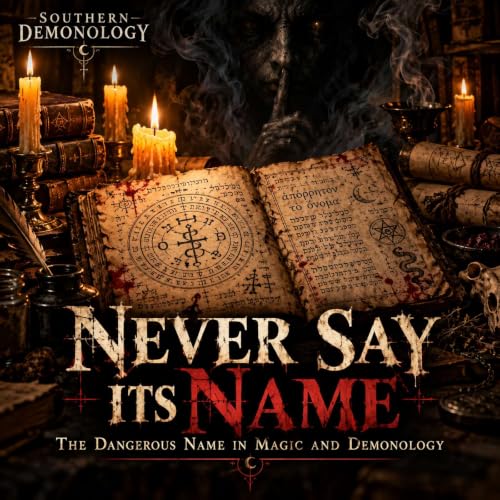
  • Never Say its Name: The Dangerous Name in Magic and Demonology
    Oct 5 2026

    Send us Fan Mail

    What happens when you say a demon's name?

    Modern horror often treats supernatural names as invitations, as though speaking the wrong one aloud might attract the very thing you are trying to avoid. Ancient magical and exorcistic traditions, however, often understood names very differently.

    In this episode of Southern Demonology, JJ traces the history of dangerous names through ancient Egypt, biblical and Jewish traditions, Greco-Egyptian magical texts, the Testament of Solomon, late antique incantation bowls, exorcistic formulas, and the later Solomonic grimoires. Along the way, we encounter secret divine names, voces magicae, demons compelled to identify themselves, sacred names used to bind or expel hostile spirits, and rituals in which naming establishes authority rather than vulnerability.

    The central question is deceptively simple: was naming a demon historically believed to summon it, or to control it?

    The answer depends on when, where, and why the name was spoken. Ancient practitioners could invoke supernatural beings deliberately, but they could also use names to identify, constrain, protect, adjure, or expel. In some traditions, the most powerful name in the ritual did not belong to the demon at all.

    From Isis seeking the hidden name of Re to Solomon interrogating demons and modern folklore warning us never to speak certain names aloud, this episode explores how names became one of the most enduring points of contact between language, magic, demonology, and fear.

    #SouthernDemonology #Demonology #Magic #HistoryOfMagic #AncientMagic #RitualMagic #CeremonialMagic #SolomonicMagic #TestamentOfSolomon #KeyOfSolomon #LesserKeyOfSolomon #ArsGoetia #Exorcism #AncientReligion #ReligiousHistory #AncientEgypt #Isis #GreekMagicalPapyri #PGM #VocesMagicae #JewishMagic #JewishMysticism #IncantationBowls #AramaicMagic #LateAntiquity #SecondTempleJudaism #BiblicalStudies #AncientJudaism #EarlyChristianity #OccultHistory #Folklore #ParanormalFolklore #TrueNames #DemonNames #SecretNames #OctoberHorror #SpookySeason

    Support the show

    Show More Show Less
    1 hr and 4 mins
  • What the Hell is an Angel?
    Sep 28 2026

    Send us Fan Mail

    What exactly is an angel?

    Today, we tend to think of angels as a distinct class of spiritual beings, complete with wings, names, ranks, and an elaborate heavenly hierarchy. Yet the Hebrew word mal'akh and the Greek angelos originally mean something much simpler: messenger. A human being could be a mal'akh just as readily as a heavenly being could.

    In this episode of Southern Demonology, JJ traces how that job description gradually became an ontological category. We begin with the divine council, the sons of God, the heavenly host, and the mysterious angel of the Lord before turning to cherubim, seraphim, and Ezekiel's extraordinary throne vision. From there, we enter the Second Temple period, where the heavenly world becomes increasingly populated by named and specialized figures such as Michael, Gabriel, Raphael, and Uriel, alongside national princes, Watchers, heavenly priests, and cosmic warriors.

    Finally, we follow these traditions into early Christianity and the medieval world, where Pseudo-Dionysius organizes the inhabitants of heaven into the famous nine celestial orders and Thomas Aquinas asks what kind of creature an angel actually is.

    The result is a history in which the familiar angel emerges gradually from a much older and considerably stranger heavenly world.

    #SouthernDemonology #Angelology #Angels #BiblicalAngels #SecondTempleJudaism #SecondTemplePeriod #HebrewBible #OldTestament #NewTestament #BibleScholarship #AncientJudaism #EarlyChristianity #DivineCouncil #HeavenlyHost #Malakh #Cherubim #Seraphim #Ophanim #Michael #Gabriel #Raphael #Uriel #Watchers #1Enoch #BookOfEnoch #DeadSeaScrolls #Qumran #PseudoDionysius #ThomasAquinas #ReligiousHistory

    Support the show

    Show More Show Less
    50 mins
  • The Kingdom that Cannot Create: from Ahriman to the Preternatural
    Sep 21 2026

    Send us Fan Mail

    For thousands of years, the demonic has refused to remain the same.

    Ancient Zoroastrianism envisioned a cosmic struggle in which Ahriman and the daēvas invaded and corrupted the good creation. Centuries later, Second Temple Jewish writers described rebellious angels, hostile spirits, Mastema, Belial, and eventually Satan within an increasingly organized landscape of supernatural evil. Christianity inherited that world, but also inherited a problem: if Satan rules a kingdom opposed to God, what prevents the Devil from becoming another god?

    In this episode of Southern Demonology, JJ follows the demonic from ancient Persia through Second Temple Judaism and into the Christian distinction between the supernatural and the preternatural. Along the way, we explore why demons cannot create, why their existence is characterized instead by corruption and putrefaction, and how limitations involving power, knowledge, time, and place distinguish the preternatural from the divine.

    The journey ends with Malachi Martin's Hostage to the Devil and its portrayal of demons as personal, intelligent, finite beings whose extraordinary abilities remain those of creatures.

    From Ahriman's assault upon creation to the modern theology of possession and exorcism, this is the story of how cosmic evil became preternatural evil, and why the kingdom of the demonic can corrupt creation but can never create anything of its own.

    #SouthernDemonology #Demonology #Preternatural #Ahriman #Zoroastrianism #SecondTempleJudaism #Satan #Angelology #AncientReligion #ReligiousHistory #HistoryOfReligion #SpiritualWarfare #Exorcism #MalachiMartin #HostageToTheDevil #DeadSeaScrolls #AncientJudaism #Theology #ReligiousStudies #Paranormal

    Support the show

    Show More Show Less
    49 mins
  • Satan: When the Adversary Became the Devil
    Sep 14 2026

    Send us Fan Mail

    What if Satan was not always the Devil?

    In the final installment of Southern Demonology’s four-part exploration of the development of supernatural evil, JJ turns to the figure who would eventually overshadow nearly every other adversary in Western demonology: Satan.

    But the story does not begin with a fallen angel ruling a kingdom of demons. The Hebrew word satan originally described an adversary or opponent, and the Hebrew Bible could apply the term to human beings, angels, and the mysterious accuser who challenges Job. Even these celestial adversaries should not automatically be treated as early appearances of the fully developed Devil.

    During the Second Temple period, the picture becomes considerably more complicated. Satan was hardly the only candidate for the role of God's great supernatural enemy. Mastema commanded hostile spirits, Belial ruled a dominion of wickedness, Azazel became deeply associated with the corruption of the Watchers, and other texts populated the supernatural world with figures such as Semyaza, the Angel of Darkness, rebellious heavenly beings, accusing spirits, and destructive angels.

    So how did Satan eventually overshadow them all?

    Rather than tracing the biography of a single character, this episode follows the gradual consolidation of accusation, temptation, supernatural opposition, demonic leadership, cosmic rebellion, and hostile dominion around Satan. By the time we reach the New Testament and Revelation, the adversary has become the Devil, ruler of demons, enemy of God's kingdom, and even the ancient serpent and dragon.

    Finally, we return to a distinction explored much earlier in Southern Demonology and ask whether demons should properly be called supernatural at all. Later theology increasingly understood Satan and demons as created spiritual beings whose extraordinary abilities belong not to the properly supernatural realm of God, but to the preternatural.

    The history of demonology made Satan increasingly powerful. Theology eventually had to remind us that he was still a creature.

    #SouthernDemonology #Satan #TheDevil #Demonology #AncientDemonology #SecondTempleJudaism #SecondTemplePeriod #AncientJudaism #BiblicalStudies #JewishStudies #ReligiousHistory #HistoryOfReligion #Angelology #Demons #Mastema #Belial #Azazel #Watchers #BookOfEnoch #1Enoch #DeadSeaScrolls #Qumran #Preternatural #Supernatural #SpiritualWarfare #AncientReligion #AncientNearEast #Apocalypticism #NewTestament #Revelation #Podcast

    Support the show

    Show More Show Less
    45 mins
  • Belial: When Wickedness Acquires a Kingdom
    Sep 7 2026

    Send us Fan Mail

    What happens when supernatural evil acquires more than a leader? What happens when wickedness acquires a kingdom?

    In the third installment of Southern Demonology’s four-part exploration of the development of supernatural evil during the Second Temple period, JJ turns to Belial and the remarkable demonology preserved among the Dead Sea Scrolls.

    Belial did not begin as the proper name of a demon. The Hebrew term beliyya'al originally conveyed ideas such as wickedness, worthlessness, and lawlessness. By the time we reach the sectarian writings associated with Qumran, however, Wickedness has become personified as the ruler of an entire supernatural dominion.

    Through the Community Rule, the Damascus Document, the War Scroll, the Songs of the Sage, and 11QMelchizedek, we explore a world divided between light and darkness, truth and falsehood, and the lot of God and the lot of Belial. Demons and hostile spirits now occupy a much larger cosmic framework, while human corruption, religious institutions, foreign empires, and even the course of history can become expressions of the same supernatural conflict.

    We also examine the Three Nets of Belial, the mysterious Treatise of the Two Spirits, the expectation that angels would fight alongside humanity during the final war, and the extraordinary practical consequences of preparing a military camp for the presence of heavenly beings.

    Belial represents a major development in the history of demonology. Under Mastema, hostile spirits acquired organization and leadership. At Qumran, wickedness acquires dominion.

    And once evil possesses a kingdom, only one question remains.

    How does Satan become its ruler?

    #SouthernDemonology #Belial #DeadSeaScrolls #Qumran #Demonology #AncientDemonology #SecondTempleJudaism #SecondTemplePeriod #AncientJudaism #JewishStudies #BiblicalStudies #Angelology #Demons #WarScroll #CommunityRule #DamascusDocument #SongsOfTheSage #Melchizedek #11QMelchizedek #Mastema #BookOfEnoch #Watchers #AncientReligion #ReligiousHistory #Apocalypticism #SpiritualWarfare #AncientNearEast #SupernaturalHistory #Podcast

    Support the show

    Show More Show Less
    54 mins
  • Mastema: When Hostility Gets a Name
    Aug 31 2026

    Send us Fan Mail

    What happens when supernatural hostility stops being just a force and becomes a prince?

    In the second episode of Southern Demonology’s four-part arc on the development of evil in Second Temple Judaism, JJ turns to Mastema, one of the most fascinating and misunderstood figures in ancient Jewish demonology.

    We begin with the word itself. Mastema originally means hostility or enmity, but over time that abstract idea becomes increasingly personified until Jubilees presents Mastema as the Prince of the Spirits.

    From there, we explore his role in the Book of Jubilees, where he commands hostile spirits, negotiates for a portion of them to remain active after the Flood, proposes the testing of Abraham, attempts to kill Moses, and becomes entangled with Israel’s enemies. Yet for all of that authority, Mastema is never presented as an equal rival to God. His power is limited, permitted, and temporary.

    The episode also looks at how Jubilees expands the Watcher tradition, why the spirits of the dead giants are only part of the supernatural picture, and how texts such as 4Q510-11 preserve a broader world of hostile spirits that may include beings associated with the fallen Watchers themselves.

    Most importantly, this episode asks what Mastema represents in the larger history of demonology. If the first episode showed how demons became a category, this one examines what happens when those spirits gain leadership, hierarchy, and jurisdiction.

    Hostility has acquired a name.

    And soon, it will acquire a kingdom.

    #SouthernDemonology #Demonology #AncientDemonology #SecondTempleJudaism #AncientJudaism #Mastema #BookOfJubilees #Jubilees #DeadSeaScrolls #Qumran #Watchers #Nephilim #BookOfEnoch #1Enoch #Angelology #AncientReligion #BiblicalStudies #ReligiousHistory #AncientNearEast #SupernaturalHistory #JewishStudies #Podcast

    Support the show

    Show More Show Less
    46 mins
  • What the Hell is a Demon?
    Aug 24 2026

    Send us Fan Mail

    What exactly is a demon?

    It sounds like a simple question, especially for a podcast called Southern Demonology. But the further back we travel into the ancient world, the harder that question becomes to answer.

    In this episode, JJ traces the concept of the demon from the dangerous spirits and numinous powers of ancient Mesopotamia through the Hebrew Bible and into the dramatically changing supernatural landscape of Second Temple Judaism. Along the way, we explore why a destructive spirit was not necessarily an evil one, how harmful spirits could still operate within divine authority, and why chronology matters when comparing the lying spirit of 1 Kings with the supernatural dangers lurking within Psalm 91.

    Then we turn eastward to ancient Persia and examine how Judaism's encounter with Zoroastrian dualism may have helped reshape the supernatural world into increasingly distinct camps of good and evil. Even the word daimon undergoes a transformation as foreign gods, spirits, and hostile powers are increasingly classified as demons.

    Finally, we arrive at the Book of the Watchers and its remarkable answer to a newly pressing question: if evil spirits exist, where did they come from?

    The answer involves rebellious angels, dead giants, and ghosts that should not exist.

    This is the first installment of a four-part Southern Demonology series exploring the development of demons, Mastema, Belial, and ultimately Satan during the Second Temple period.


    #SouthernDemonology #Demonology #AncientDemonology #SecondTempleJudaism #AncientJudaism #Mesopotamia #AncientMesopotamia #Zoroastrianism #BookOfEnoch #1Enoch #Watchers #Nephilim #AncientNearEast #Angelology #ReligiousHistory #BiblicalStudies #HistoryOfReligion #AncientReligion #SupernaturalHistory #Podcast

    Support the show

    Show More Show Less
    45 mins