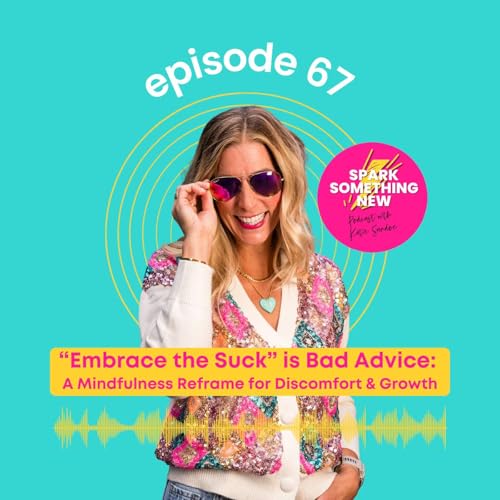
• Episode 67: “Embrace the Suck” Is Bad Advice | Mindfulness, Discomfort & Personal Growth
    Feb 2 2026

    Episode Snapshot:

    What if discomfort isn’t something to fix or escape—but something to notice? In this episode, Dr. Katie shares a powerful realization from a long treadmill run that reshaped how she understands growth, discomfort, and presence. Through story, science, and simple practices, she invites listeners to rethink how quickly we label sensations as “bad”—and how that judgment quietly fuels suffering.

    Summary:

    Discomfort shows up everywhere—in our bodies, emotions, relationships, work, and growth journeys. And almost instantly, we judge it. We label it as bad, uncomfortable, miserable, or something that needs to stop. Without realizing it, that judgment gives discomfort power.

    In this episode, Katie walks listeners through a real-time epiphany she had during a long treadmill run: many of the sensations she was experiencing weren’t painful or dangerous—they were simply sensations. It wasn’t the discomfort that made the experience hard; it was the story she was telling about it.

    Blending lived experience with mindfulness research, neuroscience, and somatic awareness, Katie explores how labeling sensations triggers our nervous system into control mode—driving us to fix, numb, escape, or resist. She introduces the concept of interoception (our awareness of internal bodily sensations), explains the difference between discomfort and suffering, and shows how mindfulness helps us stay present without judgment.

    Listeners are guided through a short, practical exercise to “feel without fixing” and are invited to reframe discomfort not as a signal of danger—but as a natural and often necessary part of growth.

    Key Learnings:

    • We judge sensations—physical, emotional, relational—far more quickly than we realize
    • Labeling discomfort as “bad” activates urgency, control, and resistance in the nervous system
    • Discomfort and suffering are not the same: suffering is the story + resistance layered onto sensation
    • Interoception (awareness of internal sensations) supports emotional regulation when paired with mindfulness
    • Growth always involves sensations—and discomfort doesn’t mean something is wrong
    • Curiosity and presence create agency; judgment gives sensations power

    Practices Shared in This Episode:

    • Name sensations without judgment (e.g., “tight,” “warm,” “intense” instead of “awful”)
    • Stay with discomfort one breath longer before reacting or escaping
    • Use curiosity as a regulation tool by asking: What is this sensation asking me to notice?

    Reflection Question:

    What sensations in your life are you labeling as “bad” that might simply be part of your growth—or just part of being human?

    Connect with Katie on LinkedIn, Facebook, and Instagram. You can also get free resources to help you on your purpose journey at www.katiesandoe.com.

    Show More Show Less
    32 mins
  • Episode 66: Doing Less Is the New High Performance | Nell Derick on Strategic Subtraction
    Jan 26 2026

    Episode Snapshot:

    What if “doing less” isn’t quitting? What if it's the most strategic way to reclaim clarity, energy, and real impact? In this episode, Nell Derick teaches us how to stop living on the hamster wheel of gold-star achievement and start making space for what actually matters.

    Summary:

    Dr. Katie sits down with keynote speaker, leadership advisor, and author Nell Derick to unpack her countercultural framework: systematic subtraction.

    Together they name the tension so many high performers live inside—craving simplicity while stacking more habits, commitments, and “shoulds” in the name of becoming healthier, better, and more successful. Nell calls out the system behind our “more” addiction: modern incentives, social conditioning, and the gold-star mentality that trained us early in life to equate worth with output.

    Nell introduces a practical three-step process—Stop, Drop, Roll—to help people gather honest data about what’s working, experiment with subtracting what drains them, and then “roll” forward through systems thinking: making one action serve multiple values instead of adding more tasks. From parenting overload and workplace meetings to nonprofit board roles and leadership identity, the conversation lands on a powerful truth: we can have more impact without doing more—especially when we subtract noise, false urgency, and outdated expectations so we can show up more fully human.

    Key Learnings:

    • Doing less is hard because the system rewards doing more. We’ve been trained—socially and economically—to chase gold stars, streaks, promotions, and productivity as proof of worth.
    • Systematic subtraction starts with honest data. The first step is “Stop”—pause long enough to ask, How is this really working? without self-gaslighting or shame.
    • Subtraction works best as an experiment, not a forever decision. “Drop” means trying a change (one season without a sport, one week skipping a meeting) to see what improves in your life and nervous system.
    • “Roll” is the shift from doing to being. Instead of piling on more tasks, connect actions to multiple outcomes—health, values, relationships, and impact—so life feels integrated instead of stacked.
    • High performance is changing. Nell argues that today’s real edge isn’t obsessive busywork—it’s presence, humanity, discernment, and the relational skills no technology can replace.

    Resources:

    • Nell Derick: Nell3D (website + work)
    • Nell's FREE 1-Page "Subtract to Succeed" framework
    • Nell's Substack + 100-Day Subtraction Practice

    Guest Info:

    Nell Derick is a keynote speaker, leadership advisor, and author who helps high-performing, purpose-driven leaders subtract what drains them so they can lead and live with greater clarity, alignment, and impact. Her work blends systems thinking with deeply human insight, offering practical tools that create more space without sacrificing ambition or contribution. Nell’s approach is both compassionate and sharp, challenging the myth that more effort always equals more impact. She teaches leaders how to become fully present, more effective, and more alive—without burning out.

    Connect with Katie on LinkedIn, Facebook, and Instagram. You can also get free resources to help you on your purpose journey at www.katiesandoe.com.
    Show More Show Less
    53 mins
  • Episode 65: You’re Not Your Thoughts — And That Changes Everything with Amy Kemp
    Jan 19 2026

    Episode Snapshot:

    What if “reality” isn’t reality… but a well-worn habit of thinking that once protected you and is now quietly running your life? In this episode, Amy Kemp helps us name those subconscious patterns so we can stop living on autopilot and start making millimeter-shifts toward a life we actually love.

    Summary:

    Dr. Katie and Amy unpack how ~80% of our thoughts happen below conscious awareness, meaning we’re often reacting from old mental grooves that were built for survival—not fulfillment. Amy explains that the brain creates automatic thought patterns to conserve energy and keep us safe, but those same patterns can become limiting once the season that required them has passed. A major theme: you’re not your thoughts but you are the one who can notice them.

    Through vivid stories (like launching a book and instantly sliding from “this will be amazing” to “this is a disaster”), Amy shows how quickly the brain can jump into catastrophic thinking. The turning point isn’t “fixing yourself”—it’s building awareness + language so you can slow down in high-risk moments and choose a different response. The conversation also explores why change feels terrifying even when we want it: your subconscious may interpret slowing down, earning more, or setting boundaries as danger because it threatens old survival rules, identity, or belonging. The path forward is not a five-step hack—it’s compassionate, incremental rewiring.

    Key Learnings:

    • Most of your thinking is subconscious. You’re living the top of the iceberg, while deeper mental grooves shape your reactions, choices, and relationships.
    • Survival patterns can outlive their usefulness. What helped you “get the plane off the ground” (hustle, over-functioning, hypervigilance) can become the very thing that crashes you later.
    • Naming creates agency. When you can label what’s happening (“I’m catastrophizing,” “I’m in fight-or-flight,” “I’m attached to this idea”), you create a pause—and the pause is power.
    • The Habit Finder is about risk, not personality. It highlights where you’re most likely to slide into old grooves—so you can slow down, bring support, and build new pathways.
    • Millimeter shifts beat dramatic overhauls. Deep, lasting change happens incrementally—especially in a culture addicted to speed, convenience, and constant stimulation.

    Resources:

    • Amy's book: "I See You"
    • The Habit Finder assessment (behavioral “risk” tool Amy uses and offers via her website)
    • The “superhighway” metaphor for neuroplasticity (Katie references The Confidence Code)

    Guest Info:

    Amy Kemp is the owner and CEO of Amy Kemp, Inc., an author, and a coach who helps leaders and business professionals understand how subconscious habits of thinking shape performance, relationships, and fulfillment. Her work centers on building awareness of the mental “grooves” that once protected us but may now be limiting us. Using tools like the Habit Finder assessment, Amy helps clients identify thinking risks, slow down in pivotal moments, and create sustainable change through incremental practice. Her approach is deeply compassionate, practical, and grounded in how the brain is wired for survival.

    Connect with Katie on LinkedIn, Facebook, and Instagram. You can also get free resources to help you on your purpose journey at www.katiesandoe.com.

    Show More Show Less
    53 mins
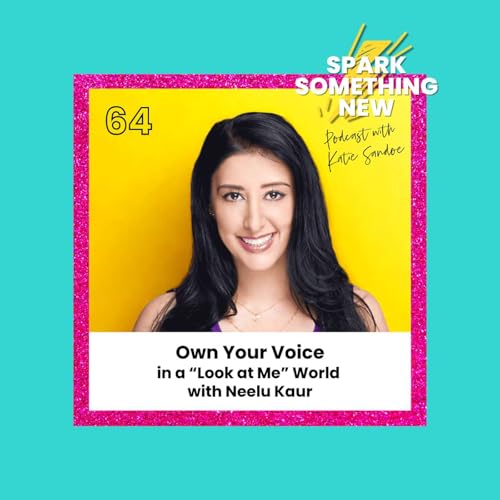
  • Episode 64: Own Your Voice in a “Look at Me” World with Neelu Kaur
    Jan 12 2026

    Episode Snapshot:

    What if being “your own cheerleader” isn’t self-promotion… but self-respect in motion? In this episode, Dr. Katie chats with organizational psychologist, Neelu Kaur, who reframes self-advocacy as a generous act—one that helps you and leaves a trail for others to follow.

    Summary:

    In this conversation, Katie and Neelu explore the tension so many of us feel: we’re told to share our voice and value—yet we’re also conditioned not to “brag,” “show off,” or “rock the boat.” Neelu introduces a powerful reframe: move from a “look at me” mindset (which can feel hollow or icky) to a “listen to me” mindset rooted in contribution, clarity, and meaningful impact.

    Neelu shares how repeated downsizing and being escorted out of a job became the catalyst for her own self-advocacy journey. Together, she and Katie unpack the cultural roots of self-silencing (collectivism vs. individualism, family conditioning, small-town and military norms, neurodivergence, introversion) and why “doing great work” is rarely enough in modern workplaces—especially large, matrixed organizations.

    The conversation gets practical: Neelu offers micro-practices to build the self-advocacy muscle in low-stakes situations (think: dinner plans, choosing the restaurant, speaking up in a line at CVS), and a “dial” approach to communication—adjusting the “I” and “we” depending on context without betraying your authenticity. The episode closes with a reminder that self-advocacy isn’t just about career advancement—it’s a life skill that can help you set boundaries, leave unhealthy dynamics, and claim space in any room you enter.

    Key Learnings:

    • Reframe the goal: self-advocacy doesn’t have to be “look at me”—it can be “listen to me,” grounded in value and service.
    • It’s cultural, not just personal: our comfort with self-promotion is shaped by upbringing, microculture, collectivist norms, personality, and identity.
    • Use the “dial” method: turn up I (performance reviews, promotions, wins) and turn up we (team settings)—without losing who you are.
    • Build the muscle with micro-moments: practice in low-stakes spaces so you can show up in high-stakes ones.
    • Self-advocacy is generous: when you advocate for yourself, you model what’s possible and create a path for others—especially those who’ve been socialized to stay small.

    Resources:

    • Neelu Kaur — Be Your Own Cheerleader (book)
    • Explore Neelu's work: https://www.neelukaur.com/
    • Concepts discussed: collectivism vs. individualism, microaggressions, representation, internal branding, relationship-building in matrixed organizations
    • Katie’s practical tool from the episode: ask others, “What are you working on that you’re excited about?” then share your own answer naturally.

    Guest Info:

    Neelu Kaur is an organizational psychologist, keynote speaker, coach, and author of Be Your Own Cheerleader. She champions self-advocacy—especially for those who have been conditioned by culture, identity, or workplace dynamics to stay quiet and “let their work speak for itself.” Through her work, Neelu helps people build confident, authentic communication skills that elevate their voice, visibility, and impact. Her approach blends psychology, leadership development, and practical tools that make self-advocacy feel doable—not performative.

    Connect with Katie on LinkedIn, Facebook, and Instagram. You can also get free resources to help you on your purpose journey at www.katiesandoe.com.

    Show More Show Less
    41 mins
  • Episode 63: Forget the Scale: A Smarter Way to Take Control of Your Health with Torkil Færø
    Jan 5 2026

    Episode Snapshot:

    It’s the first Monday of 2026—aka “new year, new health goals” season—and this episode offers a refreshingly different way to take control of your wellbeing: track what’s happening inside your body, not what’s showing up on the scale. Dr. Torkil Færø breaks down important metrics from everyday wearables that can become your personal health dashboard for energy, resilience, and longevity.

    Summary:

    In this conversation, Dr. Katie nerds out (in the best way) with Dr. Torkil Færø—medical doctor, photographer, and bestselling author of The Pulse Cure—about how wearable data can help you “listen” to your body with more clarity than guesswork alone. Torkil explains why metrics like heart rate variability (HRV) and resting heart rate can signal stress, inflammation, overtraining, late meals, alcohol, or even an oncoming illness before symptoms appear—essentially giving you early warning signs so you can respond sooner.

    Rather than chasing trendy fixes, Torkil reframes the goal as health normalization: getting your body back to how it’s designed to function. He emphasizes that the biggest levers are still the basics—sleep, movement, sunlight, nutrition, stress management, and connection—yet most people underestimate how powerfully these choices show up in their data. The episode ultimately lands on an empowering message: your wearable can help you reclaim agency, reduce chronic “blah,” and build a lifestyle that supports long-term vitality and longevity.

    Key Learnings:

    • Your body often “knows” before you do. HRV dropping and resting heart rate rising can be early indicators of illness, inflammation, or overload—sometimes before you feel symptoms.
    • VO₂ max is a longevity signal. Improving fitness capacity isn’t just about performance—it’s strongly tied to overall health and long-term outcomes (and it reflects how well your cells, especially mitochondria, are functioning).
    • Food, alcohol, and timing can be major stressors. Ultra-processed foods, added sugar, alcohol, and late-night eating can show up clearly in your recovery and sleep—sometimes more than your “mental stress” does.
    • Data builds body awareness—not replaces it. Wearables act like a missing “internal sense,” helping you connect patterns (sleep, meals, cycle timing, training load) to how you feel and function.

    Resources:

    • The Pulse Cure — Dr. Torkil Færø (also available as an audiobook)
    • Wearables mentioned: Garmin (recommended as best value), Oura Ring, WHOOP, Apple Watch (usable, varies by features)
    • Key metrics to explore: HRV, resting heart rate, VO₂ max, sleep score/recovery, stress tracking

    Guest Info:

    Dr. Torkil Færø is a medical doctor, photographer, and bestselling author known for making health data practical and accessible. After working with tens of thousands of patients, he became passionate about prevention—and about helping people use everyday wearable metrics to better understand stress, recovery, sleep, and overall resilience. His book The Pulse Cure shares lifestyle-based strategies to “normalize” health by using the heart’s signals as a real-time guide. He’s also built a global following by translating complex physiology into simple, actionable steps people can use immediately.

    Connect with Katie on LinkedIn, Facebook, and Instagram. You can also get free resources to help you on your purpose journey at www.katiesandoe.com.

    Show More Show Less
    52 mins
  • Episode 62: The Heart of Connection: How Small Roles Shape Big Lives with Daiki Kato
    Dec 15 2025

    We talk a lot about the roles we hold—parent, partner, leader, creator—but how often do we ask if those roles actually feel fulfilling?

    In this powerful conversation, Dr. Katie chats with Professor Daiki Kato, who coined the term rolefulness: a practical, human way to experience meaning and harmony in everyday life by nurturing both our “big” roles and the small, easily overlooked ones.

    Katie and Professor Kato explore why modern life pulls us toward checklists and away from connection—and how simple, intentional practices can restore joy, identity, and purpose.

    What You'll Learn:

    • Two sides of rolefulness: (1) Social rolefulness (feeling useful, needed, connected with familiar people—even two people make a “society”); and (2) Internal rolefulness (how those experiences internalize into confidence, identity, and self-trust).
    • Why we feel role distress: over-investing in a few “big” roles while ignoring smaller, nourishing ones; living by facts and to-dos while neglecting feelings and connection.
    • Balance beats perfection: shifting from “I have to be a perfect ___” to “I can be myself in this role.”
    • Micro-practices that work: express gratitude often, enjoy short real conversations, exchange simple greetings, and intentionally notice the small roles that light you up.
    • Identity connection: how social rolefulness becomes internal rolefulness—turning moments of contribution into confidence and a more grounded sense of self.

    About Professor Kato:
    Daiki Kato is a clinical psychologist and professor at Kinjo Gakuin University in Japan. His research and practice bridge art therapy and everyday well-being. He coined the concept of rolefulness and studies how cultivating small, interpersonal roles can strengthen mental health, confidence, and purpose.

    Links & Resources:

    • Connect with Professor Kato on LinkedIn
    • Explore more about Rolefulness

    Connect with Katie on LinkedIn, Facebook, and Instagram. You can also get free resources to help you on your purpose journey at www.katiesandoe.com.

    Show More Show Less
    43 mins
  • Episode 61: Your Superpower Is the Thing You’re Hiding - Marina Ivanov on Leading Differently
    Dec 8 2025

    In this conversation, Dr. Katie sits down with Marina Ivanov, co-founder and CEO of Apex Transit Solutions, a transportation and logistics company. They explore what it really means to lead as yourself—especially when the room, the industry, and the playbook weren’t designed with you in mind.

    They talk about the inner work it takes to step into your own power, how to find purpose in an industry that doesn’t look “sexy” from the outside, and what it really means to be the only (or first) woman in the room—and refuse to shrink.

    What You'll Learn:

    • Why “I just help…” is a red flag
      How and why so many women instinctively downplay their leadership—and what shifts when you finally name what you actually do.
    • How empathy becomes a leadership superpower
      Why Marina stopped hiding her deep care and emotion and how showing it has made her a stronger, not weaker, leader.
    • Moving from hustle to alignment
      The belief Marina let go of about hard work—and what she’s replaced it with instead (hint: relationships, systems, and the right “who,” not just more “doing”).
    • Being the only woman in the room
      Practical ways to walk into spaces with grounded confidence, prepare yourself energetically, and remember it’s not about proving your worth—it’s about shifting what’s possible for the women who come after you.
    • Reframing power
      How to move from power-over and scarcity to a more expansive, shared model of power rooted in agency, impact, and collective rise.
    • Why allies matter
      The role supportive men and colleagues have played in Marina’s journey—and how we can all champion women leaders in more intentional ways.

    About Marina:

    Marina Ivanov is the co-founder and CEO of Apex Transit Solutions, a transportation and logistics company she helped build from a single truck into a thriving business that supports dozens of families. A first-generation woman leader in a traditionally male-dominated industry, Marina advocates for drivers and small carriers at both the state and national level, serves on multiple advisory boards, and is passionate about creating workplaces where people feel valued, seen, and safe to be themselves. She is a powerful example of what happens when a woman stops playing small, owns her leadership, and chooses to lead with both strength and heart.

    Links & Resources:

    • Connect with Marina on LinkedIn
    • Explore Apex Transit Solutions

    Connect with Katie on LinkedIn, Facebook, and Instagram. You can also get free resources to help you on your purpose journey at www.katiesandoe.com.

    Show More Show Less
    48 mins
  • Episode 60: The Quiet Rebellion of Living Fully with Fabi Preslar
    Dec 1 2025

    We live in a culture that worships busy, celebrates burnout, and treats worthiness like something you earn through overwork. In this beautiful, soulful conversation, Dr. Katie and Fabi Preslar gently challenge that narrative.

    Fabi is the founder and president of SPARK Publications and the author of Wilted and Worthy: Essays on Holding On, Letting Go, and Living Fully. She shares how a cancer diagnosis, a healing sabbatical, and a camera turned toward wilting flowers completely shifted her relationship with control, achievement, and what it means to live a meaningful life.

    Katie and Fabi talk about why so many of us cling to productivity, how to recognize when we’re forcing a dream that no longer fits, and what it looks like to honor our “wilted” seasons as just as worthy as our perky, high-achieving ones.

    This episode is an invitation to soften your grip, listen to your own heart, and move into your next season with more courage, clarity, and compassion—for yourself and your story.

    What You'll Learn:

    • A new way to think about “living fully” that centers authenticity, courage, and creative self-expression (not constant doing)
    • How to notice when you’re forcing a dream, identity, or path—and a simple question Fabi uses to discern whether it’s time to rest or to release
    • The emotional cost of hustle culture and what happens when you stop chasing scale, status, and other people’s definitions of success
    • Why contentment is not complacency, and how gratitude for this moment can coexist with desire for what’s next

    About Fabi Preslar:

    Fabi Preslar is the founder and president of SPARK Publications, an award-winning publishing firm that helps thought leaders and business owners turn their expertise into high-impact books and magazines. She is the author of Wilted and Worthy: Essays on Holding On, Letting Go, and Living Fully, a lyrical collection of essays and images that invites readers to honor every season of their becoming.

    Proceeds from Wilted and Worthy support Radiant Chapters Collective, the nonprofit Fabi founded to help underrepresented authors get published and share their stories with the world. Across all of her work, Fabi is devoted to helping people embrace their authenticity, find rest in stillness, and transform their stories into legacies of healing and empowerment.

    Links & Resources:

    • Connect with Fabi on LinkedIn
    • Connect with Fabi on Instagram
    • Purchase Fabi's book: Wilted and Worthy
    • Explore SPARK Publications

    Connect with Katie on LinkedIn, Facebook, and Instagram. You can also get free resources to help you on your purpose journey at www.katiesandoe.com.

    Show More Show Less
    47 mins