• Episode 22: The right to understand in healthcare AI (with Anshu Ankolekar)
    Apr 30 2026
    In this episode, we speak with Anshu Ankolekar, researcher at the MAASTRO Clinic in the Netherlands, where she works on AI applications in oncology, clinical decision support systems, patient-centered AI design, and healthcare regulation.

    We explore what it really means AI explainability for patients and clinicians, also touching topics like bringing AI into real-world care, the risk of added workload for clinicians, cognitive biases, and the important of the collaboration between developers, clinicians, and patient advocates.

    Show More Show Less
    24 mins
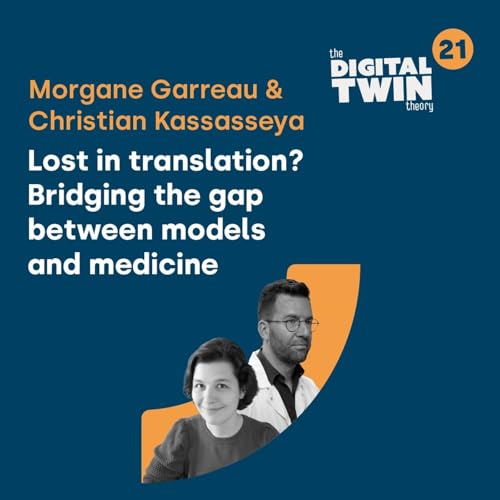
  • Episode 21: Lost in Translation? Bridging the gap between models and medicine (with Morgane Garreau & Christian Kassasseya)
    Mar 30 2026
    A recurring theme that emerged during the production of The Digital Twin Theory is how to bring AI, modelling and simulation into everyday clinical practice.

    As these technologies mature, this will become one of the key challenges—and opportunities—in healthcare. But the issue is not new. How can modellers develop tools that are not only effective and efficient, but also truly integrated into clinical workflows?

    At its core, the challenge is communication—and it is far from trivial. Even the word “model” means different things: for clinicians, it often refers to something tangible, like an animal model; for engineers, it is something abstract, living inside a computer.

    Bridging this gap is essential. Involving clinicians early in the development of new technologies can make all the difference.That’s why we brought together biomedical engineer Morgane Garreau and physician Christian Kassasseya, who work closely together, to share how this collaboration works in practice.
    Show More Show Less
    29 mins
  • Episode 20: When one-size medicine hurts women (with Blanca Rodriguez)
    Feb 27 2026
    In this episode of The Digital Twin Theory, Blanca Rodríguez (University of Oxford) explores sex differences in healthcare and the impact of bias in research and treatment. She explains how digital twins, AI, and computational models can enable sex-aware, personalised medicine, reshaping diagnosis, therapies, and the concept of the “average patient.”
    Show More Show Less
    18 mins
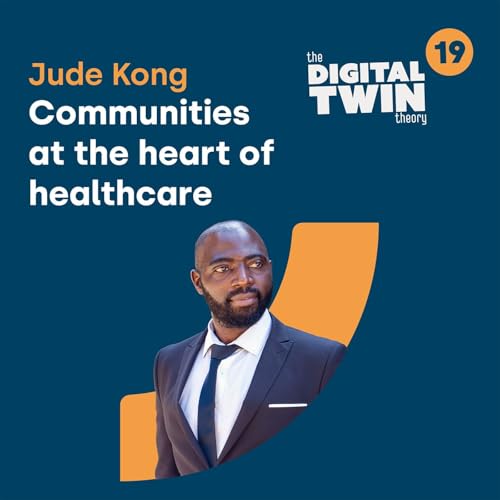
  • Episode 19: Communities at the heart of healthcare (with Jude Kong)
    Jan 29 2026
    Healthcare is about people as much as science. In this episode, we talk with Jude Dzevela Kong, Director of AIMMLab at the University of Toronto and Co-Director of ACADIC, about community-driven approaches to healthcare innovation.

    Jude explains how involving local communities and patients from problem definition to implementation leads to more effective, inclusive, and sustainable solutions. From empowering local communities to enabling global knowledge exchange, this conversation highlights why scientists must walk alongside communities to ensure healthcare truly leaves no one behind.
    Show More Show Less
    27 mins
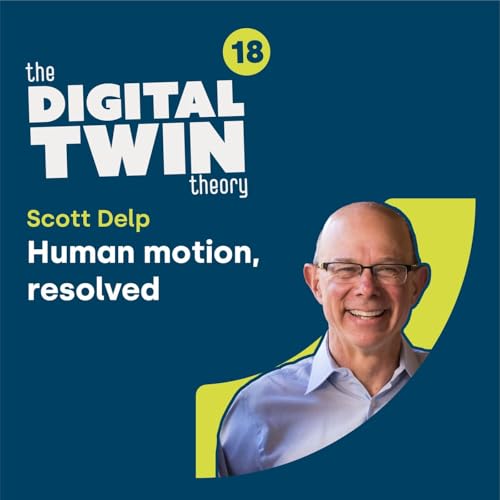
  • Episode 18: Human motion, resolved (with Scott Delp)
    Dec 19 2025
    In the final episode of 2025, we sit down with Scott Delp, Professor of Bioengineering, Mechanical Engineering, and Orthopaedic Surgery at Stanford University, and Director of the Wu Tsai Human Performance Alliance and the RESTORE Center.

    We met Professor Delp at the iSi Health Conference in September 2025, where we recorded a wide-ranging and insightful conversation on the role of in silico medicine in human health and performance. Together, we explore how computational models and digital simulations can help prevent injuries, accelerate recovery, and enhance human performance—all while prioritising safety and clinical rigor.
    Show More Show Less
    15 mins
  • Episode 17: AI deployment in healthcare (with Lia Martina)
    Nov 28 2025
    In this episode of The Digital Twin Theory we dive into the policy side of in silico medicine and digital health. This summer, the European Commission released its report “Study on the Deployment of AI in Healthcare”, a key document shaping Europe’s approach to trustworthy and effective AI in clinical settings.

    To unpack its findings, Davide speaks with Lia Martina, Policy Officer in Digital Health at DG SANTE. Lia works on the European Health Data Space, cybersecurity, and AI deployment in healthcare, and brings unique insights from inside the Commission. Tune in to understand what this study means for scientists, clinicians, patients, and policymakers across Europe.

    Disclaimer: The content represented in this interview is the interviewee point of view and does not represent the European Commission's view
    Show More Show Less
    19 mins
  • Episode 16: Beyond boundaries: realising truly interdisciplinary research (with Himanshu Kaul)
    Oct 20 2025
    Interdisciplinary research is at the heart of in silico medicine, but collaborating across disciplines is easier said than done. In this episode, we welcome back Himanshu Kaul (University of Leicester) to discuss real challenges and practical strategies for making interdisciplinary teams work effectively.

    Show More Show Less
    19 mins
  • Episode 15: We don't need better models, we need smarter systems (with Geert Meyfroidt)
    Sep 15 2025
    In this episode of The Digital Twin Theory podcast we reached out to Prof. Geert Meyfroidt, head of the department of intensive care medicine at the University Hospital of Leuven to talk about AI applications in the Intensive Care Unit.

    Prof. Meyfroidt discusses the future of intensive care and in silico medicine, highlighting the need for AI systems that support, rather than replace, clinicians. Instead of chasing ever more complex models, he argues for actionable tools that act like a “GPS for doctors”, delivering the right data at the right time. Such systems could save precious clinical time, strengthen human interaction with patients, and bring expert care to places where it is most needed.
    Show More Show Less
    29 mins