The Joe Polish Show cover art

The Joe Polish Show

The Joe Polish Show

Written by: Joe Polish
Listen for free

Joe Polish's journey from overcoming personal challenges to founding Genius Network®, one of the world's most influential groups for entrepreneurs, is nothing short of inspiring. His expertise has empowered thousands of businesses, generating hundreds of millions in revenue for his clients. Beyond his entrepreneurial endeavors, Joe is a passionate philanthropist. Through initiatives like Genius Recovery, he strives to change the global conversation around addiction, promoting compassion and effective treatment. As the host of top-ranked podcasts such as I Love Marketing, 10xTalk, and Genius Network, Joe continues to share invaluable wisdom with audiences worldwide. These are the most important conversations Joe has ever had.Copyright Joe Polish All Rights Reserved Economics Social Sciences
Episodes
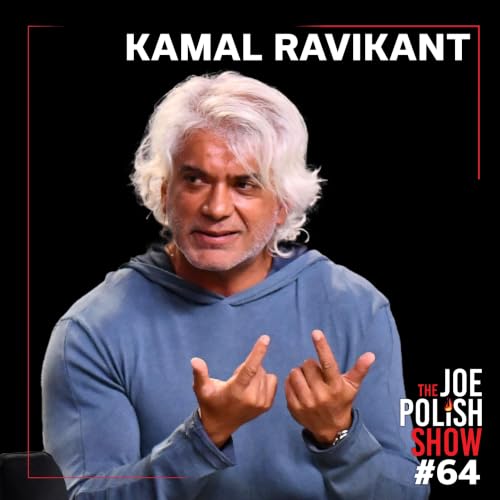
  • Love Yourself Like Your Life Depends On It With Kamal Ravikant and Joe Polish
    Sep 25 2026
    Joe Polish sits down with venture capitalist and Author Kamal Ravikant, for an unusually candid conversation about losing everything, the one-word vow that pulled him back from it, and what actually separates the investors who get rich from the ones who get wiped out. Here's what you're about to discover in this conversation: Why Kamal Ravikant hit a point so low after losing every dollar of his company, and his investors' money, that he could barely stand the sound of his own head.The one-word vow Kamal made to himself alone in a room, never intended to write down, and why he treats a promise to yourself as sacred as a marriage vow.How his inner dialogue flipped from self-hatred to something he can only call magic in about a week and a half, with zero drugs or alcohol involved.The night at a private Silicon Valley wine bar when a still mostly unknown Elon Musk answered a question about the single most important advice for a CEO, and the two words that stuck with Kamal for decades.The mindset flip his mentor Bill Coons taught him that separates the angel investors who lose $750,000 to $1,000,000 from the ones who spot every hole in a pitch.How a $35,000 check Kamal wrote to an unproven founder on Skype in 2016 is now worth roughly $6,000,000, and the one portfolio rule he swears by so a single hit can outrun every loss combined. If you'd like to join world-renowned Entrepreneurs at the next Genius Network® Event, apply today for your invitation to attend at https://geniusnetwork.com. Show Notes The Elon Musk Story From a Private Wine Bar Years before Tesla and SpaceX made him a household name, Kamal found himself in a small private Silicon Valley wine bar with about 20 people and Elon Musk.Someone in the group asked Musk for the single most important piece of advice he would give a CEO, and Kamal, stressed and overworked at the time, leaned in expecting something about cash flow.Musk's answer was to get rid of negative people, because keeping them on only lets them ruin everybody else around them.Decades later, Kamal still points to that moment as an early lesson in what it looks like to truly value yourself enough to walk away from what is not serving you. Growing Up an Immigrant Kid in Jamaica, Queens Kamal was raised by a single mother in Jamaica, Queens, the neighborhood widely credited as the birthplace of hip hop.He explains the story behind his long last name and what it meant to grow up, in his words, as an immigrant child.He dropped out of college after a year and joined the U.S. Army, wanting to give something back to the country that had taken his family in. Chasing His Brother Naval to Silicon Valley Kamal's younger brother, Naval Ravikant, went on to become globally known as an investor and thinker, and Kamal speaks candidly about what it is like being his older brother.He sold everything, bought a one-way ticket, and moved out during the late 1990s dot-com boom, doing what he calls too many things at once as a scrappy first-time founder. Losing Everything: The Company That Blew Up After building his entire identity around being a successful Entrepreneur, Kamal ran a company for three and a half years that was doing great, right up until it collapsed.He was making payroll on credit cards before it finally fell apart, and he lost every dollar he had personally invested along with money from friends who had backed him.His own co-founder had turned down a top position at Google out of loyalty to the company, which only deepened Kamal's guilt once everything came apart. The Vow That Changed Everything In the depths of what Kamal calls a dark night of the soul, he made himself a vow. Not to be great, not to be awesome, just to love himself.He treats a vow to yourself the way he treats a marriage vow: a sacred act that then obligates you to actually live it.He never read a single self-help book while working through it. He ran what he calls experiments with a sample size of one, keeping whatever worked and discarding whatever did not. From Self-Hatred to Magic in About a Week and a Half Within roughly ten days of living his vow, Kamal's inner dialogue flipped from hating himself over the lost money and broken trust to something closer to love.No drugs or alcohol were involved. He is candid that he had done ayahuasca and other substances during his years in Silicon Valley, but this particular shift was pure mindset work.Once loving himself became his dominant inner conversation, his outer life began changing in ways he was not consciously trying to force, a feeling he can only describe as magic. Deciding How He Feels, No Matter What Happens Kamal describes a more recent decision that he says has dramatically improved his quality of life: he no longer lets the world, social media, or a business outcome decide how he feels.He draws a hard line between reacting to life and responding to it, tying the word responsible directly back to being response-able, in control of his own state of mind.He ...
    Show More Show Less
    1 hr and 2 mins
  • Dare to Be Average: Finding Meaning Beyond Success with Ken Wells and Joe Polish
    Sep 11 2026
    Success doesn't eliminate suffering. Joe Polish and renowned addiction specialist Ken Wells explore why high achievers often struggle with shame, emptiness, and addiction, and why embracing everyday life may be the key to lasting fulfillment, authentic relationships, and personal brilliance. Here's what you're about to discover in this conversation: Why extraordinary achievement can never replace the search for meaning and inner peace.Ken Wells' surprising definition of addiction and how it extends far beyond drugs and alcohol.How shame fuels destructive behaviors and how compassion transforms lasting recoveryWhy boredom, discomfort, and everyday life are often the doorway to your greatest personal growthThe hidden dangers of workaholism and why Entrepreneurs are especially vulnerable.How childhood deprivation and unmet emotional needs can quietly drive adult success and addiction.Why authentic relationships and safe connection are essential for lasting recovery.Practical ways to transform fear, anger, failure, and shame into wisdom, resilience, and purpose. If you'd like to join world-renowned Entrepreneurs at the next Genius Network Event or want to learn more about Genius Network, go to www.GeniusNetworkEvents.com. Show Notes Why "Dare to Be Average" Matters • Ken explains that "average" isn't mediocrity. It's learning to embrace the ordinary experiences every human shares. • High achievers often excel at producing extraordinary results while avoiding ordinary emotions like boredom, loneliness, and emptiness. • Personal brilliance emerges when we stop escaping discomfort and begin finding meaning within it. Success Doesn't Protect You From Suffering • Billionaires, celebrities, and world-class Entrepreneurs experience the same fear, anxiety, shame, and insecurity as everyone else. • Wealth and achievement cannot eliminate the human condition. • True fulfillment comes from learning how to navigate life's emotional challenges rather than outrunning them. What Addiction Really Is • Addiction is defined as an unhealthy relationship with a mood-altering experience that creates life-damaging consequences while becoming impossible to stop alone. • Addiction can include work, sex, gambling, achievement, complaining, or anything used to escape pain. • The addiction itself isn't the problem. It becomes a temporary solution to much deeper emotional suffering. How Deprivation Creates Addiction • Unmet emotional needs often create lifelong feelings of deprivation. • That deprivation produces entitlement to temporarily "feel better." • Every addiction delivers on its promise for a brief moment before demanding a much greater price. • Recovery begins by identifying the legitimate emotional need hiding beneath the addictive behavior. Workaholism: The Addiction We Celebrate • Work addiction often disguises itself as ambition and productivity. • Many Entrepreneurs unknowingly seek their worth through achievement instead of identity. • Ken shares his own withdrawal experience after intentionally reducing his workload. • Peace comes from knowing who you are, not simply what you accomplish. The Real Meaning of Intimacy • Joe shares one of his favorite definitions: intimacy is a mutual exploration of a shared safe place. • Addiction becomes an attempt to self-soothe when genuine connection feels unsafe. • Lasting recovery requires learning to reconnect with yourself before reconnecting with others. Transforming Shame Into Compassion • Shame becomes destructive when attached to identity. • When attached to behavior instead of personhood, shame can become one of life's greatest teachers. • Compassion grows from recognizing our own brokenness without allowing it to define us. • Healing comes through honesty, self-awareness, and practicing new emotional habits daily. Authenticity Is Harder Than Achievement • Ken reflects that becoming genuinely honest with yourself may be life's greatest challenge. • Authenticity requires vulnerability with trusted people rather than performing for others. • Entrepreneurs often master external success before learning internal honesty. Recovery Is Learning How To Find Your Way Back • The goal isn't perfection or never making mistakes again. • Recovery teaches people how to return to themselves after getting lost. • Like building physical strength, emotional resilience develops through consistent daily practice. • Every setback becomes another opportunity to strengthen self-awareness and resilience. Building A Genius Network For Recovery • Joe shares why conversations about addiction belong alongside conversations about business success. • Every Entrepreneur will eventually face addiction or suffering personally or through someone they love. • A trusted community creates space for honesty, support, accountability, and meaningful transformation. • Recovery enhances performance rather than limiting achievement. Resources Dare ...
    Show More Show Less
    33 mins
  • Reading Predators and Becoming an Impossible Target with Tim Larkin and Joe Polish
    Aug 28 2026
    Tim Larkin has spent more than three decades studying predators and teaching everyday people how to avoid ever needing to fight one. In this episode, he joins Joe Polish to explain why violence is rarely the answer, but when it is, it's the only answer, and how understanding the subject changes everything about how you move through the world. Here's what you're about to discover in this conversation: Why Tim held up a single car wash ticket to convince a Vegas entertainer worth $55 million that his elaborate "special forces" home invasion drill missed the real threat sitting in his wife's glove compartment. The difference between antisocial aggression (two silverback gorillas posturing for dominance) and asocial violence (a lioness in tall grass), and why confusing the two gets people hurt. Why Tim tells clients the best home security device is not a Rottweiler or a firearm, but a small dog that won't stop barking (and what a gang's own hand-drawn map of a neighborhood proved). Inside Tim's interviews with prison gang leaders from the Aryan Brotherhood to the Mexican Mafia, and the moment prison guards were caught betting on the riots they had engineered themselves. The story of a woman stalked for four days along a Phoenix canal, and the single split-second decision that saved her life when her stalker finally struck. Why Tim, a former special operations trainer, believes AI-driven job displacement may be a bigger threat to society than any physical predator, and what he just proved for $50 in AI tokens. If you'd like to join world-renowned Entrepreneurs at the next Genius Network Event or want to learn more about Genius Network, go to www.GeniusNetworkEvents.com. Show Notes Why the Pentagon's Name Change Is a Lesson in Clarity Tim explains why the shift from Department of Defense back to Department of War is not about machismo. It's about mission clarity.He argues the original 1947 rename opened the door to using the military for jobs it was never built for, comparing it to using a stick of dynamite to open a car door.Tim connects the same principle to vague LinkedIn job descriptions, where unclear language creates the same kind of dangerous confusion he sees around violence. A Boyhood Boxing Lesson From an Irish-Boston Grandfather Tim traces his fascination with violence back to his grandfather's basement in Massachusetts, where he learned to box alongside his cousins.His grandfather, whose own father had run liquor with Joe Kennedy, drew a hard line between the rules of the ring and what happens outside it.That single distinction, sport versus real injury to the human body, becomes the foundation of everything Tim later builds into Target Focus Training. The 800-Pound Gorilla Nobody Wants to Look At Tim says violence is the subject almost nobody studies until it's already too late to matter.He asks the room a simple question: who has felt the potential for violence in just the last five days? The answers surprise almost everyone.Women, he notes, pick up on danger cues in places like elevators far faster than men do, because the background threat assessment runs constantly whether people admit it or not. Antisocial Aggression vs. Asocial Violence Tim draws a hard line between antisocial aggression (the ego-driven posturing that looks like two silverback gorillas bluffing for dominance) and asocial violence (the silent predatory strike of a lioness in tall grass).Confusing the two, he says, is exactly how untrained people get hurt reacting to the wrong kind of threat.A true predator gives almost no warning and goes straight for the areas of the body that end a confrontation immediately. The Currency of Violence: What the Mafia Understands About Power Tim describes his interviews with Sammy Gravano and explains why the mob's real currency was never cash. It was the credible threat of violence.He walks through how Gravano moved from eliminating rivals during the Gotti takeover to protecting the organization's ability to make money once control was secured.Tim argues nations operate the same way, and that understanding this currency changes how you read power in any room. Inside the Minds of Prison Gang Leaders Tim has interviewed leaders from the Aryan Brotherhood, the Mexican Mafia, and the Black Guerrilla Family, and says their sophistication would unsettle most executives.He describes a gang leader locked up 23 hours a day who still runs an estimated $1 to $2 billion drug operation through nothing but disciplined communication structure.Tim tells the story of Michael Thompson, an Aryan Brotherhood founder, discovering that Folsom Prison guards were secretly betting on the riots they had engineered between rival gangs. The Vegas Entertainer's $55 Million House and a Car Wash Ticket A well-known entertainer with the most expensive house in Las Vegas once asked Tim to run a full nighttime home invasion drill with special operations veterans.Tim instead held up a small ticket from the community's car ...
    Show More Show Less
    57 mins
adbl_web_anon_alc_button_suppression_t1
No reviews yet