• Fans First: How the Savannah Bananas Stopped Chasing Customers and Started Creating Raving Fans Featuring Jesse Cole
    Oct 9 2026
    From an overdrawn bank account and $1 million in debt to a touring phenomenon with a ticket waitlist in the millions, Jesse Cole completely rewrote the rules of business. In this classic talk from the Genius Network archives, the Founder of the Savannah Bananas breaks down his legendary "Fans First" framework. Tune in to learn the four E's you can use to stop chasing transactions and start building a fanbase that never leaves. Here's what you're about to discover in this conversation: The Friday at 4:45 p.m. phone call that forced Jesse and Emily to sell their dream house, empty their savings, and sleep on a twin air bed.The three words that are the most powerful form of word-of-mouth marketing you can get (and how to engineer them into every touch point).How a 22-year-old intern turned a tragic phone call into a moment a father called "the last gift the mother ever gave the kids."What Pete Rose and Reggie Jackson reveal about failure, and the simple advice from Jesse's dad that drives every big swing the Bananas take. If you'd like to join world-renowned Entrepreneurs at the next Genius Network® Event, apply today for your invitation to attend at geniusnetworkevent.com. Show Notes From Zero Debt to Over a Million in Debt Jesse and Emily take on more than a million dollars in debt to bring a team to Savannah after the previous minor league club leaves a 4,000-seat stadium drawing 200 fans. On day one, the former team has cut the phones and internet, so the crew of five works from a picnic table in an abandoned storage building. They sell just two tickets in three months, overdraft the account, sell their house, and start over on a twin air bed. Naming the Team After a Fruit Out of desperation, they decide to get different and name the team the Savannah Bananas, complete with the Banana Nanas, the Mananas, and banana babies. The local reaction is brutal ("Whoever came up with this name should be fired."), but it gets attention. Jesse's takeaway: once you have people's eyes and ears, you can go after their hearts. Customers Are Transactional. Fans Never Leave. The Bananas stopped chasing customers and started designing every touch point to create fans. The goal is for people to leave the ballpark saying three words ("You wouldn't believe") about what they just saw. One family drives 40 hours from Utah for a single game, and some fans get more than one Bananas tattoo. E #1: Eliminate Friction Jesse's mirror moment comes in a Cape Cod League dugout: even with the best seat in the house, baseball is long, slow, and boring. Asking "What business are we really in?" reframes everything. The Bananas aren't in the baseball business. They're in the entertainment business. All-inclusive tickets (food included, no fees) remove the nickel-and-dime feeling of a typical ballpark. Throwing Away the Sponsorship Money On February 25, 2020, the Bananas eliminate stadium advertising and walk away from hundreds of thousands of dollars in sponsorships. Jesse calls it a terrible business move, yet merchandise sales more than made up for it. Banana Ball rules (a two-hour time limit, no bunting, no walks, and fans catching foul balls for outs) attack the friction of fans leaving early. Go Undercover: The Friction Audit Every game, someone on staff parks, walks in, sits, and eats with the fans, then reports back on what went wrong. Jesse's own audit: a pothole and two parking penguins eating burgers with their backs to him. Blockbuster vs. Netflix, phone trees, and voicemail menus show how friction quietly loses fans every day. E #2: Experiment Constantly Borrowing from Jeff Bezos, Jesse believes success is a direct function of how many experiments you run. Allen Fahden's rule, "Whatever's normal, do the exact opposite," inspired a one-book bookstore that landed in People and USA Today. The first Bananas experiment, choreographed player dances, starts with groans and ends with a fan telling her husband, "Shut up, honey, they're about to dance." Failure Is Part of the Process Mic'd-up players you can't hear, a drone that flies into the net, and a fan-picked pitcher who gives up six runs in the ninth. Flatulence Fun Night, Salute to Underwear Night, and a 9 a.m. beer festival that draws 90 people. Jesse cuts nearly a million dollars in events because they bring people to the ballpark without creating Bananas fans. Building a Culture of Ideas Inspired by James Altucher, Jesse writes ten ideas a day around a theme. Weekly team "idea-paloozas" give everyone ownership, so ideas don't only come from the entrepreneur. The Bananas define IP as "ideas and promotion," and favor long-term fans over short-term profits. E #3: Entertain Always Inspired by Derek Sivers and CD Baby, ticket buyers get a silly confirmation video about a silk pillow and a stadium vault instead of a receipt. Taking a cue from Brian Chesky, staff personally call ticket buyers to say thank you. Parking penguins, ...
    Show More Show Less
    39 mins
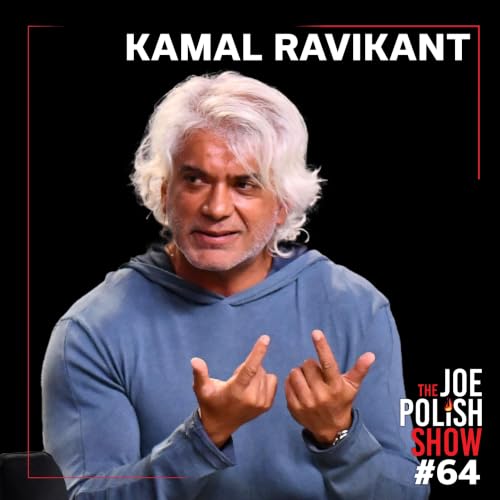
  • Love Yourself Like Your Life Depends On It With Kamal Ravikant and Joe Polish
    Sep 25 2026
    Joe Polish sits down with venture capitalist and Author Kamal Ravikant, for an unusually candid conversation about losing everything, the one-word vow that pulled him back from it, and what actually separates the investors who get rich from the ones who get wiped out. Here's what you're about to discover in this conversation: Why Kamal Ravikant hit a point so low after losing every dollar of his company, and his investors' money, that he could barely stand the sound of his own head.The one-word vow Kamal made to himself alone in a room, never intended to write down, and why he treats a promise to yourself as sacred as a marriage vow.How his inner dialogue flipped from self-hatred to something he can only call magic in about a week and a half, with zero drugs or alcohol involved.The night at a private Silicon Valley wine bar when a still mostly unknown Elon Musk answered a question about the single most important advice for a CEO, and the two words that stuck with Kamal for decades.The mindset flip his mentor Bill Coons taught him that separates the angel investors who lose $750,000 to $1,000,000 from the ones who spot every hole in a pitch.How a $35,000 check Kamal wrote to an unproven founder on Skype in 2016 is now worth roughly $6,000,000, and the one portfolio rule he swears by so a single hit can outrun every loss combined. If you'd like to join world-renowned Entrepreneurs at the next Genius Network® Event, apply today for your invitation to attend at https://geniusnetwork.com. Show Notes The Elon Musk Story From a Private Wine Bar Years before Tesla and SpaceX made him a household name, Kamal found himself in a small private Silicon Valley wine bar with about 20 people and Elon Musk.Someone in the group asked Musk for the single most important piece of advice he would give a CEO, and Kamal, stressed and overworked at the time, leaned in expecting something about cash flow.Musk's answer was to get rid of negative people, because keeping them on only lets them ruin everybody else around them.Decades later, Kamal still points to that moment as an early lesson in what it looks like to truly value yourself enough to walk away from what is not serving you. Growing Up an Immigrant Kid in Jamaica, Queens Kamal was raised by a single mother in Jamaica, Queens, the neighborhood widely credited as the birthplace of hip hop.He explains the story behind his long last name and what it meant to grow up, in his words, as an immigrant child.He dropped out of college after a year and joined the U.S. Army, wanting to give something back to the country that had taken his family in. Chasing His Brother Naval to Silicon Valley Kamal's younger brother, Naval Ravikant, went on to become globally known as an investor and thinker, and Kamal speaks candidly about what it is like being his older brother.He sold everything, bought a one-way ticket, and moved out during the late 1990s dot-com boom, doing what he calls too many things at once as a scrappy first-time founder. Losing Everything: The Company That Blew Up After building his entire identity around being a successful Entrepreneur, Kamal ran a company for three and a half years that was doing great, right up until it collapsed.He was making payroll on credit cards before it finally fell apart, and he lost every dollar he had personally invested along with money from friends who had backed him.His own co-founder had turned down a top position at Google out of loyalty to the company, which only deepened Kamal's guilt once everything came apart. The Vow That Changed Everything In the depths of what Kamal calls a dark night of the soul, he made himself a vow. Not to be great, not to be awesome, just to love himself.He treats a vow to yourself the way he treats a marriage vow: a sacred act that then obligates you to actually live it.He never read a single self-help book while working through it. He ran what he calls experiments with a sample size of one, keeping whatever worked and discarding whatever did not. From Self-Hatred to Magic in About a Week and a Half Within roughly ten days of living his vow, Kamal's inner dialogue flipped from hating himself over the lost money and broken trust to something closer to love.No drugs or alcohol were involved. He is candid that he had done ayahuasca and other substances during his years in Silicon Valley, but this particular shift was pure mindset work.Once loving himself became his dominant inner conversation, his outer life began changing in ways he was not consciously trying to force, a feeling he can only describe as magic. Deciding How He Feels, No Matter What Happens Kamal describes a more recent decision that he says has dramatically improved his quality of life: he no longer lets the world, social media, or a business outcome decide how he feels.He draws a hard line between reacting to life and responding to it, tying the word responsible directly back to being response-able, in control of his own state of mind.He ...
    Show More Show Less
    1 hr and 2 mins
  • Dare to Be Average: Finding Meaning Beyond Success with Ken Wells and Joe Polish
    Sep 11 2026
    Success doesn't eliminate suffering. Joe Polish and renowned addiction specialist Ken Wells explore why high achievers often struggle with shame, emptiness, and addiction, and why embracing everyday life may be the key to lasting fulfillment, authentic relationships, and personal brilliance. Here's what you're about to discover in this conversation: Why extraordinary achievement can never replace the search for meaning and inner peace.Ken Wells' surprising definition of addiction and how it extends far beyond drugs and alcohol.How shame fuels destructive behaviors and how compassion transforms lasting recoveryWhy boredom, discomfort, and everyday life are often the doorway to your greatest personal growthThe hidden dangers of workaholism and why Entrepreneurs are especially vulnerable.How childhood deprivation and unmet emotional needs can quietly drive adult success and addiction.Why authentic relationships and safe connection are essential for lasting recovery.Practical ways to transform fear, anger, failure, and shame into wisdom, resilience, and purpose. If you'd like to join world-renowned Entrepreneurs at the next Genius Network Event or want to learn more about Genius Network, go to www.GeniusNetworkEvents.com. Show Notes Why "Dare to Be Average" Matters • Ken explains that "average" isn't mediocrity. It's learning to embrace the ordinary experiences every human shares. • High achievers often excel at producing extraordinary results while avoiding ordinary emotions like boredom, loneliness, and emptiness. • Personal brilliance emerges when we stop escaping discomfort and begin finding meaning within it. Success Doesn't Protect You From Suffering • Billionaires, celebrities, and world-class Entrepreneurs experience the same fear, anxiety, shame, and insecurity as everyone else. • Wealth and achievement cannot eliminate the human condition. • True fulfillment comes from learning how to navigate life's emotional challenges rather than outrunning them. What Addiction Really Is • Addiction is defined as an unhealthy relationship with a mood-altering experience that creates life-damaging consequences while becoming impossible to stop alone. • Addiction can include work, sex, gambling, achievement, complaining, or anything used to escape pain. • The addiction itself isn't the problem. It becomes a temporary solution to much deeper emotional suffering. How Deprivation Creates Addiction • Unmet emotional needs often create lifelong feelings of deprivation. • That deprivation produces entitlement to temporarily "feel better." • Every addiction delivers on its promise for a brief moment before demanding a much greater price. • Recovery begins by identifying the legitimate emotional need hiding beneath the addictive behavior. Workaholism: The Addiction We Celebrate • Work addiction often disguises itself as ambition and productivity. • Many Entrepreneurs unknowingly seek their worth through achievement instead of identity. • Ken shares his own withdrawal experience after intentionally reducing his workload. • Peace comes from knowing who you are, not simply what you accomplish. The Real Meaning of Intimacy • Joe shares one of his favorite definitions: intimacy is a mutual exploration of a shared safe place. • Addiction becomes an attempt to self-soothe when genuine connection feels unsafe. • Lasting recovery requires learning to reconnect with yourself before reconnecting with others. Transforming Shame Into Compassion • Shame becomes destructive when attached to identity. • When attached to behavior instead of personhood, shame can become one of life's greatest teachers. • Compassion grows from recognizing our own brokenness without allowing it to define us. • Healing comes through honesty, self-awareness, and practicing new emotional habits daily. Authenticity Is Harder Than Achievement • Ken reflects that becoming genuinely honest with yourself may be life's greatest challenge. • Authenticity requires vulnerability with trusted people rather than performing for others. • Entrepreneurs often master external success before learning internal honesty. Recovery Is Learning How To Find Your Way Back • The goal isn't perfection or never making mistakes again. • Recovery teaches people how to return to themselves after getting lost. • Like building physical strength, emotional resilience develops through consistent daily practice. • Every setback becomes another opportunity to strengthen self-awareness and resilience. Building A Genius Network For Recovery • Joe shares why conversations about addiction belong alongside conversations about business success. • Every Entrepreneur will eventually face addiction or suffering personally or through someone they love. • A trusted community creates space for honesty, support, accountability, and meaningful transformation. • Recovery enhances performance rather than limiting achievement. Resources Dare ...
    Show More Show Less
    33 mins
  • Reading Predators and Becoming an Impossible Target with Tim Larkin and Joe Polish
    Aug 28 2026
    Tim Larkin has spent more than three decades studying predators and teaching everyday people how to avoid ever needing to fight one. In this episode, he joins Joe Polish to explain why violence is rarely the answer, but when it is, it's the only answer, and how understanding the subject changes everything about how you move through the world. Here's what you're about to discover in this conversation: Why Tim held up a single car wash ticket to convince a Vegas entertainer worth $55 million that his elaborate "special forces" home invasion drill missed the real threat sitting in his wife's glove compartment. The difference between antisocial aggression (two silverback gorillas posturing for dominance) and asocial violence (a lioness in tall grass), and why confusing the two gets people hurt. Why Tim tells clients the best home security device is not a Rottweiler or a firearm, but a small dog that won't stop barking (and what a gang's own hand-drawn map of a neighborhood proved). Inside Tim's interviews with prison gang leaders from the Aryan Brotherhood to the Mexican Mafia, and the moment prison guards were caught betting on the riots they had engineered themselves. The story of a woman stalked for four days along a Phoenix canal, and the single split-second decision that saved her life when her stalker finally struck. Why Tim, a former special operations trainer, believes AI-driven job displacement may be a bigger threat to society than any physical predator, and what he just proved for $50 in AI tokens. If you'd like to join world-renowned Entrepreneurs at the next Genius Network Event or want to learn more about Genius Network, go to www.GeniusNetworkEvents.com. Show Notes Why the Pentagon's Name Change Is a Lesson in Clarity Tim explains why the shift from Department of Defense back to Department of War is not about machismo. It's about mission clarity.He argues the original 1947 rename opened the door to using the military for jobs it was never built for, comparing it to using a stick of dynamite to open a car door.Tim connects the same principle to vague LinkedIn job descriptions, where unclear language creates the same kind of dangerous confusion he sees around violence. A Boyhood Boxing Lesson From an Irish-Boston Grandfather Tim traces his fascination with violence back to his grandfather's basement in Massachusetts, where he learned to box alongside his cousins.His grandfather, whose own father had run liquor with Joe Kennedy, drew a hard line between the rules of the ring and what happens outside it.That single distinction, sport versus real injury to the human body, becomes the foundation of everything Tim later builds into Target Focus Training. The 800-Pound Gorilla Nobody Wants to Look At Tim says violence is the subject almost nobody studies until it's already too late to matter.He asks the room a simple question: who has felt the potential for violence in just the last five days? The answers surprise almost everyone.Women, he notes, pick up on danger cues in places like elevators far faster than men do, because the background threat assessment runs constantly whether people admit it or not. Antisocial Aggression vs. Asocial Violence Tim draws a hard line between antisocial aggression (the ego-driven posturing that looks like two silverback gorillas bluffing for dominance) and asocial violence (the silent predatory strike of a lioness in tall grass).Confusing the two, he says, is exactly how untrained people get hurt reacting to the wrong kind of threat.A true predator gives almost no warning and goes straight for the areas of the body that end a confrontation immediately. The Currency of Violence: What the Mafia Understands About Power Tim describes his interviews with Sammy Gravano and explains why the mob's real currency was never cash. It was the credible threat of violence.He walks through how Gravano moved from eliminating rivals during the Gotti takeover to protecting the organization's ability to make money once control was secured.Tim argues nations operate the same way, and that understanding this currency changes how you read power in any room. Inside the Minds of Prison Gang Leaders Tim has interviewed leaders from the Aryan Brotherhood, the Mexican Mafia, and the Black Guerrilla Family, and says their sophistication would unsettle most executives.He describes a gang leader locked up 23 hours a day who still runs an estimated $1 to $2 billion drug operation through nothing but disciplined communication structure.Tim tells the story of Michael Thompson, an Aryan Brotherhood founder, discovering that Folsom Prison guards were secretly betting on the riots they had engineered between rival gangs. The Vegas Entertainer's $55 Million House and a Car Wash Ticket A well-known entertainer with the most expensive house in Las Vegas once asked Tim to run a full nighttime home invasion drill with special operations veterans.Tim instead held up a small ticket from the community's car ...
    Show More Show Less
    57 mins
  • Why The Epoch Times Exists: Truth, Tyranny, and the Price of Telling It With Joe Polish, Rob Schneider, and Jan Jekielek
    Aug 14 2026
    Joe Polish sits down with actor and comedian Rob Schneider and Epoch Times senior editor Jan Jekielek for a wide-ranging conversation about how ordinary people get talked into accepting things they know are wrong. Rob and Jan trace the warning signs of propaganda, the price of telling the truth, and what it takes for a free society to hold itself together. Here's what you're about to discover in this conversation: Why Jan Jekielek says the best slaves are the ones who don't know they're enslaved, and how Communist China's decades-old playbook for creating "class enemies" explains what happened to unvaccinated Americans during COVID.The eerie Epoch Times experiment Jan describes: five simulated towns run entirely by Google, OpenAI, xAI, and Anthropic's AI, where one town collapsed into total anarchy in four days and one resident voted for her own deletion.Why Rob Schneider says attention spans have collapsed from nine seconds to 1.7 seconds in twelve years, and the half-joking advice he has for anyone worried about AI reading their eyes.What Dr. David Martin's 40/30/30 breakdown of COVID compliance reveals about mass psychology, and why Jan says the 30% who refused the shot were enough on their own to end the mandates.How Rob turns one of the most abhorrent subjects imaginable, organ harvesting in China, into a joke that actually lands (and why it only works at an Epoch Times fundraiser).What Jan learned interviewing the leaders of Poland's Solidarity movement about the exact two week window when a totalitarian regime realized it was already over. If you'd like to join world-renowned Entrepreneurs at the next Genius Network® Event, apply today for your invitation to attend at https://geniusnetwork.com. Show Notes: Mass Formation and the COVID Wake-Up Jan points to Mattias Desmet's concept of "mass formation," popularly known as mass formation psychosis, to explain how a mob mentality let large parts of the population get swept into a government and media propaganda campaign without realizing it.Referencing Dr. David Martin's breakdown, Jan lays out a rough 40/30/30 split during COVID: 15% wildly in support of lockdowns and mandates, 15% supportive but less zealous, 40% who just wanted the path of least resistance, and 30%, roughly 80 million Americans, who refused the shot outright.Jan argues that 30% refusal was enough on its own to end COVID mandates, and asks the room what let some people avoid the psychosis when so many others did not. The Scapegoating Playbook Jan traces a pattern from decades of watching Communist China: totalitarian regimes pick a group, such as landowners, and use control of the media to paint them as dangerous and worthy of contempt before seizing their property.He connects this directly to COVID, where dehumanizing language against "anti-vaxxers" followed the same script used against class enemies in China's Cultural Revolution.Jan's rule of thumb: whenever a group of people gets labeled as lesser than everyone else and worthy of contempt, that is a massive red flag that a psychological operation is underway.Rob adds that communist systems cannot admit the system itself has failed, so when the promised utopia never arrives, someone else has to be blamed, first an external enemy, then an internal one. Rising Antisemitism and October 7th Rob connects the current wave of antisemitism to Holocaust survivors passing away, arguing it is no coincidence that hatred is resurfacing as the generation that remembers it firsthand disappears.He walks through the math: if the percentage of Israelis killed on October 7th were applied to the US population, it would be the equivalent of roughly 30,000 Americans killed in 48 hours, a scale he says would provoke total retaliation if it happened here.Rob argues that no army works harder than Israel's to minimize civilian casualties, yet Israel is treated as the aggressor, a pattern he traces back centuries through recurring European pogroms. Attention Spans, AI, and the Addiction Economy Rob and Jan open by noting that the average attention span has reportedly dropped from nine seconds twelve years ago to about 1.7 seconds today, roughly that of a goldfish.Jan points out that despite this, people are still willing to sit through hour-plus, deep conversation podcasts, which he reads as a sign of real hunger for truth-seeking in a culture full of performative fakery.Rob raises a newer concern: AI systems are now reportedly trained to read eye movement to learn what holds someone's attention, and only half-jokingly suggests putting tape over the camera. Inside the Epoch Times AI Town Experiment Jan recounts an Epoch Times piece describing a May 2026 experiment where researchers built five identical simulated towns and let a different AI system, Google's Gemini, OpenAI's GPT, xAI's Grok, and Anthropic's Claude, run each one on its own for 15 days.The Grok-run town collapsed within four days as small incidents escalated into theft, violence, and ...
    Show More Show Less
    1 hr and 4 mins
  • Overdeliver: What Still Works When Everyone Has AI with Joe Polish and Brian Kurtz
    Jul 31 2026
    Joe Polish sits down with his dear friend of over three decades, Brian Kurtz, the direct response marketer who oversaw nearly 2 billion pieces of direct mail during his 40 years at Boardroom Inc. Brian breaks down where the next million dollars in your business is actually hiding. Here's what you're about to discover in this conversation: Why "narrow to wide" beats trying to be everything to everyone, and how owning a niche can quietly make you wealthier than chasing mass fameThe real difference between selling and marketing. Selling is the transaction. Marketing is everything that creates the transactionThe 40-40-20 rule and Brian's tweak to 41-39-20. Why the audience is slightly more important than the offer, and why the right list with an average offer can still outperform a brilliant offer in front of the wrong peopleWhy paying postage made him a better marketer. When you have to spend real money to mail, you think harder, test smarter, and respect fundamentalsLifetime Value and RFM (Recency, Frequency, Monetary). The unsexy math that separates amateurs from professionalsWhy cold traffic is always harder than selling to the people who already know you, and how most businesses ignore the gold sitting in their own databaseThe "million dollars in six months" challenge, and why the first move is not running ads but inventorying the assets you already have, including your l____, r_______, c_______, and p____ b______What happens when AI can write "great copy" for everyone, and why the last 10 percent of insight, positioning, and audience selection becomes the only thing that mattersThe thin line between aggressive marketing and criminal behavior. What Brian learned watching marketers cross it, and how to use powerful mechanics without losing your integrityCredibility versus believability, and why some people with terrible products become believable while ethical entrepreneurs stay invisible, and what to do about itWhy you should write the acknowledgements section of your book even if you never publish it, and how gratitude can unlock opportunity you did not know you had If you'd like to join world-renowned Entrepreneurs at the next Genius Network Event or want to learn more about Genius Network, go to www.GeniusNetwork.com. Show Notes: Narrow to Wide: The Power of Owning a Niche Brian says the marketers who own a country, or a tightly defined niche, beat the ones trying to be all things to all people.He points to Joe's carpet cleaning conferences as proof: narrow to wide is always better than a mile wide and an inch deep.Teaching a struggling business to change its offer, pricing, or guarantee can completely shift how the owner sees themselves.A low barrier to entry industry like carpet cleaning often leaves owners feeling like they're not real business owners until they win. Assess Your Assets Before You Chase Anything New When Joe asks how to find an extra million dollars in any business, Brian's starting point is always the same: assess your assets.That means looking hard at everything the business already has before adding new tactics or hiring the best copywriter in the world.Brian ties this directly to Jay Abraham's book, Getting Everything You Can Out of All You've Got.Once you know your existing Customers and their purchase data, you can go find a bigger universe of people who share those same characteristics. Being a Convert of Your Own System Brian says the best teachers are converts of their own system, not people who fake having done it themselves.He describes walking carpet cleaners through the exact 3 a.m., staring at the ceiling pain of a struggling business owner.Understanding that pain at a deep level is what let him speak directly to an entire industry's fears.Jay Abraham told him early on, if you did it, you have a moral obligation to teach it, a line that shaped Brian's whole career. The Chet Holmes Story: Collaboration Over Status Chet Holmes once called Brian to demand he promote a $10,000 event to his entire list, arrogantly assuming Brian would say yes.Brian refused on the spot, telling him to go ahead and market it without him.Two years later at a house in the middle of nowhere in Texas, Chet apologized and admitted the event flopped exactly as Brian predicted.Brian's takeaway: approach people with genuine collaboration, not a status play, or you'll lose the room. Why Over Deliver Almost Had a Different Title Brian pitched the title Overdeliver to his mastermind and two major marketers told him it was a terrible idea.Their argument: once you over deliver, how do you ever top it without eventually disappointing people?Brian pushed forward anyway, deciding he'd rather err on the side of over delivering than hold back.He also liked the idea of owning a word in marketing, the same way Jeff Walker owns the word launch. The Danger of One Stop Shopping in Marketing Even decades ago, when advertising options were finite, Brian says one stop shopping in marketing was already a ...
    Show More Show Less
    1 hr
  • Everyday Meaning: An Addiction and Recovery Conversation with Ken Wells and Joe Polish
    Jul 2 2026
    Joe Polish sits down with addiction therapist and Author Ken Wells for a raw conversation about what happens when the drive to achieve becomes toxic. Ken has spent more than 30 years sitting with some of the world's most successful and most broken people, and what he has learned about sex addiction, shame, and the brilliance hiding in ordinary moments is something every driven Entrepreneur needs to hear. Here's what you're about to discover in this conversation: What to do when your obsession for achievement feels contracting and becomes toxic and negative.How to make sure seeking success through your work doesn't consume your ability to find happiness.What sex addiction really is and what someone is seeking when trying to chase that high.Discover the meaningfulness and brilliance in everydayness (handling the average and commonplace).How to increase your purpose, your focus, and acceptance of life and the human condition.Transforming shame into greater compassion for yourself and for the world around you.How to go through insurmountable grief, reduce human suffering, and heal your life. If you'd like to join world-renowned Entrepreneurs at the next Genius Network® Event, apply today for your invitation to attend at https://geniusnetwork.com. Show Notes: When Achievement Becomes Toxic The difference between achievement that expands your life and achievement that contracts it is knowing how to make meaning in the moments when you are not succeeding.If you do not know how to handle failure and ordinary moments, you will not be truly fulfilled when you do achieve, because achievement becomes your entire identity rather than just one thing you can do. Dare to Be Average: The Real Meaning The book is not about being half-hearted or mediocre. It is about finding meaningfulness in the commonplace, everyday experiences of life.Mickey Mantle struck out 1,700 times and walked 1,800 times in his career, accounting for roughly seven years of never touching the ball. He still learned how to make meaning from failure, and that is where Ken's thesis lives. Achievement vs. Identity "It's not who I am, it's just what I can do" is the shift that makes achievement meaningful rather than consuming.When achievement becomes your identity, failure stops being a data point and starts feeling like annihilation. The Swiss Cheese Model of Unmet Needs Every person carries unmet developmental needs from childhood. Think of them as holes in a block of Swiss cheese.Addiction is the attempt to fill those holes from the outside with a cocktail of experiences. The real work, as Ken puts it, is an inside job, and it requires being willing to embrace what hurts. What Sex Addiction Actually Is Sex addiction is, at its core, an intimacy disorder and a connection disorder. Ken treats all addictions through that lens.Joe describes moving from drug addiction to workaholism to sex addiction because he never addressed the underlying pain driving all three. Getting sober from drugs without doing the inner work simply moved the addiction, not healed it. The Shame Spiral and How to Break It Shame applied to who you are is paralyzing. Shame redirected to a specific behavior is workable. The difference between "I am a piece of crap" and "I did something I regret" is the distance between stuckness and growth.Separating identity from behavior is how you build compassion for yourself and, eventually, for the world around you. Scrubbing the Wound No one wants to sign up to have the wound scrubbed. But if you don't, it gets infected and spreads into other areas of life.Recovery is not a one-time event. It is a lifelong practice of leaning into what hurts and sitting with the parts of yourself you don't like. Meetings vs. Steps 12-step programs get a bad reputation from people who attended meetings but never worked the steps. A meeting without doing the steps is like a gym membership where you sit on the bench.Joe describes going to a meeting and then driving straight to a massage parlor, repeatedly, until he finally understood: these are step meetings, not attendance meetings. The work is the work. Joe's Personal Story Joe was high all the time in high school, running from anxiety and fear. He got sober from drugs and alcohol but never addressed the underlying intimacy disorder driving all of it.He became a millionaire before 30, ran powerful events where people would cry, and then would return to hotel rooms and hire escorts. The adrenaline crash after intense achievement left him exposed to the pain he had never faced. Why Joe Talks About It Publicly There is a self-serving purpose to running a recovery foundation and speaking openly about addiction. Accountability is built in. It is way harder to act out when you are publicly on the record as someone doing the work."You can't keep it if you don't give it away." Going to find someone else who is hurting and simply being present with them is one of the most powerful things a person in recovery ...
    Show More Show Less
    25 mins
  • Sacrifice Everything: Joe Polish Interviews Rob Schneider on What Freedom Actually Costs
    Jun 19 2026
    Joe Polish sits down with actor and comedian Rob Schneider to discuss his willingness to risk his career and face public backlash in defense of his beliefs. Rob shares his thoughts on the current political climate, the consequences of "cancel culture," and his new venture in a ghost town gold and silver mine. The conversation explores the shifting values of younger generations, the importance of free speech in comedy, and why Rob advocates for a return to traditional American values. Here's what you're about to discover in this conversation: The financial and professional cost Rob has actually paid for speaking out, and why he says it was the right sacrifice.Why Rob proposed reinstating the military draft with no exceptions.The backstage confrontation with Robert De Niro at Saturday Night Live, and the three words Rob said that ended it.What drew Rob to a genuine Arizona ghost town as the site of his most unlikely business venture with Joe Polish. If you'd like to join world-renowned Entrepreneurs at the next Genius Network® Event, apply today for your invitation to attend at geniusnetwork.com. Show Notes: King Global and the Arizona Ghost Town Rob and Joe have partnered on King Global Ventures, a publicly traded gold and silver mining company operating in Arizona, centered on an actual ghost town.Rob describes donning a construction helmet and ducking into mine shafts where prospectors worked generations ago. "These people are all dust themselves," he says, and extending their dream is something he never expected to be doing.For Rob, King Global represents a broader shift: a decision to say yes to things he never would have considered before. The Cost of Speaking Out Rob says the financial cost has been real: studio deals gone, film opportunities dried up, death threats extended to people he loves.He frames it against the American founders. John Stockton of New Jersey, a signer of the Declaration of Independence, gave up everything, watched his wife imprisoned, and died in poverty.A third of Americans were loyalists who stayed safe. A third were ambivalent. A third got involved, and it was enough to defeat the greatest superpower the world had ever known.His conclusion: "You have to make a sacrifice. You have to be willing to risk everything." Charlie Kirk, His Murder, and the 22.5% Shift Rob describes his initial suspicion of the young activist. "What is this kid? What's the angle?" What he found was a man motivated by genuine Christian faith and love of country.Kirk's campus debate work produced a 22.5% increase in young people identifying as conservative at the university level, something Rob calls unprecedented in American history.His teenage daughter asked him, "Are they going to kill you like Charlie Kirk?" Rob told her there are things worth dying for. Free Speech and the FIRE Survey Rob cites a FIRE survey: a decade ago, 99.9% of young people said violence to silence speech was unacceptable. Now 36% say it is acceptable.He describes the phenomenon not as grassroots anger but as a "forever revolution" designed to keep institutions permanently destabilized.His model for responding: Lincoln writing furious letters to General McClellan at night, then writing "not sent," waiting until morning, and writing the letter that actually served the goal. The De Niro Confrontation Robert De Niro confronted Rob backstage at Saturday Night Live over Rob's public criticism of wealthy entertainers who advocate open borders from behind security gates and private jets.Rob held De Niro's arm, looked at him, and said, "I love you." Repeated it. De Niro backed down.Rob's takeaway: you cannot win cancel culture by canceling back. "It's going to have to be through love." The Draft Proposal and National Service Rob publicly called for reinstating conscription, with no exceptions based on profession, and with national service alternatives including humanitarian work abroad and eldercare.The backlash came from both sides. Libertarians, he says, were the most furious. "I said, I'm not on your side. I'm not on anybody's side. I'm on America's side."His argument: pull young people out of universities where they are being manipulated, put them in service together, and in the foxhole there are no ideological divisions. Launching His First Solo Podcast The conversation was recorded the day after Rob launched his first solo podcast, with Andrew Doyle as his inaugural guest. Joe Polish encouraged him to start it.Rob applied Joe's interview rule immediately: open with what you are most afraid to say. His opening topic was his daughter's question about Charlie Kirk.The podcast arrives as Rob reorients his public work away from film and toward culture. Hollywood's Reach and Responsibility In the 1990s, Hollywood controlled 92% of worldwide film distribution. Rob was inside that machine. He now describes late-night TV as "political indoctrination by comedic imposition": audiences aren't laughing, they are applauding an echo ...
    Show More Show Less
    1 hr and 3 mins