The Exchange with Ed Stetzer cover art

The Exchange with Ed Stetzer

The Exchange with Ed Stetzer

Written by: Ed Stetzer
Listen for free

Each week, Ed Stetzer sits down with pastors, scholars, and leaders to make sense of the technology and culture reshaping the church.2026 Ed Stetzer Christianity Ministry & Evangelism Spirituality
Episodes
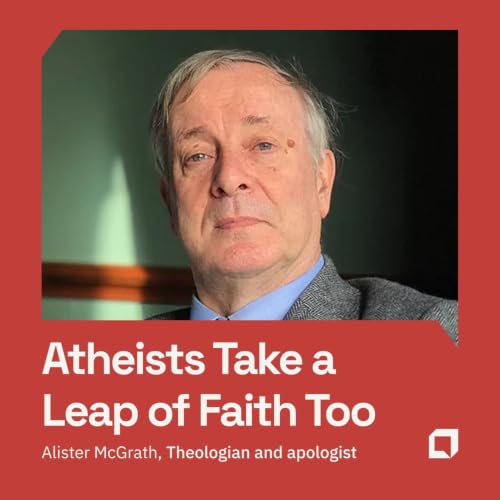
  • Alister McGrath: Atheists Take a Leap of Faith Too
    Sep 29 2026

    Alister McGrath says no one can prove what matters most, so atheists and Christians alike live by belief and live with doubt.

    The conversation

    Can Christians hold beliefs they cannot prove?

    McGrath begins from a claim about human life: meaning, moral value, and purpose cannot be established by reason or the scientific method, yet people do not flourish without them. He extends the point to atheism, recalling that when he pressed Richard Dawkins on whether atheism could be proven, Dawkins conceded it could not.

    Does a Christian worldview compete with science?

    Ed raised the objection McGrath's debate partners would make: that the Christian lens is a fantasy laid over the observable world. McGrath answers that science is a tool built for particular questions, and that using it to settle moral values is like using a thermometer to find the meaning of life. McGrath closes on what he calls Christianity's existential payload, a truth that changes a life.

    From the conversation

    "There are certain places it cannot go. It cannot talk about things like the meaning of life. It cannot talk about moral values, for example, because these both lie beyond the scope of the scientific method." Alister McGrath

    "I can prove really shallow truths, but not deep truths of meaning or moral value or purpose." Alister McGrath

    "The great big pictures of life which held sway for so long are just being junked, and there's nothing obvious that's going to replace them." Alister McGrath

    "Doubt is saying, 'I need to go into this deeper. My present understanding of this is not good enough.' Doubt is an invitation to explore, to go deeper." Alister McGrath

    About Alister McGrath

    Alister McGrath is emeritus Andreas Idreos Professor of Science and Religion at the University of Oxford and President of the Oxford Centre for Christian Apologetics. He holds doctorates in molecular biophysics, theology, and intellectual history, and his books include Dawkins' God and C.S. Lewis: A Life. His latest book is Why We Believe: Finding Meaning in Uncertain Times.

    Website: https://alistermcgrath.weebly.com/
    Facebook: https://www.facebook.com/AlisterMcGrath
    Book: https://www.amazon.com/dp/086154921X

    Presenting sponsor: Gloo, a technology company for the faith and flourishing ecosystem.


    Hosted by Simplecast, an AdsWizz company. See pcm.adswizz.com for information about our collection and use of personal data for advertising.

    Show More Show Less
    39 mins
  • Lisa Harper: An Unkind Theologian Is a Bad One
    Sep 22 2026

    Lisa Harper says church leaders, herself included, have watered down theology, and that doctrine that leaves character unchanged falls short.

    The conversation

    How should pastors teach theology to their people?
    For years Harper gave her neighborhood Bible study a story, a short exegesis, and a takeaway, following homiletic rules she learned in her thirties. She now says it was her desire to be understood that was watering down her doctrine. Her test case is the hypostatic union. Stetzer frames the vocabulary question in plain terms: people who learn to order at Starbucks can learn theological language at church.

    Does correct doctrine excuse bad character?
    Stetzer names a pattern he sees: leaders who check every doctrinal box, treat people poorly, and get a pass. Harper rejects the assumption that their theology is good. She claims gaining information is important, since it informs our understanding of Jesus, but she believes that theology solely bound to academics is lifeless.

    How much of your own story belongs in a sermon?
    Harper’s test on whether a story is appropriate to share is if Jesus remains the hero. She names two failures she has corrected in herself: telling stories that belong to someone else, and humor at her own expense that made her the emphasis. She argues that stories of darkness can also become self-aggrandizing when listeners rally around the speaker's pain. On the opposite end is editing so much that teaching becomes performance.

    From the conversation

    "Show me somebody who has strong theology but doesn't have humility, and I would say that the information hasn't softened the heart yet." — Lisa Harper

    "I think the onus is on us, and I don't think we've done a good job." — Lisa Harper

    "I don't want to edit so much when I'm teaching that it becomes performative instead of testimonial." — Lisa Harper

    "If you can learn to order coffee at Starbucks, you can learn some theological language at church." — Ed Stetzer

    About Lisa Harper

    Lisa Harper is a Bible teacher, speaker, and author of more than a dozen books and Bible studies, including A Jesus-Shaped Life: How Diving Deeper into Theology Can Transform Us and Our World with the Radical Kindness of God. She hosts the Back Porch Theology podcast and founded The Kerygma Summit, an annual gathering of theologians and Bible teachers. She holds a Master of Theological Studies from Covenant Seminary.

    Website: https://www.lisaharper.org
    Podcast: https://www.lisaharper.org/backporchtheology
    Instagram: https://instagram.com/lisadharper
    Facebook: https://www.facebook.com/OfficialLisaDHarper
    Book: https://www.amazon.com/Jesus-Shaped-Life-Theology-Transform-Kindness/dp/0800744764

    The Exchange is presented by Gloo, a technology company for the faith and flourishing ecosystem.


    Hosted by Simplecast, an AdsWizz company. See pcm.adswizz.com for information about our collection and use of personal data for advertising.

    Show More Show Less
    31 mins
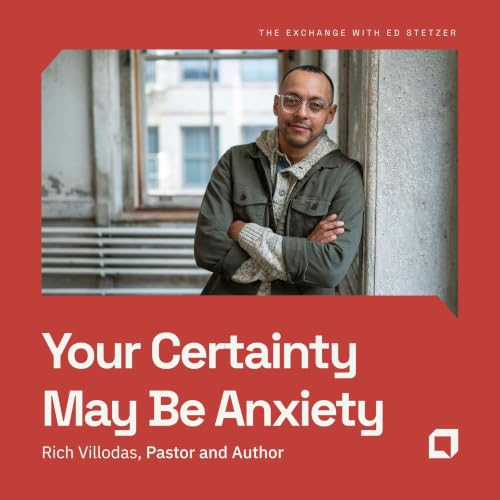
  • Rich Villodas: Your Certainty May Be Anxiety
    Sep 15 2026
    Villodas arrived with a definition of anxiety that implicates confident leaders as much as worried ones. Stetzer spends most of the hour testing whether a congregation can hold that much internal difference and still teach anything difficult.Why do confident pastors still lead anxiously?Villodas separates anxiety from worry. Worry is a feeling a pastor can honestly deny. Anxiety, as he uses the term, is the automatic response to a real or perceived threat, and it shows up as manipulation, coercion, anger, or avoidance. That definition does real work in the conversation, because it moves the diagnosis away from the visibly stressed pastor and toward the one who cannot leave room for dissent. His own test is whether he can tell a staff member to push back and mean it. When he cannot stand disagreement, he reads that as anxiety rather than conviction.Stetzer sharpens this into something a listener will recognize, noting that pastors can grow worse at formation than the people they lead because they treat sermon preparation as their spiritual life. Drawing on the pastors moving through his cohort, Villodas says the average pastor has no plan for personal formation and is living off someone else's spirituality: podcasts, books, other people's sermons. Can a politically mixed church still teach hard convictions?Villodas describes his congregation as split roughly in thirds between Trump voters, Harris voters, and people who abstained. Stetzer asks the difficult question: does a spread like that indicate a pastor avoiding the sharp edges of Scripture? Villodas responds by saying that a single message cannot form anyone, so a church that wants to hold a hard conviction has to build multiple spaces for conversation, listening, prayer, and self-examination around it. Alignment is a low bar for a pastor to clear. Discipleship is the actual assignment.He frames the pastoral task as creating an environment where difference does not automatically produce disconnection, which he ties to differentiation: staying close to God, to yourself, and to others under high anxiety. He also insists on understanding how people arrived at their conclusions, since depersonalizing someone strips the story that produced the conviction.Where does pastoral burnout actually begin?Burnout, in Villodas’s account, is the attempt to give what you do not have, which is why he starts with relationships rather than Sabbath. Villodas argues that emotional pain persists when there is no relational home to hold it, and he applies this directly to pastors carrying criticism, hard emails, and board conflict without anywhere to put them. Is the narrow path about salvation or discipleship?Villodas grants that Matthew 7 is usually read salvifically, as a statement about how few are saved, and argues instead that Jesus is describing discipleship. He works from three categories he takes from Dale Bruner: successism, moralism, and individualism. Against successism he sets the Beatitudes as a reframing of what counts as blessing. Against individualism he sets love of neighbor as the proof of love for God. He also inverts the usual sequence between prayer and mission, treating mission as a root of formation rather than a result of it, and points to his church's health center, pantry, and youth organizing work as the setting where that formation happens. From the conversationEd Stetzer: "I'm of the view that pastors sometimes are worse than regular people when it comes to their spiritual formation 'cause they just sort of rely on their preparation as their formation."Rich Villodas: "But anxiety is not simply about worry. Anxiety is what is the automatic response to distress or disagreement."Rich Villodas: "I think the average pastor's living off the spirituality of someone else. Podcasts, other sermons. There's not a cultivation of being with God and speaking out of that place."Rich Villodas: "It's a narrow path that leads to the kind of spacious life that we long for."About Rich VillodasRich Villodas is the Brooklyn-born lead pastor of New Life Fellowship, a large multiracial church in Queens with more than 75 countries represented. He is the author of The Deeply Formed Life (2020), Good and Beautiful and Kind (2022), and The Narrow Path (2024).Website: https://www.richvillodas.com/Books and links: https://linktr.ee/richvillodasInstagram: @richvillodasX: @richvillodasChurch: https://elmhurst.newlife.nyc/ The Exchange is presented by Gloo, a technology company for the faith and flourishing ecosystem. Hosted by Simplecast, an AdsWizz company. See pcm.adswizz.com for information about our collection and use of personal data for advertising.
    Show More Show Less
    29 mins
adbl_web_anon_alc_button_suppression_t1
No reviews yet