• sleep²: Sleep is an operating cost
    Nov 19 2026

    450 billion dollars a year lost in Europe to bad sleep, and almost none of it reaches a company budget.

    Dr. Thomas Winkler is CEO of sleep², a spin-off of the University of Salzburg that reads sleep from heart rate variability rather than from movement. The company sells three ways: to health insurers, to armed forces, and to manufacturers. Recorded at the Garmin Health Summit in Bangkok.

    In this conversation:

    · Why a doctor spends only a couple of hours on sleep in an entire medical degree, and what that does to a product that is not a pill

    · The two numbers an employer never sees: eight to twelve sick days a year, against up to thirty days of people who turn up and cannot perform

    · Over 50,000 users and more than 150,000 analysed nights, and the Austrian special forces project where shooting performance tracked the sleep data from one or two nights earlier

    · How the company actually charges: a flat fee with Germany's largest statutory insurer, and a per-night rate for research that falls as the volume rises

    · Why he calls mouth taping an overhyped trend with no peer-reviewed evidence behind it

    · Where sleep sits against exercise and nutrition in the healthspan stack, and why it has had the least attention

    This season of Tomorrow Health is sponsored by Garmin Health.

    Chapters:

    00:00 sleep² and two things to listen for

    01:12 What sleep² measures, and who it is for

    03:05 Who pays: insurers, armed forces and manufacturers

    05:37 50,000 users, and what the special forces data showed

    06:50 Why doctors reach for pills instead

    10:35 The cost of bad sleep that never reaches a budget

    13:25 Where sleep sits in the healthspan stack

    Links:

    · Thomas Winkler on LinkedIn: https://www.linkedin.com/in/dr-thomas-winkler-8a15aa54/

    · sleep²: https://www.sleep2.com

    · Garmin Health: https://www.garmin.com/health

    · Natalia Karbasova on LinkedIn: https://www.linkedin.com/in/karbasova/

    · Tomorrow Health: https://tomorrow-health.com

    · Get episode alerts: https://tomorrow-health.com/#subscribe

    · Apply to join FitTech Club: https://fittechclub.com/

    Show More Show Less
    17 mins
  • Coya: A board of directors for health
    Nov 12 2026

    Four specialists per member. Nick Wooters, co-founder of Coya, on why every time they automated the coaching, engagement fell off.

    Everyone in consumer health is taking humans out to make the unit economics work. Coya added four of them per member, a dietitian, a fitness specialist, a sleep specialist and a mental performance coach, and sells the result to employers rather than individuals. Nick Wooters co-founded it, and he has the renewal number to argue the case.

    In this conversation:

    * Why a report that never names a single person still changed a state police force’s shift pattern

    * What an employer pays for a year of Coya, and what the coaching team behind it costs to run

    * Why automating parts of the service cost them engagement every time

    * Who is writing the cheques now, and why venture firms are buying coaching for their founders

    * Where a wellness programme stops and something closer to clinical begins

    Season 3 of Tomorrow Health is sponsored by Garmin Health.

    Chapters:

    00:00 Why the system plays health on defense

    01:24 Four specialists on top of the data

    04:06 Twelve thousand a year, then the monthly support

    05:21 What Coya built on top of the data

    07:32 Referees, police and a merger

    10:26 Texas police and the two-week flip

    13:38 The data is not the answer

    Links:

    * Nick Wooters on LinkedIn: https://www.linkedin.com/in/nicholas-wooters-725427112/

    * Coya: https://coya.life/

    * Garmin Health, season sponsor: https://www.garmin.com/health/

    * Natalia Karbasova on LinkedIn: https://www.linkedin.com/in/karbasova/

    * Tomorrow Health: https://tomorrow-health.com

    * Get episode alerts: https://tomorrow-health.com/#subscribe

    * Apply to join FitTech Club: https://fittechclub.com/


    Show More Show Less
    16 mins
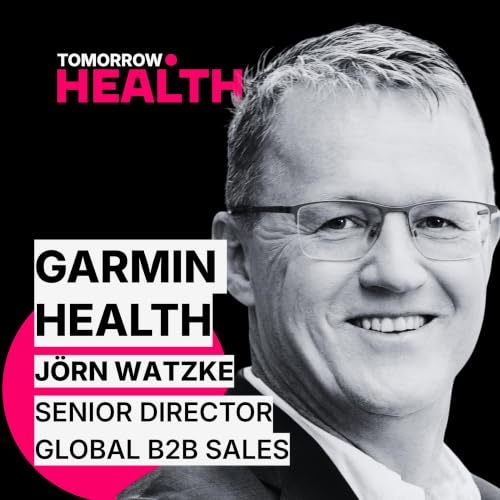
  • Garmin Health: Who pays for prevention
    Nov 10 2026

    3% to 5% of clinical trials currently use wearable devices, on Jörn Watzke's count. Garmin Health's global sales lead on who pays for prevention.

    Everyone in health says prevention is cheaper than treatment. Most health systems still pay for treatment. Jörn Watzke, Senior Director Garmin Health Global Sales, sees where the business case for wearable data gets made: with employers, insurers, researchers, healthcare providers and gyms. Recorded at the Garmin Health Summit in Bangkok.

    In this conversation:

    * How Garmin Health works with collaborators, and what they build

    * Which customer segment is biggest, and which is growing fastest

    * Why the employer business case changes between Europe and the US

    * What separates a programme that scales from a pilot that stalls

    * The one decision a health or fitness executive can make this quarter

    This season of Tomorrow Health is made in collaboration with Garmin Health.

    Chapters:

    00:00 The five-minute stairs test

    00:24 Garmin Health and three things to listen for

    01:19 Why every industry now sells a longer, healthier life

    03:17 Which customer segments are growing fastest

    07:09 Why gyms need to see the member outside the club

    09:38 How Garmin Health makes money

    11:59 Who pays for prevention

    Links:

    * Jörn Watzke on LinkedIn: https://www.linkedin.com/in/joernwatzke/

    * Garmin Health: https://garmin.com/health

    * Natalia Karbasova on LinkedIn: https://www.linkedin.com/in/karbasova/

    * Tomorrow Health: https://tomorrow-health.com

    * Get episode alerts: https://tomorrow-health.com/#subscribe

    * Apply to join FitTech Club: https://fittechclub.com/

    Garmin wearables are consumer wellness devices and are not medical devices intended to diagnose, treat, prevent or monitor medical conditions. Any medical or clinical functionality described is provided by a third-party solution, based solely on the third party's interpretation of any data collected by its applications through the Garmin Health Connected Ecosystem or third-party sources.

    Show More Show Less
    18 mins
  • Neo: The gym priced like an airline
    Oct 17 2026

    Kids slipped in at 5:59 pm to beat peak pricing. Felipe Apablaza, CEO of Grupo Wellness, turned that into a gym with no membership.

    Felipe Apablaza runs DMOOV, a membership club chain in Chile, and Neo, a gym with no membership at all: you pay per visit and the price moves with demand. His co-founder came from airline revenue management. He says 40% of Neo's users were not going to any gym before, which raises the question of who the monthly contract leaves out.

    In this conversation:

    • Why kids walking in at 5:59 pushed DMOOV towards peak-hour pric
    • How a 90-person cap and a twelve-visit ceiling shape what members pay
    • Who comes to a gym that has no membership, and what it costs to bring them in
    • Why a free app, not the gym, is Neo's acquisition channel
    • How he plans to take pay-per-visit into other operators' clubs

    Season 2 of Tomorrow Health is sponsored by Zing Coach - every gym member, personally coached.

    Chapters:

    00:00 Why the monthly contract is wearing out

    00:10 Grupo Wellness, Neo and three things to listen for

    01:12 Six companies and a sports city

    02:25 DMOOV: one price, every training space

    03:43 Ten million in revenue, seven from DMOOV

    03:57 Why build a second gym brand

    04:42 Kids at 5:59 and an airline revenue manager

    05:58 What Gen Z does on a gym floor

    06:19 Three things Gen Z wants

    06:38 Strength, mirrors and DJ nights

    07:36 Pay per visit, 90 people at a time

    08:41 From 12 to 55 dollars a month

    09:03 A 3.50 average check-in, benchmarked on Smart Fit

    09:28 13,000 visitors and 40% new to gyms

    10:36 Who the 40% are, and what they cost to acquire

    11:25 The free app as acquisition channel

    12:28 Nine gyms in Chile, then Peru, Colombia and Argentina

    12:59 Why the gym itself is a commodity

    13:40 How dynamic pricing flattened the peaks

    14:53 What changes in Europe and the US

    16:05 Building a technology company out of a gym

    17:28 Plugging into the CRMs gyms already use

    18:17 Why Latin America is a year behind

    19:06 Price points decide Latin America

    19:57 What the industry gets wrong about technology

    20:26 One decision: four visits a month, not twelve


    Links:

    * Felipe Apablaza on LinkedIn: https://www.linkedin.com/in/felipeapablaza/

    * Neo Plex: https://www.neoplex.cl

    * Zing Coach, season sponsor: https://zing.coach/

    * Natalia Karbasova on LinkedIn: https://www.linkedin.com/in/karbasova/

    * Tomorrow Health: https://tomorrow-health.com

    * Get episode alerts: https://tomorrow-health.com/#subscribe

    * Apply to join FitTech Club: https://fittechclub.com/

    Show More Show Less
    21 mins
  • FitActive: The upsell is software
    Oct 9 2026

    192 clubs, 500,000 members, 19.90 euros a month. FitActive founder Eduardo Montefusco on why the next margin comes from software, not square metres.

    A FitActive club costs around a million euros to build today, roughly double what it cost ten years ago, and the membership price has not moved. Montefusco runs 192 clubs across seven countries and owns all or most of every one of them, having stopped signing franchise partners altogether on 1 January 2025.

    In this conversation:

    • Why the word franchise was never the right one for what he built
    • What 51 per cent lets him do in eight days that a franchise agreement does not
    • Why his banks wanted him to stop taking partners
    • Why 19.90 stays fixed while everything around it gets more expensive
    • What he expects AI to do to a retention rate that has already moved from 32 to 38

    Season 2 of Tomorrow Health is sponsored by Zing Coach - every gym member, personally coached.

    Chapters:

    00:00 Why he does not need franchisees

    01:09 192 clubs, seven countries, 500,000 members

    01:53 Why this is not a franchise, and the eight-day clause

    03:59 Why partners open a second club

    05:27 What a single club costs to build

    06:31 Stopping franchising, and what the banks wanted

    07:24 Breakeven at 2.1 members per square metre

    08:44 Retention at 38 per cent and the AI bet

    10:53 Costs doubled, revenue did not

    11:53 Selling more to the same member

    12:33 What travels to Spain and Brazil

    13:50 Where the company goes in five years

    14:26 Two tax regimes and a distorted market

    15:56 The one decision he would make this quarter

    Links:

    • Eduardo Montefusco on LinkedIn: https://www.linkedin.com/in/eduardo-montefusco-53155521/
    • FitActive: https://www.fitactive.it/
    • Zing Coach, season sponsor: https://zing.coach/
    • Natalia Karbasova on LinkedIn: https://www.linkedin.com/in/karbasova/
    • Tomorrow Health: https://tomorrow-health.com
    • Get episode alerts: https://tomorrow-health.com/#subscribe
    • Apply to join FitTech Club: https://fittechclub.com/
    Show More Show Less
    16 mins
  • BeWell Brands: A gym is a database
    Oct 2 2026

    A gym is a database. Elaine Jobson, CEO of BeWell Brands and Jetts Fitness, on why Gen Z is rewriting the budget-gym model.

    Elaine Jobson led the management buyout of Jetts Fitness in 2022, then built BeWell Brands on top of it: a franchise house that runs the same franchise engine across gym, recovery and group-exercise brands.

    On her count, Jetts runs 130 gyms in Australia and about 200 overall, with clubs in the UK, the Netherlands and now India. She puts the group at well over 100 million dollars in revenue, and says it is not even halfway.

    Her argument is that Gen Z, now the majority of new members on her numbers, wants a gym worth filming from every angle and will pay a bit more for it. The big budget chains, she says, can only change at the pace of their refurbishment cycles.

    She also explains why Jetts runs no contracts at all, why she will not put water into a gym nobody staffs overnight, and which market she is looking at for the first time.

    🧠 What you will hear:

    • Why the membership system holds almost all the IP of a gym
    • How Jetts changes around 30% of its concept from Delhi to London
    • What never changes, and how she takes the word love to a boardroom
    • Why she says contracts only help the business, and what she does instead
    • What makes the US interesting for the first time
    • Why the budget chains will struggle to keep up with Gen Z
    • What the industry gets wrong about unit numbers

    ⏱️ Timestamps:

    00:00 A gym is effectively a database

    00:11 Jetts, BeWell and three things to listen for

    01:09 More products on the same shelf

    02:16 Jetts, O-Studio and Fitesque by the numbers

    03:22 Why franchise

    03:33 Over 100 million and not halfway

    03:49 Where the franchisee's dollar goes

    04:26 The tech stack behind a 24-hour gym

    05:09 Why every CEO loses sleep over security

    06:01 HYROX: a trend more than an innovation

    06:32 Why Jetts is not bleeding edge

    07:11 No water in a gym nobody staffs

    08:26 What changes between Delhi, London and Australia

    10:04 The 70% that never changes

    10:22 How to measure love in a boardroom

    11:15 A Net Promoter Score that never dips

    11:59 Contracts only help the business

    13:19 Members who leave and come back

    14:21 The Middle East, and the US for the first time

    14:48 Gen Z is the majority of new members

    15:48 Accessible premium versus the budget chains

    16:50 Filmability in a design brief

    17:45 Why HVLP is not going anywhere

    18:25 Social strength

    19:23 Why budget chains can't move fast enough

    20:00 The obsession with unit numbers

    20:51 One decision: how much to invest in AI

    🌐 Links:

    • Elaine Jobson on LinkedIn: https://www.linkedin.com/in/elaine-jobson-72a8a33
    • BeWell Brands: https://www.bewellbrands.com.au/
    • Jetts Fitness: https://www.jetts.com.au/
    • Natalia Karbasova on LinkedIn: https://www.linkedin.com/in/karbasova/
    • Tomorrow Health: https://tomorrow-health.com
    • Get episode alerts: https://tomorrow-health.com/#subscribe
    • Apply to join FitTech Club: https://fittechclub.com/

    This episode is sponsored by Zing.Coach: Every member, personally coached. Learn more: https://zing.coach/

    Show More Show Less
    22 mins
  • VivaGym: The moments that decide retention
    Sep 24 2026

    Juan del Río ran VivaGym for nine years. He joined in 2016, when it had fifteen gyms in Spain. By the time he handed over, on his own count, it was around three hundred clubs across Spain and Portugal.

    In this episode he sets out a framework he calls moments of truth: the specific points in a member's life where intervention decides whether they stay. The first visit. The month usage drops. The anniversary nobody notices. The member still paying who stopped coming two weeks ago.

    I put it to him that this sounds like a people problem rather than a technology one. He disagrees, and his answer is the clearest case I have heard for why a gym floor needs software.

    He also puts a number on what makes a club work, warns that his own segment has taken quantum leaps in pricing, and names the growth he wishes he had not slowed down.

    What you will hear:
    - What a low-cost club needs before it works, and why 400 members is a dead room
    - How he clusters moments of truth so a club of 250 addresses only the fifteen who need it
    - Why he refuses to choose between quality and quantity
    - Opening versus acquiring, and why he would not trade one for the other
    - What broke first between fifteen clubs and three hundred
    - Why he replaced the membership system, the CRM and the apps during the pandemic
    - The most costly mistake of his tenure

    00:00 Speed is the only real competitor
    00:24 Nine years, fifteen gyms to three hundred
    01:32 What caught his attention in fitness
    02:10 What changed in how he runs the business
    02:57 Moments of truth, defined
    04:12 What you actually do with them
    04:44 People problem or technology problem
    06:45 Why speed beat every competitor
    07:32 The ladder: 100, 300, a million members, a thousand gyms
    09:41 Franchise or own the clubs
    10:34 What one club needs before it works
    11:47 Cost structure and inflation
    12:42 Build or buy
    13:16 What breaks first at scale
    14:16 Quantum leaps in pricing
    15:07 Why Spaniards use their gyms more
    15:37 Who walks in now
    16:22 Health beyond the gym floor
    16:59 The mistake he would undo
    17:19 What everyone gets wrong
    17:34 One piece of advice to an operator
    18:18 The back-to-school quarter

    Links:

    - VivaGym: https://vivagym.es
    - Natalia Karbasova on LinkedIn: https://www.linkedin.com/in/karbasova/
    - Tomorrow Health: https://tomorrow-health.com
    - Get episode alerts: https://tomorrow-health.com/#subscribe
    - Apply to join FitTech Club: https://fittechclub.com/

    Show More Show Less
    15 mins
  • NYSC: The member nobody budgets for
    Sep 17 2026

    120,000 members and a 70% use rate. NYSC CEO Bill McMenamy on what it costs when members actually turn up.

    Most club economics quietly depend on members who never come. Bill McMenamy built the opposite: a majority of his members check in more than 16 times a month, his use rate is above 70%, and he is candid that it costs him more in repairs, maintenance and capital than a half-empty gym would. He took over New York Sports Club in 2022, straight out of Chapter 11, with a fifty-year-old name and, in his words, no website, no app, no CRM and no equipment worth having. He came from Gap and from pharma, not from fitness. Today he runs 32 clubs across four cities, ten public partnerships, the boutique brand Fhitting Room, and 120,000 members.

    In this conversation:

    • Why a full gym is more expensive to run than an empty one, and why he wants it anyway
    • What the club everyone told him not to invest in now returns
    • Why he refuses to measure ten partnerships on ROI, and what he looks at instead
    • What a human coach is for once software writes the training plan
    • Why he is about to stop charging members for something they pay for today

    This season of Tomorrow Health is brought to you by Zing Coach.

    Chapters:

    00:00 Cold open

    00:16 Intro

    01:16 Fitness is immature in its use of data

    02:51 Three kinds of member, one building

    04:26 The club nobody wanted

    05:27 Rebuilding a brand that had nothing left

    06:55 From three visits a month to sixteen

    07:40 Why he refuses to measure partnerships on ROI

    08:29 Selling units is not selling solutions

    09:27 What a coach is for once software writes the plan

    12:48 Why he is about to stop charging for the app

    13:56 Which health markers are worth optimising

    14:40 Insurance will write the exercise prescription

    15:41 Subscription rules are about to change the model

    16:48 Why a boutique does not work inside a big box

    18:41 Invest in your people this quarter

    Links:

    • Bill McMenamy on LinkedIn
    • New York Sports Club
    • Natalia Karbasova on LinkedIn
    • Tomorrow Health
    • Get episode alerts
    • Apply to join FitTech Club
    Show More Show Less
    19 mins