• How to Fuel Your First Ironman and Actually Enjoy It with Lily Godding
    Jun 18 2026
    What does it actually take to finish your first Ironman at 22 years old - and cross that finish line with a smile? Lily Godding is a TNA athlete, a rugby rep player and a chef who had never raced a triathlon three years ago. On the weekend, she crossed the finish line of Ironman Cairns 140.6 in 13 hours, 21 minutes and 54 seconds. In this episode, Taryn sits down with Lily just days after the race to talk about what it took to get there — the brutal washing-machine swim, the six-and-a-half-hour bike leg, and the moment on the run where Lily quietly reminded herself: I can do hard things. What you'll hear in this episode: What Lily's nutrition looked like before TNA - and how far off the mark it wasHow her race nutrition plan held up across 140.6km (spoiler: to a T)The biggest mistakes younger triathletes make with nutrition and trainingWhy she almost didn't join TNA because of the price — and what changed her mindHow good recovery nutrition had her collecting her own bike the morning after the raceWhat Lily wishes she'd known sooner, and her advice for anyone tackling their first Ironman TIMESTAMPS 00:00 Lily opens: race nutrition to a T — gut trained, fuelled, mapped out 00:26 Welcome — Taryn introduces Lily, Ironman Cairns finisher 00:56 From rugby to triathlon: how Lily balances two completely different sports 02:11 What made her fall in love with triathlon and sign up for a full Ironman? 03:02 Is Ultraman next? Lily's answer: a faster Ironman and maybe Kona 03:14 Come-down after Cairns — take me back to the finish line 03:54 The finish line moment: electric, community, absolutely amped 05:00 Taryn preps the toughest moment question 05:20 The toughest moment on course: the brutal washing-machine swim 06:38 70 people pulled from the water — absolute carnage 07:22 What a 13:21:54 finish at 22 years old actually meant to Lily 08:34 What young triathletes get wrong: nutrition and overtraining 09:49 Lily admits to being the over-trainer (just ask coach Pablo) 10:06 Advice for younger athletes who think nutrition can wait 10:24 TNA's first module: recovery nutrition changed everything 11:39 What Lily's nutrition actually looked like before TNA 13:05 Would she have finished Cairns without TNA? 13:20 "100% no. It was when I joined TNA I thought — yeah, I can do this" 14:00 How she tried to figure out nutrition on her own 14:27 Social media, the algorithm and the weight-loss noise aimed at female athletes 16:07 How TNA tuned out the noise — worksheets, carb loading, race plan 16:36 What TNA taught her about everyday eating 17:12 The forgotten stuff: colourful plate, healthy fats, nuts, seeds, beans 18:28 The protein myth - more protein isn't always the answer 19:03 Why nobody teaches us how to eat — health as a lifelong foundation 19:34 How did race nutrition hold up on race day? 20:01 Lily: to a T - gut trained, fuelled, everything consumed at the right time 20:55 The run: Coke, gels, chews and carrying her own water bottle 21:51 The one adaptation she'd make: take Panadol for tight calves and hamstrings 22:24 What would she do differently? Not play a rugby game the week before 22:59 First Ironman goal: just finish — next one is for performance 23:37 Recovery: went and got her own bike the morning after the race 24:31 The toilet test - she's perfected the technique 24:51 Balking at the price - what made Lily commit anyway 25:16 Joined in October after Port Macquarie with zero race nutrition plan 26:28 Is TNA worth the investment? 26:36 Lily: "113,472%. I would not be an Ironman finisher without TNA" 27:23 Youth alone isn't enough - nutrition is what gets you across 27:42 Advice for someone about to do their first Ironman 28:30 The finish line photo tip: arms up, smile, don't touch the Garmin 29:05 Has finishing an Ironman changed how Lily sees herself? 29:13 "I can do hard things" - the mantra that got her through lap three 29:49 The moment Taryn ran alongside Lily on the third lap 30:18 What's next: Kona, performance focus, so many years of triathlon ahead 30:57 The privilege of being able to race - and being an Ironman 31:14 Iron Woman? (Lily's aunt is campaigning for it) 31:26 Taryn's closing reflection on Lily's story — and the TNA CTA 33:54 Sign off ABOUT THE GUEST Lily Godding is a 22-year-old age-group triathlete, rugby rep player and TNA athlete from the Snowy Mountains, Australia. She completed her first sprint triathlon in November 2024 and progressed to Ironman 140.6 Cairns in June 2026, finishing in 13:21:54. A chef by trade, Lily balances high-level representative rugby with full Ironman training and gives a first-hand account of what evidence-based triathlon nutrition actually does for a young athlete. Connect with Lily on Instagram: https://www.instagram.com/lily.godding If the Cairns Ironman story has you thinking about your own race day nutrition, come and join us in the Triathlon Nutrition Academy. Head to dietitianapproved.com/academy and register your ...
    Show More Show Less
    34 mins
  • Five Habits of Triathletes Who Reach the Start Line Ready to Race
    Jun 11 2026

    Are you actually going to hit the start line ready - or are you going to arrive having done all the training but undone the work in race week?

    Taryn is recording this one live from Cairns, where the TNA crew has flown in from all over the world to race the 70.3 and Ironman. Every single one of these athletes had their race nutrition dialled in months ago. Not this week. Not over last night's bowl of pasta. Months ago.

    In this episode, Taryn shares the five habits that separate triathletes who arrive on race morning topped up, adapted and confident from those who roll up to the start line under-fuelled before the gun has even gone off.

    What you'll learn:

    • Why race week is not the time to train harder or eat less - and what the taper trap actually does to your fuelling
    • How recovery nutrition session by session is what makes the hard work stick
    • Why rehearsing your race fuelling on long sessions is non-negotiable (and what happens when you wing it on race day)
    • The one habit that quietly takes more athletes out of their A-race than any fuelling mistake out on course
    • How to carb load properly - because no, it is not a giant bowl of pasta the night before

    TIMESTAMPS

    00:00 Introduction — Live from Cairns

    06:37 Habit 1 — Bank the adaptations and protect the taper

    09:11 Habit 2 — Recover from every session

    12:38 Habit 3 — Rehearse race fuelling on long sessions

    15:02 Habit 4 — Protect your immune system

    17:48 Habit 5 — Plan and practise your carb load

    20:14 Race Day Pack List

    21:40 Summary and close

    RESOURCES MENTIONED

    Recovery Accelerator - the exact framework Taryn teaches TNA athletes for what to eat after every training session and every race (the four R's, when to eat, what to eat and when to prioritise it). You can get through it all in one trainer session or one long run

    Free Race Day Pack List - everything you need for swim, bike and run, plus before and after your race, ready to print and reuse for every race

    STUDIES MENTIONED

    Gunzer, W., Konrad, M., & Pail, E. (2012). Exercise-induced immunodepression in endurance athletes and nutritional intervention with carbohydrate, protein and fat: What is possible, what is not? Nutrients, 4(9), 1187-1212. https://doi.org/10.3390/nu4091187

    Knowledge of carbohydrate requirements does not predict carbohydrate intake around competition in endurance athletes. PMC11451575

    (2025). A review of carbohydrate supplementation approaches and strategies for optimising performance in elite long-distance endurance. Nutrients, 17(5), 918. https://doi.org/10.3390/nu17050918

    Gatorade Sports Science Institute. Dietary carbohydrate and the endurance athlete: contemporary perspectives.

    If you want to toe a start line with the TNA crew somewhere in the world, get your name on the Triathlon Nutrition Academy waitlist at dietitianapproved.com/academy. You'll be first to know when the next cohort starts.

    Download the FREE audio series The 5 Biggest Nutrition Mistakes Costing You Time on Race Day

    Recovery Accelerator Program

    SUPPORT THE PODCAST HERE

    CONNECT WITH TARYN

    Website | Instagram | Facebook | YouTube

    The Triathlon Nutrition Academy® is a podcast by Dietitian Approved®. All rights reserved.

    See omnystudio.com/listener for privacy information.

    Show More Show Less
    14 mins
  • Does Hydrogen Water Actually Work for Triathlon Recovery?
    Jun 4 2026
    Hydrogen water is all over your feed right now. Tablets, bottles, little machines bubbling away on the kitchen bench, all promising less soreness, faster bounce-back and recovery at the cellular level. But does it actually do anything for you as a triathlete, or are you about to drop sixty bucks on fizzy water? In this episode I give you my honest, no-BS breakdown on hydrogen water. What it actually is, what the research genuinely says about recovery and performance, and whether it earns a spot in your toolbox. Then I run the actual numbers on what it costs to replicate the research dose (you might want to sit down for that part) and weigh it up against where your money is truly best spent. WHAT YOU'LL LEARN • What hydrogen water actually is, and why the marketing sounds far more exotic than the science • What the research really shows on recovery, soreness and performance • Why mopping up every free radical from training might quietly blunt the adaptations you work so hard for • The real cost of replicating the research dose, run line by line • The two-dollar recovery option that ticks every box hydrogen water misses TIMESTAMPS 00:00 The fizzy tablet moment 01:39 What this episode covers 04:20 What hydrogen water actually is 05:45 The theory: mitochondria and selective antioxidants 08:38 What the research shows (the fin swimmer study) 12:45 The bigger systematic reviews 15:00 Why you don't want to mop up every free radical 17:50 The honest verdict on the evidence 20:11 The real cost, run line by line 23:05 The two-dollar recovery smoothie comparison 25:53 The athlete I see all the time 28:24 Red light therapy: same pitch, better evidence 30:32 Pulling it all together 33:14 Where to start instead STUDIES MENTIONED Li, Y., Bing, R., Liu, M., Shang, Z., Huang, Y., Zhou, K., Bao, D., & Zhou, J. (2024). Can molecular hydrogen supplementation reduce exercise-induced oxidative stress in healthy adults? A systematic review and meta-analysis. Frontiers in Nutrition, 11, Article 1328705. [https://doi.org/10.3389/fnut.2024.1328705](https://doi.org/10.3389/fnut.2024.1328705) Sládečková, B., Botek, M., Krejčí, J., Valenta, M., McKune, A., Neuls, F., & Klimešová, I. (2024). Hydrogen-rich water supplementation promotes muscle recovery after two strenuous training sessions performed on the same day in elite fin swimmers: Randomized, double-blind, placebo-controlled, crossover trial. Frontiers in Physiology, 15, Article 1321160. [https://doi.org/10.3389/fphys.2024.1321160](https://doi.org/10.3389/fphys.2024.1321160) Zhou, K., Shang, Z., Yuan, C., Guo, Z., Wang, Y., Bao, D., & Zhou, J. (2024). Can molecular hydrogen supplementation enhance physical performance in healthy adults? A systematic review and meta-analysis. Frontiers in Nutrition, 11, Article 1387657. [https://doi.org/10.3389/fnut.2024.1387657](https://doi.org/10.3389/fnut.2024.1387657) If recovery is the thing you keep meaning to sort, I built the Recovery Accelerator for exactly that. A clear plan for what to eat after training and racing to hit your personalised targets, with a recovery nutrition sheet, four recipes and a recovery playlist. One-off payment, no subscription, and it costs less than a single month of hydrogen tablets. Grab it HERE . Download the FREE audio series The 5 Biggest Nutrition Mistakes Costing You Time on Race Day Recovery Accelerator Program SUPPORT THE PODCAST HERE CONNECT WITH TARYN Website | Instagram | Facebook | YouTube The Triathlon Nutrition Academy® is a podcast by Dietitian Approved®. All rights reserved.See omnystudio.com/listener for privacy information.
    Show More Show Less
    20 mins
  • The 3 Recovery Nutrition Mistakes Triathletes Make (And How to Fix Them)
    May 28 2026

    You’re doing the training. You’re showing up consistently. But if your legs constantly feel heavy, your energy crashes every afternoon and you can’t seem to bounce back between sessions, your recovery nutrition could be the missing piece.

    In this episode, Advanced Sports Dietitian and Triathlon Nutrition Specialist Taryn Richardson breaks down the three biggest recovery nutrition mistakes triathletes make and explains exactly how to fix them.

    Because recovery is where adaptation actually happens.

    Recovery Accelerator Program

    Taryn dives into:

    • Why your post-training nutrition window matters more than you think
    • The common protein mistake endurance athletes make
    • Why carbohydrate is critical for triathlon recovery
    • The signs your recovery nutrition is failing you
    • How poor recovery impacts performance, body composition and immunity
    • What proper recovery should actually feel like
    • Practical strategies busy triathletes can use to recover properly even with work, kids and life chaos

    If you’re training hard but still feeling flat, sore or permanently fatigued, this episode will help you connect the dots.

    In This Episode:

    [00:00] Why recovery nutrition gets pushed aside for busy triathletes

    [04:20] What actually happens physiologically after training

    [05:45] The research on delayed recovery nutrition and glycogen restoration

    [08:50] Why so many triathletes get recovery wrong

    [09:40] Mistake #1: Having no recovery nutrition plan

    [11:55] Mistake #2: Focusing on protein while forgetting carbohydrate

    [13:50] Mistake #3: Poor timing

    [15:40] Signs your recovery nutrition is not working

    [17:50] What proper recovery should feel like

    [20:15] Why adaptation happens during recovery, not training

    [21:30] How to fix your recovery nutrition properly

    Research Mentioned

    Ivy JL et al. (1988). Muscle glycogen synthesis after exercise: effect of time of carbohydrate ingestion. Journal of Applied Physiology, 64(4), 1480–1485.

    Csanaky L et al. (2025). Post-Exercise Nutrition Knowledge and Adherence to Recommendations Among Amateur Endurance Athletes. Nutrients, 17(22), 3629.

    Burke LM et al. Postexercise muscle glycogen resynthesis in humans. Journal of Applied Physiology (review article).

    Download the FREE audio series The 5 Biggest Nutrition Mistakes Costing You Time on Race Day

    Recovery Accelerator Program

    SUPPORT THE PODCAST HERE

    CONNECT WITH TARYN

    Website | Instagram | Facebook | YouTube

    The Triathlon Nutrition Academy® is a podcast by Dietitian Approved®. All rights reserved.

    See omnystudio.com/listener for privacy information.

    Show More Show Less
    14 mins
  • Pressure Is Not the Enemy: The Mental Game of Triathlon with Dr Haley Perlus
    May 21 2026

    Do race day nerves throw you completely off your game?

    Maybe you second-guess your pacing, panic when things don’t go to plan or let pressure spiral into poor decisions around fuelling and performance.

    In this episode of the Triathlon Nutrition Academy Podcast, Advanced Sports Dietitian Taryn Richardson sits down with performance psychologist Dr Haley Perlus to unpack the mental side of triathlon and why pressure isn’t something to avoid, but something to work with.

    Dr Perlus shares practical strategies to help age-group triathletes build confidence, stay focused under pressure and perform at their best when it matters most. From race day anxiety and perfectionism to resilience, self-talk and mental preparation, this conversation is packed with actionable advice you can apply straight away.

    In this episode, we discuss:

    • Why pressure is not the enemy in endurance sport

    • The difference between mental health and mental performance

    • How fear and self-doubt show up for triathletes

    • Practical tools to improve focus and confidence on race day

    • Why your mindset affects pacing, fuelling and decision-making

    • The importance of preparation and controllables

    • How to stop spiralling when things go wrong mid-race

    • Strategies to build mental resilience during training

    Whether you're training for your first sprint triathlon or chasing a PB at your next Ironman, this episode will help you strengthen the mental skills needed to race with confidence.

    About Dr Haley Perlus

    Dr Haley Perlus is a sport and performance psychologist who works with elite athletes, executives and high performers to optimise mindset, resilience and performance under pressure. With decades of experience in sports psychology, she helps athletes develop the mental tools needed to consistently perform at their best.

    CONNECT WITH HAYLEY
    Website | Instagram | YouTube

    Download the FREE audio series The 5 Biggest Nutrition Mistakes Costing You Time on Race Day

    SUPPORT THE PODCAST HERE

    CONNECT WITH TARYN

    Website | Instagram | Facebook | YouTube

    The Triathlon Nutrition Academy® is a podcast by Dietitian Approved®. All rights reserved.

    See omnystudio.com/listener for privacy information.

    Show More Show Less
    45 mins
  • What Ozempic and GLP-1 Drugs Do to Your Triathlon Performance
    May 14 2026

    GLP-1 medications like Ozempic, Wegovy and Mounjaro are now firmly inside the triathlon conversation. Athletes are seeing dramatic weight loss results and wondering whether these drugs could help them perform better too.

    But what actually happens when you combine appetite-suppressing medications with the demands of swimming, riding and running for hours every week?

    In this episode, Advanced Sports Dietitian Taryn Richardson breaks down the science and practical realities of GLP-1 medications for endurance athletes. From muscle loss and gut issues to RED-S and race day fuelling disasters, this is the conversation triathletes need to hear before considering these medications.

    In this episode, you’ll learn:

    • What GLP-1 medications actually do in the body

    • Why delayed gastric emptying can become a major issue for endurance athletes

    • The surprising amount of muscle mass that can be lost during rapid weight loss

    • How GLP-1 medications may increase the risk of RED-S in triathletes

    • Why hunger and thirst cues become unreliable on these medications

    • The key nutrition strategies to protect your performance if you’re taking a GLP-1

    • How protein and resistance training can help preserve lean muscle mass

    • Which foods give you the biggest micronutrient bang for buck when appetite is low

    • Why fuelling to a schedule becomes critical during long training sessions and racing

    • What WADA’s monitoring of GLP-1 medications means for athletes moving forward

    Key Takeaways

    • Rapid weight loss can come with significant lean muscle loss if nutrition and strength training aren’t prioritised

    • Slower gastric emptying may increase the risk of gut distress during training and racing

    • Suppressed appetite can make chronic under-fuelling and RED-S much harder to detect

    • Triathletes taking GLP-1 medications need a very deliberate fuelling plan to maintain health and performance

    Timestamps

    • 00:00 – Why GLP-1 medications are suddenly everywhere in triathlon

    • 01:47 – What GLP-1 medications actually do

    • 03:00 – WADA monitoring and anti-doping implications

    • 04:09 – The muscle mass problem triathletes need to understand

    • 06:34 – Gut function, gastric emptying and fuelling challenges

    • 08:50 – The hidden risk of RED-S and chronic under-fuelling

    • 11:13 – Practical strategies for athletes using GLP-1 medications

    • 12:35 – The most nutrient-dense foods when appetite is low

    • 14:00 – Why fuelling to a schedule matters

    • 16:00 – Final takeaways for triathletes

    If you know a triathlete currently taking Ozempic or another GLP-1 medication, send them this episode. These conversations are happening quietly in squads all over the world, and athletes deserve practical, evidence-based guidance to protect both their health and performance.

    Links & Resources

    • Triathlon Nutrition Kickstart Course

    • Join the waitlist for the Triathlon Nutrition Academy

    • Free Triathlon Nutrition Checklist

    Download the FREE audio series The 5 Biggest Nutrition Mistakes Costing You Time on Race Day

    SUPPORT THE PODCAST HERE

    CONNECT WITH TARYN

    Website | Instagram | Facebook | YouTube

    The Triathlon Nutrition Academy® is a podcast by Dietitian Approved®. All rights reserved.

    See omnystudio.com/listener for privacy information.

    Show More Show Less
    17 mins
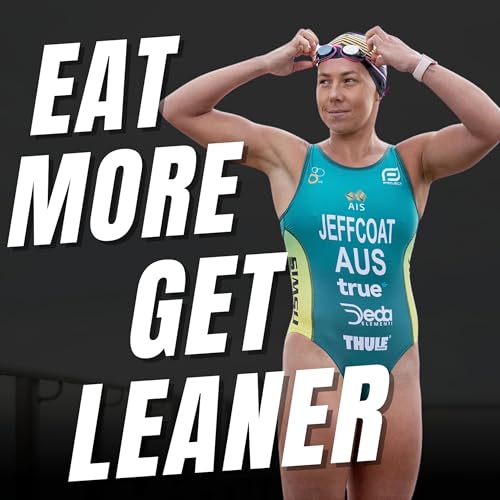
  • She Tripled Her Food Intake and Got Leaner - Emma Jeffcoat's Nutrition Turnaround
    May 7 2026
    What does it actually take to recover from surgery in half the expected time and come back stronger than ever? Australian elite triathlete Emma Jeffcoat did exactly that — and she's on the podcast to break down how. About Emma Jeffcoat Emma Jeffcoat is an Australian elite triathlete and Tokyo 2020 Olympian based on Sydney's Northern Beaches. A former surf lifesaving ironwoman and registered nurse, Emma switched to triathlon in 2015 and hasn't looked back. She is a Mixed Team Relay World Champion (2024), Australian Elite National Champion (2021) and multiple World Cup winner. Known for her powerful racing, fierce resilience and trademark smile across every finish line, Emma is now also joining the NSW Fire Brigade — all while gunning for a mixed relay gold medal at the 2028 LA Olympics. Connect with Emma: Website: emmajeffcoat.com.auInstagram: @emmajeffcoat About This Episode Emma first joined the Triathlon Nutrition Academy Podcast all the way back in Episode 91 — Life of an Elite Australian Triathlete. Three years later she is back, and what a journey it has been. Mixed Team Relay World Champion. A new career with the NSW Fire Brigade. An acute ankle reconstruction that left her surgeon speechless at the speed of her recovery. And a deeply honest account of going from a decade of amenorrhea and RED-S to running 80km weeks and racing at her absolute best. This episode is packed with gold for triathletes at every level — practical, personal and genuinely inspiring. What You Will Learn The four-pillar recovery protocol Emma used to come back eight weeks ahead of scheduleExactly which supplements she used and why (collagen, creatine, fish oil, magnesium)Why nutrition has to come first — before hyperbaric chambers or red light therapy mean anythingHow Emma manages the mental side of injury, including her work with a sports psychologistHer raw and honest account of ten years with amenorrhea, RED-S and the bone stress injuries that followedThe moment someone showed her the actual energy numbers — and everything clickedHow she went from 40km capped run weeks to 80km weeks and winning World CupsHer decision to freeze her eggs after 10 years of amenorrhea affected her AMH and fertilityThe big life plan: Fire Brigade, LA 2028 mixed relay gold and what comes after elite sport Episode Timestamps [00:00] Welcome back Emma — life update including Mixed Relay World Champs, the move back to Sydney and joining the NSW Fire Brigade[03:47] The injury: acute posterior tibialis tendon rupture and full ankle reconstruction[06:35] Milestones that blew the surgeon's mind: walking at four weeks, boot off and swimming normally by six weeks[08:51] The four recovery pillars: rest, nutrition, hyperbaric oxygen and red light therapy[10:13] Fuelling for recovery, not restriction: how Emma approached nutrition when training load dropped to near zero[12:38] Hyperbaric oxygen therapy: four sessions a week and why the surgeon called it gold standard[13:08] Red light therapy: passive, practical and something Emma will continue long-term[16:46] Staying positive through injury: the 24-hour rule, drawing a line in the sand and working with a sports psychologist[22:00] Three years of evolution: what has changed in nutrition, mindset and self-awareness[24:05] What proactive and consistent fuelling actually looks like day to day for an elite athlete[29:38] From tightrope to bridge: what adequate fuelling has done for Emma's injury resilience and training availability[32:26] Body image, social media and why Emma deleted Strava from her phone[38:03] RED-S in triathlon: the moment Emma saw her energy numbers and everything changed[46:55] Getting her period back after 10 years of amenorrhea and the compounding effect of proper fuelling[50:09] Egg freezing: making proactive decisions for fertility and life after elite sport[54:30] Balancing elite sporting goals with long-term life goals[58:08] The grand plan: Fire Brigade, LA Olympics mixed relay gold and what comes after Key Takeaways Nutrition first, always. Recovery nutrition is not about restriction. Carbs, fats and proteins all stay on board. Your body is doing serious work healing.Big rocks before sprinkles. Hyperbaric and red light therapy are powerful tools — but only once sleep and fuelling foundations are locked in.Proactive beats reactive. From booking psych appointments before she thought she would need them, to planning her nutrition before injury progressed — Emma stays ahead of problems.RED-S is rampant and reversible. Emma went from chronic bone stress injuries and 10 years without a period to running 80km weeks and winning World Champs. The difference was fuelling adequately.Honesty accelerates progress. The more open Emma was with her dietitian, physio, coach and family, the more effectively they could actually help her. Resources and Links Episode 91 - Life of an Elite Australian Triathlete with Emma Jeffcoat Red Light Therapy Masterclass Blood Tests for ...
    Show More Show Less
    59 mins
  • Can Your Gut Microbiome Predict Your Training Response with Dr Matthew Cooke
    May 1 2026
    Can Your Gut Microbiome Predict Your Training Response with Dr Matthew Cooke Your gut isn’t just along for the ride… it could be influencing how well you train, recover and perform. In this episode, Advanced Sports Dietitian Taryn Richardson is joined by integrative physiologist and researcher Dr Matthew Cooke to unpack the rapidly evolving science of the gut microbiome in endurance athletes. From how your training shapes your gut, to whether your microbiome could predict performance outcomes, this conversation bridges cutting-edge research with practical takeaways you can actually use. If you’re an age-group triathlete chasing marginal gains, this is one area you don’t want to ignore. What You’ll Learn in This Episode: How endurance training influences your gut microbiome compositionWhy higher training loads can be both beneficial and detrimental for gut healthThe link between gut diversity and aerobic capacity (VO2 max)How your microbiome may influence motivation, cognition and performanceWhether your gut can predict how you’ll respond to trainingThe truth about GI mapping tests and whether they’re worth your moneyWhen probiotics may help and when they’re a waste of cashPractical strategies to support your gut while fuelling for performance Timestamps 00:00 – Introduction to the gut microbiome and why it matters for triathletes02:20 – Meet Dr Matthew Cooke and his research background05:00 – Microbiome vs microbiota explained simply06:30 – Does training actually change your gut microbiome?09:00 – Endurance vs strength athletes: what’s the difference in gut health11:30 – The “U-shaped curve” of training load and gut health13:00 – How quickly your microbiome can change14:30 – The Boston Marathon study and performance-enhancing bacteria17:00 – Is your gut linked to performance and VO2 max?20:00 – Can your gut influence motivation and brain function?22:00 – Fueling with gels vs gut health: what you need to know24:30 – Can the microbiome predict training response?29:00 – Military study: predicting who adapts… and who drops out32:00 – Stress, sleep and diet: the hidden drivers of gut health34:30 – Do you actually need a probiotic?38:00 – Specific probiotic strains and performance benefits40:00 – What is GI mapping and how does it work?43:00 – Is microbiome testing worth it right now?49:00 – Future of gut microbiome testing and personalised performance Links & Resources Read: Is AG1 Worth It? Sports Dietitian Review Explore ways to work with Taryn: https://www.dietitianapproved.com Connect with Dr Matthew Cooke: Matt.Cooke@latrobe.edu.au Research Mentioned Servetas, S. L., Hoffmann, D., Ravel, J., & Jackson, S. A. (2025). Evaluating the analytical performance of direct-to-consumer gut microbiome testing services. Communications Biology. https://doi.org/10.1038/s42003-025-09301-3 Cooke, M. B., Catchlove, S., & Tooley, K. L. (2022). Examining the influence of the human gut microbiota on cognition and stress: A systematic review of the literature. Nutrients, 14(21), 4623. https://doi.org/10.3390/nu14214623 Key Takeaway Your gut microbiome is shaped by how you train, eat, sleep and recover. While the science is still evolving, one thing is clear: nailing the basics like fibre intake, diet diversity and managing training load will go a long way in supporting both gut health and performance. Ready to Take Action? If you want to dial in your nutrition and stop second-guessing your fuelling strategy: Grab the Triathlon Nutrition Checklist to see what you might be missingOr head to dietitianapproved.com to explore courses and programs designed specifically for triathletes CONNECT WITH TARYN Website | Instagram | Facebook | YouTube The Triathlon Nutrition Academy® is a podcast by Dietitian Approved®. All rights reserved.See omnystudio.com/listener for privacy information.
    Show More Show Less
    44 mins