Episodes

  • Mark: Chapter 2
    Oct 5 2026

    Jesus did not come to make religion more manageable. He came to make all things new.

    In Mark 2, He forgives sins, calls the rejected, eats with sinners, confronts religious pride, and declares Himself Lord even over the Sabbath. The message is clear: "the new covenant will not be contained if it is poured into an old religious heart."

    Religion asks, "Did you follow the rules?"
    Jesus asks, "Do I have your heart?"

    New wine requires new wineskins.

    Show More Show Less
    1 hr
  • Mark: Chapter 1
    Sep 28 2026

    In this episode of Unskripted, we begin a journey through the Gospel of Mark, exploring the man behind the story, the world in which he wrote, and the explosive opening chapter that introduces Jesus with urgency, authority, compassion, and power. From the wilderness and temptation to demons, healing, leprosy, and the call to follow, Mark wastes no time confronting us with a question that still matters today: Who is Jesus and what changes when we truly recognize Him?

    Along the way, we wrestle with the supernatural worldview of Scripture, suffering and the goodness of God, dying to self, spiritual authority, and why studying the Bible in context can uncover treasures we may have read past a hundred times.

    This isn't just a study of Mark. It's an invitation to slow down, look closer, ask harder questions, and encounter the living story behind the words.

    Show More Show Less
    1 hr and 13 mins
  • Anniversary Episode
    Sep 22 2026

    One year in, the Unskripted crew looks back on what God has done not just through the podcast, but in them.

    What began as a handful of friends wrestling honestly with Scripture has become a journey of community, accountability, changed perspectives, and a deeper knowledge of Jesus. In this anniversary episode, the conversation moves from remembering the early days to confronting the question: Have we confused the organization of Christianity with the life Jesus actually called us to live?

    Together, the group wrestles with reputation, religious expectations, judgment, church culture, grace, and what it means to follow the example of Christ among imperfect people. What happens when relationship replaces religion? When knowing Jesus matters more than appearing righteous? And when the Church begins to look less like an institution and more like a living body?

    Through laughter, vulnerability, challenge, and gratitude, this episode celebrates a year of discovering that following Jesus is not about having everything figured out. It is about knowing Him, walking together, asking better questions, and trusting the faithfulness of God along the way.

    Show More Show Less
    55 mins
  • Jesus in Psalms
    Sep 1 2026

    What if the Psalms are more than a collection of ancient prayers, songs, and poetry? What if, taken together, they tell the story of a King who suffers, saves, judges, restores, and ultimately reigns?

    In this episode , the conversation moves beyond reading individual Psalms in isolation and begins looking at the Psalter as a unified witness to God's redemptive plan. From David's deeply personal prayers of repentance and deliverance to royal and prophetic Psalms that anticipate the Messiah, the episode explores how the human experiences of fear, failure, worship, injustice, and hope continually point beyond themselves to Jesus.

    Along the way, we return to a simple lens for reading Scripture: love God first and love your neighbor as yourself. Through Psalms 40, 82, 91, 103, and others, they ask two questions: Where is the two most important commands being revealed here, and where do we see Jesus? The result is an invitation to rediscover the Psalms not simply as poetry to admire, but as testimony, prophecy, prayer, and a story of redemption that ultimately leads to Christ.

    Bibliography (Really great materials to aid in your study of scripture..)

    Ayars, Matthew I., Peter C. W. Ho, and David M. Howard Jr. Between the Psalms and the Twelve: Exploring the Nature and Shape of Composition. Eugene, OR: Pickwick Publications, 2025.

    Fleming, David M., and Russell Fuller. "Psalms, Book Of." In Holman Illustrated Bible Dictionary, edited by Chad Brand, 1315. Nashville, TN: Holman Reference, 2015.

    Grogan, G. W. "Psalms." In New Dictionary of Biblical Theology, edited by T. Desmond Alexander and Brian S. Rosner, 203. Electronic ed. Downers Grove, IL: InterVarsity Press, 2000.

    Mangum, Douglas. The Lexham Glossary of Literary Types. Bellingham, WA: Lexham Press, 2014.

    Mitchell, David C. The Message of the Psalter: An Eschatological Programme in the Books of Psalms. Vol. 252, Journal for the Study of the Old Testament Supplement Series. Sheffield: Sheffield Academic Press, 1997.

    Reardon, Patrick Henry. Christ in the Psalms. Chesterton, IN: Ancient Faith Publishing, 2000.

    The Holy Bible: English Standard Version. Wheaton, IL: Crossway Bibles, 2025.

    Show More Show Less
    1 hr and 9 mins
  • The Covenant Series: The Wedding Feast
    Aug 25 2026

    In the final episode of The Covenant series, we turn to the marriage supper of the Lamb and discover that the feast is about far more than a future celebration. It is the culmination of a covenant: deliverance, rest, restoration, and finally, unhindered union with God. From Isaiah's promised feast for all peoples to Jesus' parable of the great banquet and Revelation's Bride who has made herself ready, Scripture tells a story of a Bridegroom who is coming back for His Bride.
    But the invitation carries a question: What does it mean to be ready?

    This conversation challenges us to examine the difference between simply belonging to the religion of Christianity and actually living as the body and Bride of Christ; loving God, loving people, dying to self, resisting the idol of comfort, and allowing our lives to bear the fruit of the One whose name we carry. The table is being prepared. The invitation is open. And perhaps the most important question is not whether we know about the feast, but whether our lives reveal that we are waiting for the Bridegroom.

    Study Questions
    1. When you think about your relationship with Jesus, do you think primarily in terms of religion or covenant? How would viewing Him as Bridegroom change the way you relate to Him?
    2. Revelation says that "the bride has made herself ready." What does readiness look like practically in your life right now?
    3. The episode describes the biblical feast with two major ideas: deliverance and rest. Where do you currently need to trust God for deliverance? Where do you need to learn to rest in Him?
    4. In Luke 14, people who had been invited to the banquet began making excuses. What good things, responsibilities, comforts, or preferences could become excuses that keep you from responding fully to God?
    5. Revelation 19 connects the Bride's fine linen with the righteous deeds of the saints. What is your life currently "sewing into the garment"? What fruit is becoming visible because of what Christ is doing within you?
    6. John the Baptist said, "He must increase, but I must decrease." What is one area where "self" needs to become smaller so Christ can become more visible?
    7. The episode distinguishes between the organization of church and the organism the living body of Christ. Are you primarily participating in Christian activity, or actively living as part of Christ's body in the world?
    8. How much of your time, money, energy, eating, entertainment, schedule, and decision-making is shaped by comfort and preference? Is there an area where comfort may have quietly become an idol?
    9. Paul describes building a life with either gold, silver, and precious stones or wood, hay, and straw. What are you building right now that will matter eternally?
    10. Jesus' banquet servant was told to go into the streets and bring others to the table. Who is your one? Who in your life needs to know that they have been invited?
    Show More Show Less
    1 hr and 5 mins
  • The Covenant Series: The Bride
    Aug 17 2026
    What does it actually mean to live as the Bride of Christ while we wait for the Bridegroom? In Part Two of The Covenant, Jimmy Farrell, Carla Googe, and Ken Land explore the difference between approaching Jesus through a contract and living with Him in covenant. Through Scripture, ancient wedding imagery, and honest conversation, they consider what it means for the Bride to remain faithful, prepare herself, and eagerly anticipate Christ's return. From Hosea and the ten virgins to wedding garments, sanctification, and the Bridegroom's promise to return, this episode reframes obedience as something deeper than fear or religious performance. It is the response of a people who are learning to trust the One who loved them first. And for those whose experience of marriage, covenant, or authority has been painful, the conversation points back to Jesus, the Bridegroom who does not coerce His Bride, but gives Himself for her. The Bridegroom is preparing a place while the Bride is being prepared and the story is moving toward a wedding feast. Study Questions 1. Covenant or contract? Are there places in your relationship with God where you have quietly begun thinking in "if/then" terms... If I pray enough, serve enough, give enough, or obey enough, then God should give me what I want? What might change if the relationship itself became the reward? 2. What is being prepared in you? What habit, identity, dependency, fear, coping mechanism, or attachment might the Lord currently be asking you to surrender? Instead of seeing that process only as something being taken away, what would it look like to view it as part of your preparation (your "beautification") as the Bride of Christ? 3. Are you waiting and listening? John the Baptist describes himself as waiting and listening for the Bridegroom's voice. What practices help you become quiet enough to recognize the voice and presence of Jesus in everyday life? 4. How do you imagine Christ's return? When you think about Jesus returning, is your first response fear, indifference, curiosity, or joy? What has shaped that reaction, and how might the biblical image of a Bride anticipating her Bridegroom reshape it? Key Scriptures from the Series 2 Corinthians 11:2–3 Ephesians 5:22–32 Isaiah 54:5–8 Isaiah 61:10 Isaiah 62:4–5 Ezekiel 16:8–43 Hosea 1–3 Esther 2:12 Matthew 25:1–13 John 3:29–30 John 14:2–3 Romans 5:8 1 John 4:18 Luke 15:11–32 1 Corinthians 6:20 1 Peter 1:18–19 Acts 20:28 Revelation 19:7–9 Revelation 21:2, 9 References & Further Study Miller, Jeffrey E. "Bride of Christ." In The Lexham Bible Dictionary, edited by John D. Barry et al. Bellingham, WA: Lexham Press, 2016. Read the "Bride of Christ" entry through Biblia Charlesworth, James H., ed. The Old Testament Pseudepigrapha, Volume 1: Apocalyptic Literature and Testaments. New York: Yale University Press, 1983. The Old Testament Pseudepigrapha, Volume 1 — Yale University Press Ryle, J. C. Expository Thoughts on the Gospels: John. Edited by Graham Hind and Mary Davis. Leyland, England: EP, 2024. Smith, James, and Robert Lee. Handfuls on Purpose for Christian Workers and Bible Students, Series I–XIII. Grand Rapids, MI: William B. Eerdmans Publishing Company, 1971. Turner, Max. "Ephesians." In New Bible Commentary: 21st Century Edition, edited by D. A. Carson et al. Leicester, England / Downers Grove, IL: InterVarsity Press, 1994. Stories & Media Mentioned Brown, Chandni. Sahan Shakti (Fortitude). Granada Centre for Visual Anthropology. Learn more about Sahan Shakti (Fortitude) Reiss, Fraidy. Founder and Executive Director of Unchained At Last. Read Fraidy Reiss' story Rivers, Francine. Redeeming Love. A novel inspired by the biblical book of Hosea. Explore Redeeming Love Additional Research Allen, E. S., Atkins, D. C., Baucom, D. H., Snyder, D. K., Gordon, K. C., & Glass, S. P. (2005). "Intrapersonal, Interpersonal, and Contextual Factors in Engaging in and Responding to Extramarital Involvement." Clinical Psychology: Science and Practice, 12(2), 101–130. Aron, A., & Aron, E. N. (1986). Love and the Expansion of Self. Atkins, D. C., Baucom, D. H., & Jacobson, N. S. (2001). Understanding Infidelity: Correlates in a National Random Sample. Finkel, E. J. (2017). The All-or-Nothing Marriage. Fisher, H. (2004). Why We Love. Fisher, H. (2016). Anatomy of Love. Glass, S. P. (2003). Not "Just Friends": Rebuilding Trust and Recovering Your Sanity After Infidelity. Free Press. Gottman, J. M., & Gottman, J. S. (2015). The Seven Principles for Making Marriage Work. Gottman, J. M., & Gottman, J. S. (2017). The Relationship Cure. Johnson, S. (2008). Hold Me Tight. Johnson, S. (2019). Attachment Theory in Practice. Perel, E. (2017). The State of Affairs: Rethinking Infidelity. Harper. Pittman, F. (1989). Private Lies: Infidelity and the Betrayal of Intimacy. Questions, Prayer Requests, or Thoughts? If something in this conversation stirred a question, challenged you, or left you needing prayer, we...
    Show More Show Less
    1 hr and 4 mins
  • The Covenant Series: Bridegroom
    Aug 6 2026
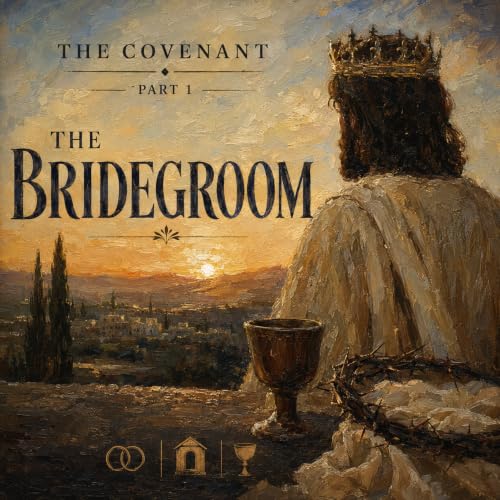
    Episode Description Scripture begins with a marriage and it ends with one. In Part 1 of The Covenant, the Unskripted crew explores one of Scripture's most enduring pictures of God's relationship with His people: the Bridegroom and His Bride. What does it mean that Yahweh calls Himself a husband, Jesus identifies Himself as the Bridegroom, and Revelation ends with the marriage supper of the Lamb? Through the framework of ancient marriage customs, the conversation explores covenant versus contract, the arranged match, the bride price, and the beginning of betrothal. At the center is a simple but powerful truth: our covenant with God rests not upon our ability to earn His love, but upon the character of the Bridegroom who chose us and paid the price for His Bride. Modern relationships are often understood transactionally: I fulfill my obligations, you fulfill yours. Biblical covenant reaches deeper. The episode asks what changes when believers stop approaching God through performance and begin understanding their relationship with Him through covenant, faithfulness, intimacy, and love. The following biblical passages are referenced or substantively discussed in the episode. Old Testament Genesis 2:24 — Marriage established; husband and wife become one flesh. Isaiah 54:5–8 — Yahweh identified as husband; everlasting love and compassion. Isaiah 62:5 — God rejoices over His people as a bridegroom rejoices over his bride. Jeremiah 31:31–34 — Promise of the New Covenant. Hosea 2:19–20 — Betrothal in righteousness, justice, steadfast love, mercy, and faithfulness. Ezekiel 16:8 — God spreads His garment over His people and enters covenant with them. Song of Solomon 4:9 — "You have captivated my heart" / bridal love imagery. New Testament Matthew 5:8 — "Blessed are the pure in heart." Matthew 6:21 — Where your treasure is, your heart will be also. Matthew 9:14–15 — Jesus uses Bridegroom imagery of Himself. Matthew 25:1–13 — Parable of the ten virgins waiting for the Bridegroom. Luke 10:38–42 — Mary and Martha; Mary chooses to remain at Jesus' feet. Luke 22:20 — "The new covenant in my blood." John 3:29–30 — John the Baptist identifies Jesus as the Bridegroom. John 10:10 — Jesus comes that His people may have abundant life. Romans 5:8 — Christ dies for sinners. Romans 12:1–2 — Transformation through the renewing of the mind. 1 Corinthians 6:19–20 — "You were bought with a price." Ephesians 1:4–6 — Chosen in Christ before the foundation of the world. Ephesians 5:21–33 — Marriage as an image of Christ and the Church. Philippians 2:5–11 — Christ's humility, obedience, death, and exaltation. Philippians 4:11–13 — Contentment and strength through Christ. 1 Peter 1:1–2 — Foreknowledge, sanctification, obedience, and Christ's blood. 1 Peter 1:18–21 — Ransomed through the precious blood of Christ. Revelation 19:7–9 — The marriage of the Lamb and marriage supper. STUDY RESOURCES Want to dig deeper into the biblical, historical, relational, and psychological themes behind The Covenant series? These resources informed or complement the subjects explored throughout the series. Biblical & Theological Studies Cambridge Paragraph Bible: Of the Authorized English Version. Cambridge: Cambridge University Press, 1873. Charlesworth, James H. The Old Testament Pseudepigrapha. Vol. 1. New York; London: Yale University Press, 1983. Got Questions Ministries. Got Questions? Bible Questions Answered. Bellingham, WA: Logos Bible Software, 2002–2013. McGuckin, John A. Illumined in the Spirit: Studies in Orthodox Spirituality. Yonkers, NY: St Vladimir's Seminary Press, 2017. Miller, Jeffrey E. "Bride of Christ." In The Lexham Bible Dictionary, edited by John D. Barry et al. Bellingham, WA: Lexham Press, 2016. Ryle, J. C. Expository Thoughts on the Gospels: John. Edited by Graham Hind and Mary Davis. Leyland, England: EP, 2024. Smith, James, and Robert Lee. Handfuls on Purpose for Christian Workers and Bible Students, Series I–XIII. Grand Rapids, MI: William B. Eerdmans Publishing Company, 1971. Turner, Max. "Ephesians." In New Bible Commentary: 21st Century Edition, edited by D. A. Carson et al. Leicester, England; Downers Grove, IL: Inter-Varsity Press, 1994. Marriage, Love & Attachment Aron, A., & Aron, E. N. (1986). Love and the Expansion of Self. Finkel, E. J. (2017). The All-or-Nothing Marriage. Fisher, H. (2004). Why We Love. Fisher, H. (2016). Anatomy of Love. Gottman, J. M., & Gottman, J. S. (2015). The Seven Principles for Making Marriage Work. Gottman, J. M., & Gottman, J. S. (2017). The Relationship Cure. Johnson, S. (2008). Hold Me Tight. Johnson, S. (2019). Attachment Theory in Practice. Infidelity, Betrayal & Covenant Faithfulness Allen, E. S., Atkins, D. C., Baucom, D. H., Snyder, D. K., Gordon, K. C., & Glass, S. P. (2005). Intrapersonal, interpersonal, and contextual factors in engaging in and responding to extramarital involvement. ...
    Show More Show Less
    1 hr and 13 mins
  • The Plumb Line
    Jul 14 2026

    What happens when God measures His people against His own standard?

    In this episode of Unskripted, we take a look at the book of Amos, exploring one of Scripture's most sobering prophetic images, the plumb line.

    Was God's judgment against Israel arbitrary, or was it the inevitable consequence of generations of injustice, idolatry, and spiritual compromise?

    Together we examine the historical setting of Jeroboam II's prosperous kingdom, Amos' unlikely calling as a shepherd from Judah, and the covenant warnings God had already given through Moses centuries earlier. Along the way they discuss how prosperity can conceal spiritual decay, why God continually warns before He judges, and how His desire has always been repentance rather than destruction.

    More than an ancient prophecy, Amos confronts every generation with the same question:

    What happens when our lives are measured against the plumb line?

    Biblical References
    • Amos 1–9
    • Amos 2:6–8
    • Amos 3:7, 10
    • Amos 4:1
    • Amos 5:10–12, 21–24
    • Amos 6:4–6
    • Amos 7:1–17
    • Amos 8:14
    • Deuteronomy 28
    • Exodus 32:11–14
    • Genesis 18:23–33
    • Isaiah 28:14–18
    • Isaiah 57:15
    • James 5:16–18
    • Jonah 3
    • Matthew 7:21–23
    • Matthew 23
    • Numbers 23:19
    • Psalm 34:17–18
    • Psalm 72:12–13
    • Psalm 86:5–7
    • Psalm 102:17
    • Psalm 138:6
    • Psalm 145:18–19
    • 1 Kings 8:65
    • 1 Kings 12:28–33
    • 2 Kings 14:25
    Commentaries & Reference Works
    • Butler, Trent C. Hosea, Joel, Amos, Obadiah, Jonah, Micah. Holman Old Testament Commentary. Nashville: Holman Reference, 2005.
    • Fredericks, Daniel C. "Bethel." In Holman Illustrated Bible Dictionary. Nashville: Holman Bible Publishers, 2003.
    • Frederick, John. "Mercy and Compassion." Lexham Theological Wordbook. Lexham Press, 2014.
    • Fausset, A. R. A Commentary, Critical, Experimental, and Practical, on the Old and New Testaments. Vol. IV. London: William Collins, Sons & Company.
    • Kelle, Brad E., and Brent A. Strawn. "History of Israel 5: Assyrian Period." In Dictionary of the Old Testament: Historical Books.
    • Mariottini, Claude F. "The Life of Jeroboam II." In Ultimate Guide to the Holy Land. Nashville: Holman Reference, 2022.
    • McKelvey, Michael G. "Amos." In ESV Expository Commentary: Daniel–Malachi. Vol. 7. Wheaton: Crossway, 2018.
    • Moseley, Allan. "Amos." In Exalting Jesus in Hosea, Joel, Amos, Obadiah. Christ-Centered Exposition Commentary. Holman Reference, 2024.
    • Sala, Maura. "Bethel North of Jerusalem." Lexham Bible Dictionary. Lexham Press, 2016.
    • VanGemeren, Willem, ed. New International Dictionary of Old Testament Theology & Exegesis. Grand Rapids: Zondervan, 1997.
    Show More Show Less
    54 mins