• AI Search: Why Some Brands Get Cited (And You Don't)
    Nov 10 2026
    AI search is already recommending brands to millions of people — is yours one of them? In this episode of Crystal Clear, LinkedIn's Senior Director of Digital Marketing Inna Meklin breaks down exactly what it takes to show up when someone asks ChatGPT, Perplexity, or Claude which product to buy. Inna leads Web Experience, SEO, and AI search strategy for LinkedIn's B2B products — meaning she's solving this problem from inside one of the most-cited brands on the internet. Get certified in AEO fundamentals for free: HubSpot Academy AEO Fundamentals Certification → https://clickhubspot.com/68ccf7 In this conversation, you'll learn why AI systems reward reinforcement signals over any single piece of content, how to write for humans while structuring for machines, and why citation decay is real — and how to avoid it. Inna explains the difference between owned, earned, and paid signals, why LinkedIn articles and newsletters hit the LLM "trifecta," and how her team went from treating AEO as a campaign to building it as an operating model across the entire marketing org. She also covers why sentiment now matters more than ever, what AI-generated slop is doing to discoverability, and why you absolutely cannot game AI search — but you can build durable authority over time. More resources mentioned in this episode: Unlocking AI Visibility: The B2B Marketer's Guide to LinkedIn → https://hubs.ly/Q04DNGSF0 HubSpot AEO Tool → https://clickhubspot.com/965d52 The Critical Thinker's Guide to AI → https://hubs.ly/Q04CkrJS0 Follow Crystal King on LinkedIn: https://hubs.ly/Q04DCxx90 Follow Inna Meklin on LinkedIn: https://www.linkedin.com/in/inna425/ TIMESTAMPS: 00:00 Why AI search is changing which brands get recommended 01:35 Doing AI search for LinkedIn from inside LinkedIn 03:45 What makes AI cite one brand over another 05:44 Is AI search just SEO? 06:55 Write for humans, structure for machines 08:47 Why LinkedIn articles and newsletters get cited 11:28 Authenticity, AI slop, and making content work harder 14:29 Where to put your energy: Reddit, G2, social, and press 17:49 Earned vs. paid: what lasts 18:12 How to measure what's working 19:36 Why sentiment matters more now 20:40 Does AI penalize content that sounds like AI? 22:52 Can you game AI search? 24:47 What didn't work: why citations fade 26:54 What marketing and sales leaders get wrong 28:54 Final advice This video answers questions like: What signals make an AI recommend one brand over another? How is AEO different from traditional SEO? How do you measure brand visibility in AI search results? Explore more AI marketing resources at HubSpot.com. About HubSpot: HubSpot is a customer platform that provides education, software, and support to help businesses grow better. The platform includes marketing, sales, service, commerce, operations, and website management products that start free and scale to meet our customers’ needs at any stage of growth. Today, thousands of customers around the world use HubSpot’s powerful and easy-to-use tools and apps to attract, engage, and delight customers. ⚠️ Disclaimer: The videos on our YouTube channel are for informational purposes only, and are not intended as an endorsement for any of the products or services that we feature. #HubSpotAEO #HowToHubspot --- Subscribe for more episodes from Crystal, as well as tips and tutorials from HubSpot Academy team → and follow Crystal on LinkedIn for daily leadership insights: https://www.linkedin.com/in/crystalking
    Show More Show Less
    30 mins
  • Why AI Feels Fake: The Value of Human-Authored Marketing
    Oct 27 2026
    Audiences usually spot AI content instantly, even if they can’t put their finger on why. It lands right in the uncanny valley: grammatically spotless, perfectly structured, and completely hollow. When feeds fill up with the same regurgitated insights, real taste and a distinct point of view stop being nice-to-haves. They become your only real leverage. In this episode of Crystal Clear, Crystal King talks with Ashley Faus (author of Human-Centered Marketing, Atlassian) and Jenna Fidellow (WPP Media) about the "human premium," explaining why marketers shouldn't just roll over and become prompt engineers. ➡️ Grab The Critical Thinker's Guide to AI: https://hubs.ly/Q04CkrJS0 What we dig into: The Uncanny Valley: Why synthetic writing triggers instant distrust, and what Dove’s Real Women campaign proves about transparency as a brand asset. Escaping the Sea of Sameness: Why scraping the public web guarantees average copy that sounds like your competitors, plus the internal rules Atlassian uses to prevent it. The Hard Lines: What Ashley and Jenna will never outsource to an algorithm, no matter how fast the tools get. Tactics to Protect Your Voice: Low-tech ways to keep your thinking original (like metaphor dice, raw voice notes, and human-first brainstorming) before opening an AI prompt. TIMESTAMPS: [0:00] Crystal frames the human-authored premium and why human taste is the key competitive differentiator in an AI-driven world [0:24] Ashley Faus and Jenna Fidellow introduce their backgrounds in marketing, brand strategy, and culture [2:01] Ashley traces the human premium across history, from the printing press to AI [6:05] Jenna explains why AI cannot create brand taste, DNA, or meaningful differentiation on its own [7:22] How brands can experiment with AI for emotional storytelling without sacrificing authenticity [9:10] Ashley shares Atlassian's internal guidelines for responsible AI use in content creation [13:56] The uncanny valley effect and why AI content triggers a subconscious threat response in audiences [16:15] Why transparency is a brand strategy — and what marketers can learn from Dove's Real Women campaign [23:28] The sea of sameness problem: can AI truly curate, or does it only reflect the context humans give it? [27:57] How working inside walled-garden AI instances shapes and limits creative output [30:40] Practical tactics for reclaiming your creative voice while still using AI efficiently [35:41] Where Ashley and Jenna draw a hard line on what they will never let AI write for them [38:20] What business leaders most need to understand about this moment in marketing [40:39] Ashley pushes back on the idea that all marketers must become AI workflow engineers [43:36] Closing thoughts, book recommendations, and where to connect with today's guests Connect with Ashley Faus on LinkedIn and grab her book Human-Centered Marketing: How to Connect with Audiences in the Age of AI. ➡️https://www.linkedin.com/in/ashleyfaus ➡️https://ashleyfaus.com/book Connect with Jenna Fidellow on LinkedIn. ➡️https://www.linkedin.com/in/jennafidellow/ For more marketing insights, strategies, and free resources, visit hubspot.com. About HubSpot: HubSpot is a customer platform that provides education, software, and support to help businesses grow better. The platform includes marketing, sales, service, commerce, operations, and website management products that start free and scale to meet our customers’ needs at any stage of growth. Today, thousands of customers around the world use HubSpot’s powerful and easy-to-use tools and apps to attract, engage, and delight customers. ⚠️ Disclaimer: The videos on our YouTube channel are for informational purposes only, and are not intended as an endorsement for any of the products or services that we feature. --- Subscribe for more episodes from Crystal, as well as tips and tutorials from HubSpot Academy team → and follow Crystal on LinkedIn for daily leadership insights: https://www.linkedin.com/in/crystalking
    Show More Show Less
    44 mins
  • AI Productivity Gains? Here's What the Data Actually Shows
    Oct 13 2026
    AI productivity tools promise to save your team hours every week — but what if the math doesn't actually add up? In this episode of Crystal Clear, HubSpot Academy Senior Evangelist Crystal King breaks down the verification tax: the hidden cost eating your team's time, burning out your best people, and quietly sabotaging your pipeline. What you'll learn: why 72% of orgs report AI time savings but almost none of it flows back to revenue, how to calculate the real ROI of your AI stack, and a four-part playbook to redesign your operating model around this reality. The uncomfortable truth is that generative AI doesn't eliminate work — it redistributes it. Research from Foxit shows executives net only 16 minutes of actual weekly savings after verification time. Frontline workers net negative 14 minutes. A Glean WorkAI Institute study found workers spend 37% of all AI time on "bot sitting." And a BetterUp Labs/Stanford study published in HBR coined the term "work slop" — polished-looking AI output that lacks substance — estimating it costs a 10,000-person org $9 million a year in lost productivity. Crystal also covers Jason Wei's verifier's law, automation bias, phantom pipelines, and why your $160K strategist is doing quality control on a $20/month chatbot.
    Show More Show Less
    14 mins
  • The Apprenticeship Crisis: How AI Is Leaving Junior Talent Behind
    Sep 29 2026
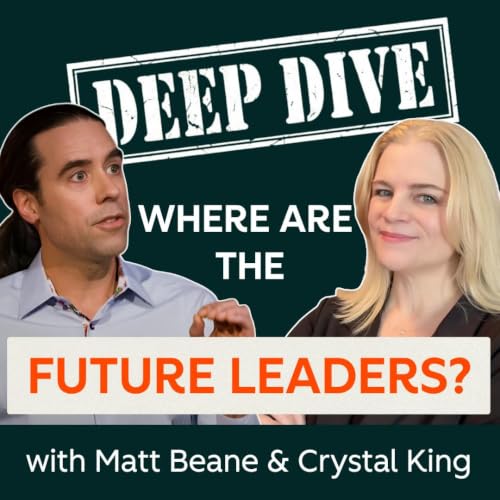
    We handed AI all the entry-level grunt work — and accidentally destroyed the training ladder junior employees use to build real-world expertise. When routine coding, draft copy, and spreadsheets are offloaded to machines, senior leaders surge ahead while junior talent gets left behind without important mentorship and expert guidance. In this episode of Crystal Clear, host Crystal King is joined by Dr. Matt Beane (Associate Professor at UC Santa Barbara, CEO of Skillbench, and author of The Skill Code) to explore the silent apprenticeship crisis unfolding across industries. From surgical operating rooms to software engineering teams, Matt shares research showing how automated efficiency is severing human mentorship, causing cognitive overload, and leading to AI "slop" in production. You’ll discover a practical framework to reverse the skill drain using "The 3 Cs"—Challenge, Complexity, and Connection—and learn how to reconfigure AI workflows so junior teams build judgment instead of falling behind. Key Topics Covered: The hidden organizational cost of eliminating entry-level tasks What surgical robotics teach us about AI's impact on mentorship The OpenAI & Anthropic study insights on cognitive overload and team silos Why junior employees ship AI slop—and how senior context protects quality The 3 Cs of Skill Development: Challenge, Complexity, and Connection How to design high-speed, mentor-led AI workflows for junior talent Additional resources: Critical Thinking in the Age of AI (Free HubSpot Academy Course) The Skill Code by Matt Beane → available wherever books are sold Matt Beane's Substack Skillbench Stay sharp with more free courses to grow your business at HubSpot Academy.
    Show More Show Less
    40 mins
  • AI Brand Strategy: Stop Being Forgettable at Scale
    Sep 15 2026
    AI made producing content almost free — and flooded the market with work that's competent, polished, and completely forgettable. In this inaugural episode of Crystal Clear, host Crystal King breaks down the hidden costs of relying on AI tools that train on the exact same data to write your posts, articles, and marketing copy. From LinkedIn's epidemic of automated posts to the phenomenon of "model collapse" and "Habsburg AI," discover why operational efficiency might actually be eroding your brand value. Crystal explores the economic and psychological data behind AI-generated content, explains why consumer backlash is rising, and shares actionable frameworks to build "business taste,” essentially, the human judgment, context, and editorial restraint needed to stand out when everyone else sounds identical. Take the course: The Critical Thinker's Guide to AI — https://hubs.ly/Q04xx62t0 Chapters 00:00 The Rise of AI in Content Creation — why your feed is starting to sound like one voice 04:34 The LinkedIn AI content flood — what Pangram Labs found when they scanned over a million posts 06:00 Why AI narrows creative output — findings from UCL, MIT, and a natural experiment in Italy 09:35 Model Collapse and Habsburg AI explained — what happens when models train on their own output 11:53 Defining business taste in the AI era — and why saying no is half the job 15:00 Playbook: How to taste-gate your AI workflow — practical steps for teams who want speed without sameness
    Show More Show Less
    19 mins