Season's Savings | ₹5/mo for 3 months

₹199/month after first 3 months. Renews automatically. Terms apply.
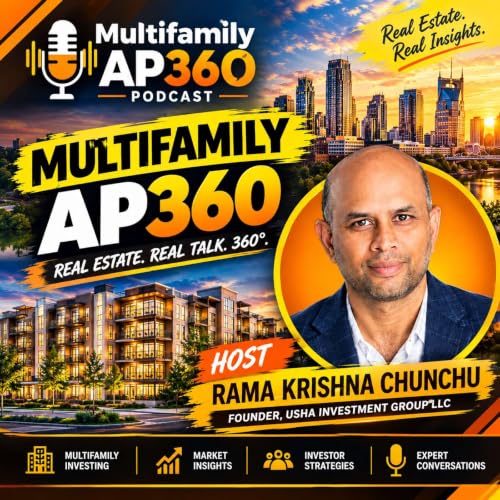
MULTIFAMILY AP360 cover art

MULTIFAMILY AP360

MULTIFAMILY AP360

Written by: Rama Krishna chunchu
Listen for free

About this listen

MULTIFAMILY AP360 — REAL ESTATE. REAL INSIGHTS. 360°.


The podcast for people who take commercial real estate seriously.


Hosted by Rama Krishna Chunchu, Multifamily AP360 goes behind the headlines and into the minds of the investors, operators, developers, lenders, economists, and entrepreneurs shaping commercial real estate.


No fluff. No scripted answers. No hype.


Just real conversations, real numbers, hard questions, and strategies you can use.

We cover multifamily, CRE, capital markets, financing, development, property management, technology, AI, economics, and wealth creation.


We don't just ask what happened.


We ask:

Why?
What does the data say?
Where's the opportunity?
Where can investors get hurt?
And—if it were your money—what would you do?


We don't chase celebrities. We chase ideas.


Think Bigger. Ask Harder. Invest Smarter.

© 2026 MULTIFAMILY AP360
Economics Leadership Management & Leadership Personal Finance Self-Help Success
Episodes
  • RK# 467 How to Find Distressed Multifamily Deals Before Everyone Else
    Nov 9 2026

    Send us Fan Mail

    How to Find Investable Multifamily Distress (Without Chasing Fire Sales)

    This episode explains why a distressed apartment building isn’t automatically a good investment and offers a practical framework for identifying investable multifamily distress. It contrasts headlines with data, noting refinancing pressure from maturing commercial debt, historically low delinquency rates across most capital sources, and that an 8.04% multifamily CMBS delinquency rate applies to CMBS rather than the entire market. The script outlines five signals to evaluate opportunities: a refinancing gap, verifiable financial distress, realistic operational upside, pricing based on disciplined underwriting and stress testing, and financing that still works under downside scenarios. It also covers five sourcing channels—loan/servicing data, brokers, property managers, public records, and direct-to-owner outreach—and a five-question investability screen, plus added sponsor diligence for passive investors.

    Support the show

    Follow Rama on socials!
    LinkedIn | Meta | Twitter | Instagram|Youtube

    Connect to Rama Krishna
    https://calendly.com/rama-krishna/
    E-mail: info@ushacapital.com
    Website: www.ushacapital.com

    To find out more about partnering or investing in a multifamily deal:
    email: info@ushacapital.com

    Show More Show Less
    21 mins
  • RK#466 Why High Occupancy Can Mislead Multifamily Investors in 2026
    Nov 3 2026

    Send us Fan Mail

    Why High Occupancy Can Mislead Multifamily Investors in 2026

    The episode explains why 90%+ physical occupancy can be misleading in multifamily underwriting in 2026 and doesn’t necessarily indicate a healthy deal. It outlines four risks: occupancy propped up by large rent concessions that reduce effective rent; rent roll delinquencies and weak collections despite high occupancy; lease expiration cliffs where a large share of leases roll in a short period, creating near-term vacancy risk; and temporary or artificial occupancy from corporate/short-term leases, owner/employee units, or leases not yet tested by market competition, especially amid new supply. It recommends focusing instead on economic occupancy, actual collected rent versus potential, trailing 12-month collection and delinquency trends, lease expiration schedules and renewal rates, effective rents after concessions, and the sub-market supply and absorption pipeline.

    Support the show

    Follow Rama on socials!
    LinkedIn | Meta | Twitter | Instagram|Youtube

    Connect to Rama Krishna
    https://calendly.com/rama-krishna/
    E-mail: info@ushacapital.com
    Website: www.ushacapital.com

    To find out more about partnering or investing in a multifamily deal:
    email: info@ushacapital.com

    Show More Show Less
    4 mins
  • RK#465 The hidden risk behind projected rent growth
    Oct 31 2026

    Send us Fan Mail

    This episode warns that projected rent growth assumptions in multifamily offering memorandums (often 3–4%+) can quietly break deals, especially in 2026. It argues sellers and brokers use optimistic pro formas—based on national averages, peak 2021–2022 growth and ignoring concessions and lease-up competition—to make returns look stronger than the actual submarket supports. In today’s higher-rate environment, missing rent growth can reduce DSCR, erase cash-on-cash returns, and lower refinance or exit values, undermining the entire business plan. The script notes rent growth is uneven: parts of the Midwest and some gateway markets are still gaining while many Sun Belt submarkets face heavy new supply and weak pricing power. It recommends underwriting with conservative, submarket-specific numbers, using effective rents after concessions, stressing flat rents for 2–3 years, and rejecting deals that only work due to aggressive rent growth.

    Support the show

    Follow Rama on socials!
    LinkedIn | Meta | Twitter | Instagram|Youtube

    Connect to Rama Krishna
    https://calendly.com/rama-krishna/
    E-mail: info@ushacapital.com
    Website: www.ushacapital.com

    To find out more about partnering or investing in a multifamily deal:
    email: info@ushacapital.com

    Show More Show Less
    4 mins
adbl_web_anon_alc_button_suppression_t1
No reviews yet