Episodes

  • Why does food stick to stainless steel utensils?
    Oct 9 2023

    Welcome to PetPuja Dot Com, the podcast where we explore the fascinating world of food and cooking through a scientific lens. Today, we're diving deep into a topic that everyone has encountered at some point in their cooking journey: why does food stick to stainless steel utensils?

    Cooking is not just an art; it's also a science. The choices we make in the kitchen, from ingredients to utensils, can have a profound impact on the outcome of our dishes. In this episode, we're peeling back the layers of this common kitchen conundrum to understand the science behind why food sticks to stainless steel utensils.

    We'll uncover the mysteries of chemical bonds, the role of temperature, and the secrets to creating that perfect non-stick surface. Whether you're a seasoned chef or just getting started in the world of cooking, this episode will provide you with valuable insights that will elevate your culinary skills.

    So, join us as we embark on this delicious journey into the science of cooking. Get ready to unlock the secrets behind a well-seasoned pan, discover tips to prevent sticking, and gain a deeper appreciation for the magic that happens in your kitchen.

    Welcome to Pet Puja Dot Com, where food meets science, and every bite is a lesson.

    Please do share your suggestions to the email.

    Neerja Bhatnagar

    motivationalmata@gmail.com

    Show More Show Less
    9 mins
  • Cooking Under Pressure: The Science Behind the Amazing Effects of Pressure Cooking on Food
    Sep 25 2023

    Welcome to the Science of Cooking series on our podcast, "Petpuja Dot Com", where we explore the fascinating physics, chemistry, and biology behind everyday dishes. In this episode, we will learn about the science behind pressure cooking, a method of cooking food using high pressure steam. 🍲

    Pressure cooking is not a new invention. It was first developed by a French physicist named Denis Papin in the 17th century. He invented a device called the "digester", which was a sealed pot with a safety valve that could withstand high pressure and temperature. He used it to cook bones and other tough materials in a fraction of the time it would take in a normal pot.

    But how does pressure cooking work? And why does it make food cook faster and more tender? To answer these questions, we need to understand some basic concepts of thermodynamics and chemistry. ( We have covered them in earlier episodes. Pls check.)

    First, let's talk about boiling point. Boiling point is the temperature at which a liquid turns into a gas. For water, the boiling point is 100°C or 212°F at sea level. However, this value changes depending on the atmospheric pressure. The higher the pressure, the higher the boiling point. The lower the pressure, the lower the boiling point.

    This means that when you cook food in a normal pot at sea level, the water can never go above 100°C, no matter how high you turn up the heat. The excess heat escapes as steam. But when you cook food in a pressure cooker, you trap the steam inside the pot and increase the pressure. This raises the boiling point of water to around 120°C or 250°F. This higher temperature allows food to cook faster and more evenly.

    Second, let's talk about collagen. Collagen is a protein that gives structure and strength to animal tissues, such as skin, bones, cartilage, and tendons. Collagen is also what makes meat tough and chewy when it is raw or undercooked. However, when collagen is exposed to high temperature and moisture for a long time, it breaks down into gelatin, a soft and sticky substance that gives meat its juiciness and flavor.

    This means that when you cook meat in a normal pot, you need to simmer it for hours to break down the collagen and make it tender. But when you cook meat in a pressure cooker, you can achieve the same result in minutes, because the higher temperature and pressure accelerate the collagen breakdown.

    So, there you have it: the science behind pressure cooking. In summary, pressure cooking works by increasing the boiling point of water and breaking down collagen faster than normal cooking methods. This results in faster cooking time, more tender meat, and more flavorful dishes.

    If you want to learn more about pressure cooking, check out our website for some delicious recipes and tips. And don't forget to subscribe to our podcast for more episodes on the science of cooking.

    Thank you for listening and happy cooking! 😊

    Neerja Bhatnagar

    petpuja12@gmail.com

    Show More Show Less
    17 mins
  • Chemistry in Cooking
    Sep 17 2023

    🎙️ Welcome to another delectable episode of PetPujaDotCom! 🍽️

    Are you ready to take your culinary skills to the next level? Join us as we embark on a gastronomic journey through the enchanting world of chemical reactions in cooking. 🔍🍳

    In this episode, we'll unravel the science behind what happens in your kitchen when heat meets ingredients. 🧪 From the mesmerizing starch gelatinization that transforms grains into silky goodness, to the protein denaturation that gives your meat that mouthwatering tenderness, and the complex Maillard reaction responsible for the rich flavors in your roasts and bakes, we've got it all covered. 🥖🥩🔥

    But that's not all! We'll also explore the intriguing realm of hydrolysis, a process that unlocks a world of flavors and textures in your dishes.

    Whether you're a seasoned chef or a culinary novice, this episode promises to feed your curiosity and your appetite for knowledge. 🤓🍽️

    Don't miss out on this captivating culinary journey. Tune in now to discover the secret chemistry behind your favorite meals! 🔬👩‍🍳 #CookingChemistry #FoodScience #CulinaryMagic #PetPujaPodcast

    Neerja Bhatnagar

    petpuja12@gmail.com


    Show More Show Less
    21 mins
  • Cooking - A science or an Art?
    Sep 10 2023

    The realm of cooking, my friends, is a fascinating canvas where opinions abound, and there's no definitive answer. It's a flavorful debate that's been simmering for ages.

    On one side of the stove, you've got the fervent believers in cooking as an art form. They extol the virtues of creativity and imagination, asserting that in this culinary arena, there are no strict rules. Each dish, they argue, is a masterpiece, a unique creation forged by the cook's inspiration.

    Then, on the other side, you've got the champions of cooking as a science. They're all about precision, exact measurements, and techniques that must be adhered to like the formulae of a grand experiment. To them, the kitchen is a laboratory where certain rules and methods are key to crafting a delectable dish.

    In this gastronomic debate, there's no right or wrong. It's a delightful blend of artistry and scientific precision, a culinary tapestry woven with diverse perspectives. So, whether you lean toward the artistry of creation or the scientific precision of a well-tuned recipe, one thing's for sure: cooking remains a captivating journey where flavor, imagination, and technique come together in delightful harmony.

    So, is cooking an art or a science? What is your take on this?

    Cooking is an exquisite blend of art and science, a captivating journey that marries boundless creativity with precise technique. The culinary virtuosos masterfully fuse these two worlds to craft delectable, unforgettable dishes.


    From the scientific vantage point, cooking can be distilled down to the elegant transfer of energy, most often in the form of heat, to our culinary creations.


    Heat, the unsung hero of the kitchen, is the catalyst that metamorphoses raw ingredients into mouthwatering delights. Picture this: the heat emanates from a source, whether it's the trusty gas stove, the rugged kerosene burner, the rustic wood-burning chulah, or the sleek induction cooker.

    Now, physicists might tell you that heat is a manifestation of energy. But what is energy, you ask? Allow me to offer a handy explanation. Energy is the magical force that brings things to life, making the seemingly impossible not just possible but spectacular.

    In this tantalizing episode, we're delving deep into the physics underpinning the culinary world. And hold onto your aprons, because the next episode is a sizzling journey into the fiery realm of chemistry. Subscribe to our channel so you don't miss out on this flavor-packed adventure!

    So, for a taste of the physics behind your favorite dishes, hop aboard and let's explore the sizzle, the science, and the succulence of cooking.

    Neerja Bhatnagar

    petpuja12@gmail.com


    Show More Show Less
    24 mins
  • India's iconic Biscuit - Parle G
    Sep 3 2023

    अगर बिस्कुट की बात आती है तो फिर सबसे पहले जुबान पर एक ही नाम आता है और वो है 'Parle-G'. बच्चे-बूढ़े या फिर जवान लगभग सभी इस नाम से वाकिफ हैं.अगर आप चाय के शौकीन है और पारले जी बिस्किट के बारे में नही जानते हो। ऐसा होने की सभांवना बहुत कम है। पारले-जी (Parle-G) बिस्किट का स्वाद आज भी लोगों की जुबां पर बरकार है. भारत में ये सिर्फ एक बिस्किट का ब्रांड भर नहीं है, बल्कि इसके साथ लोगों को भावनाएं भी जुड़ी हैं. जब भी पारले-जी बिस्किट का जिक्र होता है, हम अपने बचपन में लौट जाते हैं. समय के साथ पारले-जी बिस्किट में कई बदलाव हुए, लेकिन इसका स्वाद नहीं बदला. ये ब्रान्‍ड तब से चाय का साथी बना हुआ है जब भारत आजाद भी नही हुआ था। पारले बिस्किट के साथ लोगो का रिश्‍ता कुछ ऐसा है कि इसको देखते ही लोगो की अपने जीवन से जुडी हुई काफी यादें ताजा होने लगती है।

    Neerja Bhatnagar

    petpuja12@gmail.com

    Show More Show Less
    15 mins
  • भारतीय चाय का इतिहास
    Aug 28 2023

    भारतीय चाय का इतिहास

    नमस्कार दोस्तों! चाय पर चर्चा तो अक्सर होती है पर आज हम चाय की चर्चा करने वाले हैं। हम आपको भारतीय चाय के इतिहास की यात्रा पर ले जाने वाले हैं। चाय हमारे देश की प्रिय बेवरेज है, जिसकी खुशबू और स्वाद हर घर में खुशियों का संचार करती है।

    I hope, you will love this journey of Tea from China to India. And India becoming one of the biggest exporter of Tea in the world.

    With best wishes,

    Neerja Bhatnagar

    Email - motivationalmata@gmail.com


    Show More Show Less
    23 mins
  • GI Tagged Spices: A Gourmet's Delight!
    Jul 23 2023

    India's rich and diverse culinary heritage is deeply intertwined with the exotic flavors of its traditional spices. Among the many treasures in the realm of Indian spices, certain varieties have been awarded the prestigious Geographical Indication (GI) tag. This certification ensures their authenticity, unique identity, and ties to specific geographical regions, elevating their significance in the world of gastronomy.

    Each GI tagged spice carries a legacy that dates back centuries, tracing its roots to specific regions where favorable agro-climatic conditions and traditional cultivation methods create unparalleled flavor profiles. These spices are cultivated, processed, and perfected by skilled farmers and artisans who have passed down their knowledge through generations.

    Guntur Sannam Chilli, hailing from Andhra Pradesh, is famed for its deep red hue, moderate pungency, and rich vitamin C content. Waigaon Turmeric, from Maharashtra, undergoes organic farming, ensuring purity and medicinal properties. Malabar Black Pepper, native to Kerala, entices with its sharp, biting taste, while Byadgi Chilli from Karnataka offers a unique blend of color and sweetness.

    The Malnad Gidda Chilli from Karnataka captivates with its vibrant color and moderate spiciness. Kashmir Saffron, grown in the pristine valleys of Jammu and Kashmir, adds its golden hue and luxurious aroma to various delicacies. The delicate aroma and distinctive flavor of Mysore Malligae impart a touch of royalty to dishes, hailing from Karnataka.

    These GI tagged spices hold a place of pride in Indian culinary traditions, adding depth, complexity, and character to regional dishes. They are an essential part of Indian households, enlivening everyday meals and enhancing festive feasts.

    Beyond their culinary allure, these spices boast remarkable health benefits. They are known for their antioxidant properties, aiding digestion, improving immunity, and promoting overall well-being. Additionally, their use in traditional medicine has been praised for ages, making them an integral part of Ayurvedic practices.

    When you savor dishes seasoned with GI tagged spices, you experience the essence of the land where they originated. These spices celebrate the cultural diversity and richness of India's culinary tapestry, making each bite an unforgettable journey through time and tradition.

    Whether you're a seasoned cook, an enthusiastic foodie, or simply appreciate the wonders of gastronomy, exploring the world of GI tagged spices promises an unforgettable adventure. Embark on a culinary exploration and let the exquisite flavors and stories of these precious spices transport you to the heart of India's vibrant culinary heritage.

    I shall be covering some of these GI tagged spices.

    Happy cooking, Wisely choosing.

    Neerja Bhatnagar

    petpuja12@gmail.com

    Show More Show Less
    30 mins
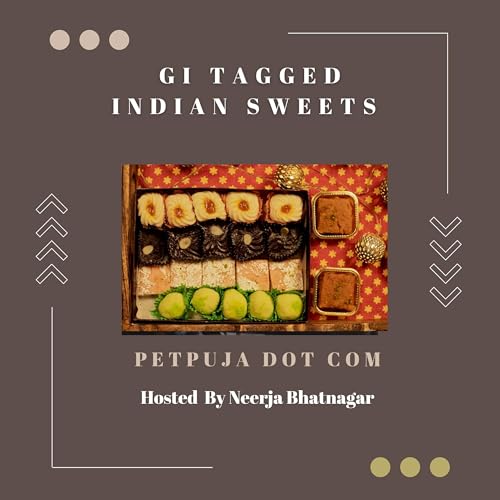
  • Exploring the Sweet World of GI Tagged Indian Sweets
    Jul 15 2023

    Indulging in the delightful realm of sweets is an integral part of Indian culture. From traditional recipes passed down through generations to regional specialties, the variety and richness of Indian sweets are unmatched. In recent years, the concept of Geographical Indication (GI) tags has been introduced to protect and promote the unique identity and origin of these culinary treasures. In this write-up, we will delve into the world of GI tagged Indian sweets, exploring their significance, flavors, and the cultural heritage they represent.

    Preserving Cultural Heritage:

    The GI tag serves as a badge of honor, acknowledging the historical and cultural significance of Indian sweets. It provides legal protection against imitations and ensures that only sweets produced in specific regions with traditional methods can bear the prestigious label. This recognition not only safeguards the authenticity of these sweets but also promotes the rich cultural heritage associated with them.

    GI tagged Indian sweets encompass a diverse range of flavors, textures, and ingredients.

    Promoting Regional Economy:

    The GI tag not only benefits the consumers by ensuring authenticity but also plays a crucial role in boosting the regional economy. By protecting the traditional production methods and promoting the uniqueness of these sweets, the tag encourages tourism, creates employment opportunities, and supports local farmers and artisans. It becomes a source of pride for the communities involved in the production of these sweets.


    Preserving Traditions for Future Generations:

    The GI tag serves as a link between generations, preserving age-old recipes and techniques. By emphasizing the traditional methods and maintaining strict quality standards, it ensures that the art of making these sweets is passed down to future generations. This not only preserves the flavors and textures but also promotes cultural diversity and craftsmanship.

    The GI tagged Indian sweets are not just desserts but symbols of cultural heritage, regional pride, and culinary excellence. They represent the rich tapestry of India's diverse traditions and flavors. The GI tag provides recognition, protection, and economic opportunities for the communities behind these culinary gems. As we savor these delicacies, let us appreciate the labor, skill, and passion that go into creating these sweet treasures, ensuring their legacy for generations to come.

    Let us embark on this journey to find out more about our cutural heritage!

    Neerja Bhatnagarmotivationalmata@gmail.com

    Show More Show Less
    24 mins