• How to Buy a Business Without Buying Yourself a Job
    Nov 12 2026

    What would you do if 70% of your revenue walked out of the door in a single meeting?

    My guest lost most of his business in one meeting, and by the time he got back to his car he’d already worked out his next move. That moment led to 29 acquisitions in seven years, including one he bought without putting in a penny and one he wishes he’d never touched.

    We talk about how he can tell a deal is wrong within five minutes, the question he asks every seller, and why buying a small business could just land you another job.

    Ross Tomkins is a former physiotherapist turned serial entrepreneur, investor and founder of Balmoral Partners, with 25 acquisitions and four exits behind him.

    Value Bombs

    1. The meeting that wiped out 70% of his revenue
    2. How he bought his first business with no money
    3. The partner betrayal due diligence would never catch
    4. The holiday question that exposes a bad deal
    5. Why using one deal structure loses you deals

    Interested in freeing yourself in the business? Take the exit ready diagnostics test and identify the gaps in your growth and scale model. Go here: https://readytoexit.scoreapp.com/

    Timestamps

    00:00 Losing 70% of the business in one meeting
    05:43 The book that sparked his first acquisition
    07:56 Why most founders never think about buying
    09:37 Imposter syndrome and outgrowing your identity
    13:26 Why you can’t be the best at everything
    15:36 The 80% rule for delegation
    17:26 Why health comes before hustle
    19:43 29 deals in seven years and the first one
    24:04 The £1 turnaround that went under
    27:16 The deal he should never have done
    30:24 Due diligence and cloning the owner with AI
    33:15 Walking away from a deal after five minutes
    35:14 How to avoid buying yourself a job
    39:18 Coaching: cash flow or capital event?
    44:54 Why one strategy limits your deals
    46:21 Why you should stay in your lane

    ABOUT THE GUEST

    Linkedin:Ross Tomkins | LinkedIn

    Instagram: Instagram

    Facebook: (3) Facebook

    Course: https://www.rosstomkins.co.uk/seven-figure-founder-422095

    ABOUT THE HOST
    LinkedIn: https://www.linkedin.com/in/adamistrong
    Website: ⁠https://adamstrong.net⁠

    YouTube: https://www.youtube.com/adamstrong

    Show More Show Less
    48 mins
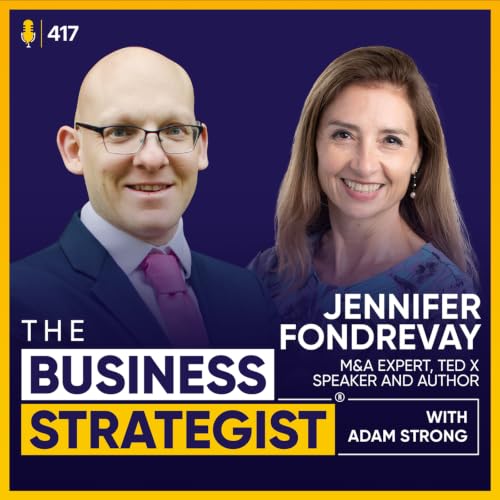
  • Selling Your Business? What Happens the Morning After
    Nov 5 2026

    What happens to you the morning after you sell the business you spent a decade building? I’ve sat with founders who planned every number of their exit and never once planned for the person left standing when the deal closes.

    In this episode I sit down with Jennifer Fondrevay, who went through three acquisitions worth billions from the inside and then interviewed more than 60 CEOs to find out whether what she felt was normal.

    We get into the emotional side of exiting that nobody prepares you for, why grief shows up even when the deal goes well, and the question I ask every founder that almost none of them can answer.

    Jennifer is an M&A culture and change consultant, TEDx speaker and author of the bestselling Now What? A Survivor’s Guide for Thriving Through Mergers and Acquisitions.

    Interested in freeing yourself in the business? Take the exit ready diagnostics test and identify the gaps in your growth and scale model. Go here: https://readytoexit.scoreapp.com/

    Value Bombs

    1. Why your identity disappears the moment the deal closes
    2. The stages of grief every founder goes through after an exit
    3. Where betrayal creeps in and how fast trust collapses with your senior team
    4. The six month rule Jennifer gives founders handing over the keys
    5. A music exercise that gets CEOs talking openly about loss

    Timestamps

    00:00 What nobody tells you about selling your business

    05:43 From advertising executive to accidental M&A expert

    09:39 Interviewing 60 CEOs to find the patterns

    11:01 The team that had been leaderless for a year

    14:05 When she realised she had to write the book

    15:45 Does everyone go through an identity shift after a deal?

    18:11 The stages of grief after an acquisition

    23:15 Where betrayal and feeling blindsided show up

    24:45 Why this doesn't mean you shouldn't exit

    26:43 Who are you after you sell your business?

    29:23 The exit planning question founders can't answer

    33:16 Legacy versus impact after exit

    34:20 The visualisation exercise for founders

    37:14 Preparing for the emotional exit, not just the financial one

    39:39 How to rebuild your identity without your business

    43:20 Peeling back the layers of founder identity

    46:11 Why there's no secret formula for exit

    48:21 Coaching: leading a team through an acquisition

    56:17 Coaching: lonely at the top during a deal

    57:46 The playlist exercise that gets CEOs talking about grief

    1:01:32 Integration debt and what's next for Jennifer

    ABOUT THE GUEST

    LinkedIn: Jennifer Fondrevay

    Instagram: @jenniferj.fondrevay

    Freebie: Resources

    ABOUT THE HOST

    LinkedIn: https://www.linkedin.com/in/adamistrong

    Website: ⁠https://adamstrong.net⁠

    YouTube: https://www.youtube.com/adamstrong

    Show More Show Less
    1 hr and 6 mins
  • How to Grow on LinkedIn With AI (Without Sounding Like AI)
    Oct 29 2026

    Could AI be the reason my LinkedIn content still sounds like everyone else’s?


    I’ve been trying to get Charlie Hills on the show for well over a year and this conversation was worth every bit of the wait. Charlie built one of the biggest audiences on LinkedIn while admitting he was never a natural writer, and the way he did it isn’t what most people would expect. By the end he turns the spotlight on my own profile, and what he picked up on is something you’ll want to check on yours straight after listening.

    Charlie Hills is a LinkedIn creator and AI content strategist with over 160,000 followers who helps founders grow their audience and turn attention into sales and partnerships.

    In this episode

    1. Why context now beats clever prompts
    2. The AI privacy risk in your connected tools
    3. The CHEF framework for content that sounds like you
    4. When lead magnet posts build trust and when they burn it
    5. A live LinkedIn profile audit you can steal

    Interested in freeing yourself in the business? Take the exit ready diagnostics test and identify the gaps in your growth and scale model. Go here: https://readytoexit.scoreapp.com/

    ABOUT THE GUEST

    LinkedIn: https://www.linkedin.com/in/charlie-hills/

    ABOUT THE HOST
    LinkedIn: https://www.linkedin.com/in/adamistrong
    Website: ⁠https://adamstrong.net⁠

    YouTube: https://www.youtube.com/adamstrong

    Show More Show Less
    1 hr and 6 mins
  • Why Buyers Pay Less for Businesses That Sound the Same
    Oct 22 2026

    Why would anyone pay more for your business when it sounds exactly like the firm down the road?


    I sat down with my good friend Les Evans for his return to the show, and this one turned into a proper masterclass. We got into the hidden cost of sounding like everyone else in your industry, why it drags down what a buyer will pay when you sell, and what a soap brand, a guitar maker and a law firm handing out free coffee can teach you about standing out.

    If you’ve ever read your own website and wondered why it sounds like your competitor’s, grab a notebook for this one.


    Les is the author of Uncopyable, has worked with founders in over 25 countries and once ran a $100 million investment fund.

    In this episode

    1. The sameness tax and what it costs you at exit
    2. How brand can add two or three to your multiple
    3. The one line that turned a fund manager into a bank robber
    4. How a law firm grew 400% without changing the law it practised
    5. The question that exposes what you’re really selling

    Interested in freeing yourself in the business? Take the exit ready diagnostics test and identify the gaps in your growth and scale model. Go here: https://readytoexit.scoreapp.com/

    ABOUT THE GUEST

    Website: https://reallesevans.com/

    Instagram: https://www.instagram.com/lesevansofficial

    LinkedIn: https://www.linkedin.com/in/les-evans-uncopyable/

    ABOUT THE HOST
    LinkedIn: https://www.linkedin.com/in/adamistrong
    Website: ⁠https://adamstrong.net⁠

    YouTube: https://www.youtube.com/adamstrong

    Show More Show Less
    1 hr and 9 mins
  • Feeling Stuck in Business? Your Habits Are the Reason
    Oct 15 2026

    My business isn’t held back by the market, the economy or my team, and I’d bet yours isn’t either. So why does nothing change when I already know exactly what needs to change?

    I sat down with Dr Michael Hagemann to work out why founders who know they need to change still don’t, and before long I was the one in the coaching seat.

    We got into why the habits that built your business can quietly hold it back, why people don’t really resist change so much as they resist being changed, and the slightly uncomfortable exercise that showed me what I’m actually chasing.

    If you’ve ever set a big goal and looked back twelve months later to find nothing had moved, this one is for you.

    My guest Dr Michael Hagemann is a change and transformation leader at a global multinational, founder of Transformationdoc and author of two books on leadership and change.

    In this episode

    1. Why people resist being changed, not change itself
    2. The real reason founders never follow through on the plan
    3. How to build your change muscle with one small daily habit
    4. The DOC framework for reinventing how you lead
    5. The eulogy exercise that reveals what you really want

    Interested in freeing yourself in the business? Take the exit ready diagnostics test and identify the gaps in your growth and scale model. Go here: https://readytoexit.scoreapp.com/

    Timestamps

    00:00 Why good businesses stall
    03:00 From priest to change leader
    08:22 People resist being changed, not change
    10:49 The real reasons we resist change
    15:03 Knowing you need to change but staying stuck
    18:39 Why the plan never gets followed through
    20:27 How your brain keeps you in a rut
    23:48 How to train your change muscle
    34:40 The DOC framework for getting unstuck
    42:25 Live coaching: why my goals keep stalling
    53:46 The eulogy exercise
    58:39 The MIC method for changing your team
    1:03:32 Final thoughts

    ABOUT THE GUEST

    https://www.linkedin.com/in/dr-michael-hagemann-20359156

    ABOUT THE HOST
    LinkedIn: https://www.linkedin.com/in/adamistrong
    Website: ⁠https://adamstrong.net⁠

    YouTube: https://www.youtube.com/adamstrong

    Show More Show Less
    1 hr and 5 mins
  • How to Sell Your Business When the Brand Is You
    Oct 8 2026

    For years I've heard founders being told to build their personal brand, so why does my guest believe it's the worst thing you can do if you ever want to sell your business?

    This conversation puts my guest at odds with Daniel Priestley and half of LinkedIn, and I wanted to find out why. We talk about the difference between brand and branding, why buyers hunt for undervalued businesses the way a dealer looks for a Picasso at a car boot sale, and the one asset Stevey says nobody can replace once you've sold.

    If you run a professional services firm and you've ever wondered whether your name is holding up the valuation, listen before a buyer asks you that question.

    My guest Stevey Arroyo started on the creative side, learning his craft at a studio in Australia whose clients included Apple. He now works on the deal side, putting a number on what a brand is worth when a business is sold. He also hosts The Brand Exit podcast, where he talks to founders and buyers about what makes a business worth more.

    Value bombs

    1. Why your personal brand could be the biggest risk in your exit
    2. Brand versus branding, and why only one shows up in your valuation
    3. How buyers use arbitrage to buy low and sell high
    4. The three things a buyer checks before making an offer
    5. What to do if you've spent years building your own profile

    Interested in freeing yourself in the business? Take the exit ready diagnostics test and identify the gaps in your growth and scale model. Go here: https://readytoexit.scoreapp.com/

    ABOUT THE GUEST

    www.linkedin.com/in/steveyarroyo

    www.linkedin.com/company/the-brand-exit

    https://www.instagram.com/stevey.arroyo/

    https://www.instagram.com/the.brand.exit

    https://www.thebrandexit.co.uk/

    ABOUT THE HOST
    LinkedIn: https://www.linkedin.com/in/adamistrong
    Website: ⁠https://adamstrong.net⁠

    YouTube: https://www.youtube.com/adamstrong

    Show More Show Less
    46 mins
  • Why Culture Adds Millions to Your Business Valuation
    Oct 1 2026

    What if two businesses with the same revenue and the same profit went to market, and one sold for millions more than the other?

    I've watched it happen more times than I can count, and the reason never shows up anywhere on the balance sheet.

    Alex Brueckmann has been a good friend of mine for the best part of five years, and this is the third time he's joined me on the show.

    This time we tackle the question most founders never think to ask until a buyer is already sitting across the table: why will an investor happily pay more for one business than another when the numbers look almost identical?

    Alex sits on both sides of that table, advising founders and investing in businesses himself, so he knows exactly what makes a buyer lean in and what quietly sends them walking.

    Towards the end I asked him to coach me through my own exit plan, and the very first question he put to me is one I think every founder planning to sell should be able to answer before they go anywhere near a deal.

    Alex is the Wall Street Journal bestselling author of The Strategy Legacy and creator of the Nine Elements of Organisational Identity framework.

    Value bombs

    1. Why identical profits can sell at very different prices
    2. The dead body in the closet that kills deals
    3. How buyers read your culture in due diligence
    4. Why alignment is a dangerous word in your boardroom
    5. Where to start if you plan to exit in the next 24 to 36 months

    Interested in freeing yourself in the business? Take the exit ready diagnostics test and identify the gaps in your growth and scale model. Go here: https://readytoexit.scoreapp.com/

    ABOUT THE GUEST

    LinkedIn: https://www.linkedin.com/in/alexanderbrueckmann

    Website: www.AlexBrueckmann.com

    ABOUT THE HOST
    LinkedIn: https://www.linkedin.com/in/adamistrong
    Website: ⁠https://adamstrong.net⁠

    YouTube: https://www.youtube.com/adamstrong

    Show More Show Less
    1 hr and 4 mins
  • How To Buy An Online Business (From A $120M Broker)
    Sep 24 2026

    Would you rather spend three years building a business from scratch, or buy one that's already paying out every month?

    There's a whole market most founders never see. Websites, SaaS tools and digital products change hands every single day, some of them for millions.

    I sat down with someone who's brokered over $120 million of these deals. We got into what buyers are really paying for, why two businesses making identical profit can sell for double the price, and the million dollar purchase that went to zero overnight.

    I'm joined by Mike Swigunski, employee number four at Empire Flippers, the world's largest marketplace for buying and selling online businesses. He helped grow it to a 100 person remote team, brokered over $120 million in acquisitions, and is a number one bestselling author and TEDx speaker.

    He's now building Dividends, a platform that lets everyday investors own a share of cash flowing online businesses.

    Value Bombs

    1. The five checks that stop a business collapsing overnight
    2. Why equal profit can mean a 2x difference in price
    3. The £1M lesson one first time buyer learned the hard way
    4. How service firms can bolt on recurring revenue
    5. Why the best offer doesn't always win the deal

    Interested in freeing yourself in the business? Take the exit ready diagnostics test and identify the gaps in your growth and scale model. Go here: https://readytoexit.scoreapp.com/

    ABOUT THE GUEST

    #1 Bestselling Book: https://globalcareerbook.com

    Dividends Raise: https://wefunder.com/dividends

    Dividends Website: https://dividendscapital.com

    TEDx Talk: https://youtu.be/MQpotNI5NvQ?si=vBq41Ts_io6eIbHV

    Instagram: https://instagram.com/mikeswigunski

    LinkedIn: https://www.linkedin.com/in/mikeswigunski

    YouTube: http://www.youtube.com/c/MikeSwigunski

    Facebook: https://www.facebook.com/swigunski

    ABOUT THE HOST

    LinkedIn: https://www.linkedin.com/in/adamistrong
    Website: ⁠https://adamstrong.net⁠

    YouTube: https://www.youtube.com/adamstrong

    Show More Show Less
    1 hr and 6 mins