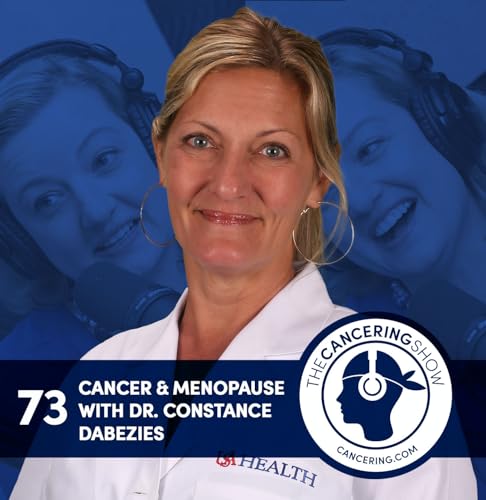
The Cancering Show cover art

The Cancering Show

The Cancering Show

Written by: Dr. Jennifer Young Pierce
Listen for free

A podcast about cancering. Seeing cancer as a part of life that touches every person and community is today's reality and the spark for this podcast. Cancer is just something that we ALL have to recognize, acknowledge, cope with, live with, struggle with, rage upon, crush and even thrive with. This show is more than knowing and fighting or beating cancer. It's more than just relaying science, hope and technology. It's a platform for knowledge, stories, coping advice, life tips, inspiration, humor, jokes and even smiles. Together our purpose is to demystify cancer. Take away as much fear out of the diagnosis, treatment and process as we can. Defeat its grip on our lives. This is The Cancering Show.@2021 USA Health | Mitchell Cancer Institute Hygiene & Healthy Living Science
Episodes
  • AI in Cancer Care with Brian Persing, M.D.
    Oct 15 2026

    A patient recently came to see Brian Persing, M.D. with a list of questions about their lung cancer, every one of them written by AI. He answered them all, and he noticed that a few were tailored to that patient in ways even an attentive doctor might not think to raise. That story opens Dr. JYP's conversation with Dr. Persing, a hematologist and medical oncologist who has returned to the USA Health Mitchell Cancer Institute as its new director.


    Most people hear "artificial intelligence" and picture a chatbot, but at MCI much of the work happens out of sight. Canopy Care checks in with patients on treatment by text or email and alerts the care team when a symptom can't wait. LeanTaaS studies the clinic schedule to shorten wait times, and other software follows lung nodules that turn up on scans taken for unrelated reasons, so a finding from a car accident doesn't slip through the cracks.


    The two doctors are just as candid about the limits of artificial intelligence. Information generated by chatbots can be months out of date and sometimes even fully invented. Security measures dictate that patient information has to stay private, so what can be inputted has to omit any identifying information. For these reasons and more, no algorithm will ever replace the professionals in the exam room, Dr. Persing says.

    Relevant Links

    Brian E. Persing, M.D. | USA Health - Mitchell Cancer Institute | Medical Oncologist And Hematologist

    Persing named director of USA Health Mitchell Cancer Institute

    Submit your questions for the show at cancering.com


    3 Key Listener Takeaways

    1. Much of the AI in cancer care Is invisible

    Patients on treatment at MCI receive a short weekly survey from Canopy Care by text or email. If an answer crosses a threshold, such as unexpected vomiting or new shortness of breath, the care team is alerted right away and the patient gets clear instructions on what to do next, even if they hadn't thought to call. Behind the front desk, LeanTaaS learns which appointments tend to run long and adjusts the schedule to match. Persing admits he is one of the clinicians who gives it reason to.


    2. Speed is not the same as accuracy

    Persing recently joined a panel that tested the NCCN and ASCO guidelines against Claude and ChatGPT. The clinicians loved getting answers in 15 to 30 seconds, but they didn't trust them, and the experts who reviewed the results found they weren't always right. Pierce has her own cautionary tale: a chatbot once sent her to a Paris café that doesn't exist. For medical questions, both doctors recommend vetted sources like UpToDate and OpenEvidence, and they encourage patients to lean on their own physician to help make sense of what they find online.


    3. The human stays in the room

    AI may help oncologists keep pace with the 15 to 20 new cancer drugs now approved each year, flag interactions buried in a long medication list, and turn an eighth-grade drug information sheet into one written at a first-grade level. Even so, when Canopy Care raises an alert, someone from the care team still picks up the phone to confirm it, and every new AI tool at USA Health goes before a special committee to make sure it is safe. When asked what he hopes AI will be doing in 10 years, Persing keeps it simple. He wants it to work so seamlessly that it fades into the background and gives clinicians more time face to face with their patients.

    Show Overview

    00:00 A patient arrives with questions written by AI

    03:07 What AI really means in cancer care

    05:22 When chatbots make things up

    07:28 Turning medical jargon into plain language

    08:43 How Canopy Care keeps tabs on patients between visits

    11:01 Shorter waits through smarter scheduling

    12:02 Ambient recording and protecting patient privacy

    14:37 Catching cancer earlier

    17:51 Moving from precision medicine to personalized medicine

    21:15 The next five to 10 years, including virtual tumor boards

    25:42 Why AI will never replace the human touch

    Show More Show Less
    32 mins
  • The Night Everything Changed: Surviving Sudden Trauma
    Sep 10 2026


    In this emotional episode of the Cancering Show, Dr. JYP shares a deeply personal story about the unexpected health crisis that disrupted her and her family's life. After her husband, Chris, suffered a heart attack, she was suddenly thrust from her role as a physician into the roles of wife, caregiver, and mother navigating trauma and healing. She opens up about their journey through crisis, the challenges of caregiving, the realities of post-traumatic stress, and the ongoing process of healing as a family. Throughout the episode, Dr. JYP emphasizes the parallels between the journeys faced by families dealing with cancer, heart disease, and other life-altering events, underscoring the universality of healing and resilience, what she calls "cancering."


    3 Key Listener Takeaways

    1.The Universality of Trauma and Healing

    The conversation focuses on how life-altering events such as cancer, heart disease, loss, or trauma reshape individuals and families in profound ways. No matter the diagnosis or event, the emotional and psychological journey of coping, healing, and caregiving shares many universal features. Whether someone is a patient, caregiver, or loved one, the process of adjusting to a new reality brings similar challenges and growth opportunities for everyone involved. This episode underscores the notion that these experiences transcend any specific illness and connect deeply with the human condition.


    2. Caregivers Need Care, Too

    Dr. JYP discusses the critical importance of recognizing that caregivers themselves require support and care. She explores how caregivers often shoulder an immense emotional and logistical burden, sometimes neglecting their own needs in the process. She covers lessons learned about the necessity of allowing oneself to accept help, utilizing therapy, and giving space for emotional processing. Recovery -- whether the patient or the caregiver -- is not linear and can include setbacks. Understanding and accepting this can alleviate guilt and feelings of inadequacy.


    3. Healing Is Ongoing, Not a Fixed Destination

    A key theme is the idea that healing does not have a definite end point. Dr. JYP points out that the aftermath of a life crisis creates a "new normal," where fears and anxieties linger, yet life must be rebuilt with intention and hope. She explores how both patient and family must find ways to adapt, embracing new routines, identities, and methods of self-care to continue living meaningfully. Healing is an ongoing practice, not simply a stage to check off before resuming normal life. It requires conscious choices, resilience, and community support to navigate the ongoing uncertainties that follow trauma.


    Show Overview

    00:00 Dr. JYP's life-changing medical emergency
    05:31 Her husband's traumatic cardiac event
    09:25 Learning about recovery and healing
    15:42 Discussing EMDR and caregiving therapy
    17:06 Coping with burnout and healing

    Show More Show Less
    21 mins
  • Cancer and Menopause with Dr. Constance Dabezies
    Nov 19 2025

    In this episode of The Cancering Show, Dr. JYP sits down with menopause specialist Dr. Constance Dabezies for a candid conversation about where cancer care and menopause meet. They talk about why menopause deserves real attention in survivorship, how cancer treatments can trigger or intensify symptoms, and what women can do to feel better. From hormone therapy to non-hormonal options and everyday lifestyle shifts, they walk through practical ways to manage symptoms.

    The episode highlights the importance of personalized care, the latest evidence-based guidance from the Menopause Society, and the crucial role gynecologists play in supporting long-term wellness after cancer. Listeners also get tips on finding reliable information from trusted sources such as menopause.org.


    3 Key Takeaways


    1. Menopause and cancer are deeply connected, especially for survivors.

    Dr. Dabezies points out that many cancer survivors are now living long, full lives after treatment, and spending a big part of that time in menopause. While menopause itself doesn't raise cancer risk (that's really about age), cancer therapies like chemotherapy or surgery can bring on menopause early and suddenly. That abrupt drop in estrogen can make symptoms more intense and raise long-term risks for heart disease and osteoporosis. It's a big reason midlife survivors need thoughtful, whole-person care.

    2. Hormone therapy is safer and more Personalized than ever.

    The conversation clears up a lot of confusion around hormone therapy. Today's FDA-approved bioidentical hormones, which are covered by most insurance, are very different from older synthetic versions. For women without hormone-sensitive cancers, hormone replacement therapy can be a safe, effective way to ease significant menopausal symptoms. Even for women with hormone-sensitive cancers, there are newer non-hormonal treatments and localized estrogen options that can make a huge difference, especially for vaginal and urinary symptoms.


    3. Gynecologists are key partners in survivorship and long-term wellness.

    Dr. Dabezies and Dr. JYP emphasize that gynecologists aren't just menopause experts; they're central partners in survivorship care. From cancer screenings and sexual health to bone strength, heart health, mental well-being, and lifestyle support, they help women navigate the full picture of post-cancer life. They encourage listeners to lean on expert guidance and use trusted resources like the Menopause Society for solid, evidence-based information.


    Show Overview


    00:00 Menopause Insights with Dr. Dabezies

    05:08 Estrogen Loss and Menopause Effects

    09:30 Vaginal Estrogen and Systemic Therapy

    10:41 Non-Hormonal Menopause Treatment Options

    14:59 Memory Issues and Estrogen Loss

    16:30 Holistic Approach to Wellness

    22:27 Osteoporosis Treatment Strategies

    24:26 Gynecologist: Key to Women's Health

    26:45 Women's Health Holistic Approach

    Show More Show Less
    29 mins
adbl_web_anon_alc_button_suppression_t1
No reviews yet