Episodes

  • When the Game Gets Violent: Neural Control in Professional Rugby
    Feb 1 2026

    Rugby isn’t lost because players lack fitness, strength, or desire.
    It’s lost when the nervous system degrades under collision, fatigue, and chaos.

    In this episode, we break down how elite rugby performance is governed by neural control, not mindset or motivation — and why decision-making, timing, and skill execution collapse late in games despite good preparation.

    We cover:

    • what repeated collision actually does to the nervous system

    • why “mental toughness” fails at pro level

    • the real cause of late-game errors

    • how elite players stay neurologically organised under pressure

    This is not sports psychology.
    It’s neural performance under contact — for players, coaches, and performance staff working at the highest level.

    Show More Show Less
    13 mins
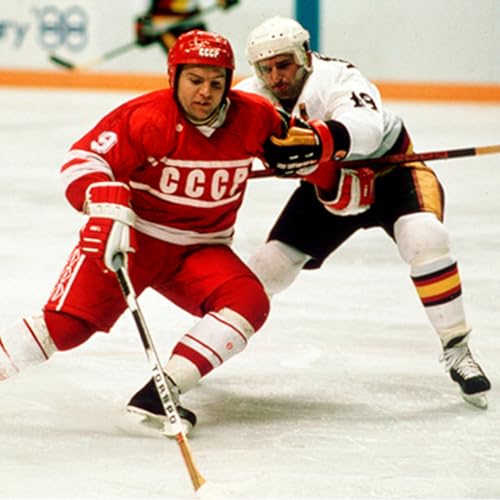
  • Why Mental Training Is Surface-Level in Elite Ice Hockey
    Feb 1 2026

    Most elite ice hockey teams don’t fail because of mindset, confidence, or motivation.
    They fail because performance collapses below the level sports psychology can reach.

    In this episode, we dissect why traditional mental training is fundamentally surface-level — operating in the cognitive layer — while elite ice hockey performance is decided inside the nervous system under speed, threat, fatigue, and chaos.

    We examine:

    • why focus cues, breathing, and confidence disappear at game speed

    • how collision, momentum swings, and fatigue bypass conscious control

    • the biological limits of sports psychology in elite environments

    • why players “know what to do” but lose access under pressure

    • how dominant systems (including Soviet ice hockey) trained control without calling it “mental”

    This is not a critique of psychology — it’s a clarification of where it stops working.

    Elite hockey isn’t lost mentally.
    It’s lost neurally.

    A clinical, systems-level breakdown for coaches, practitioners, and high-performance environments that want real answers — not surface solutions.

    Show More Show Less
    9 mins
  • 200 Metres: The Most Neurologically Deceptive Sprint
    Jan 30 2026

    The 200 metres looks like a simple sprint — one bend, one straight.
    In reality, it is the event where the nervous system changes state earliest and most quietly.

    This episode of Neural Arena examines the 200 m as a transition problem, not a speed or endurance test. Athletes rarely lose the race at the finish. They lose it at the bend-to-straight transition, when the nervous system narrows timing, elasticity, and permission before fatigue arrives.

    This is why great 100 m sprinters often struggle in the 200, why effort increases as speed falls, and why the cleanest 200 m races look almost effortless.

    The 200 isn’t decided by who runs hardest at the end.
    It’s decided by whose nervous system never changes state.

    Show More Show Less
    14 mins
  • Stability, Exploration & the Nervous System — Grappling and MMA Under Chaos
    Jan 29 2026

    Why do elite grapplers and MMA fighters sometimes freeze, rush, or default to “safe” decisions — even when they know exactly what to do?

    This episode explores the nervous system layer beneath technique, tactics, and mindset. Drawing on a structured performance framework developed for extreme-pressure environments, this deep dive examines why performance collapses under fatigue, novelty, and consequence — and why the best athletes remain fluid, decisive, and adaptive.

    Topics include:

    • Stability vs exploration in grappling and MMA

    • Why “flow state” is a misdiagnosis

    • Permission, regulation, and continuity in exchanges

    • Why chaos training often makes fighters worse

    • How the same nervous system principles scale from world-title fights to daily training rooms

    This is not sports psychology.
    Not motivation.
    Not drills or tactics.

    It’s about the governing system that decides what you can access when it matters most.

    Show More Show Less
    12 mins
  • Altitude and the 800: Why Fitness Improves but Performance Often Doesn’t
    Jan 29 2026

    Altitude training reliably improves aerobic capacity — yet many 800 runners return fitter but less able to execute under race pressure. In this episode, we examine why the 800 is a precision event under fatigue, how altitude can quietly disturb rhythm and late-race access, and why elite systems judged methods by what survived at 600m, not by laboratory gains.


    Show More Show Less
    13 mins
  • Why Many Olympic Athletes Perform Just as Well at the Olympics as at World Championships
    Jan 27 2026

    The Olympics are often described as uniquely destructive to performance.
    Yet many elite athletes compete just as well — and sometimes better — at the Games than they do at World Championships.

    This episode of Neural Arena explains why.

    The difference is not experience, toughness, or belief.
    It is how the nervous system categorises the event.

    World Championships are intense but neurally recoverable.
    The Olympics introduce singularity — but not every nervous system responds by tightening.

    This episode explores why some athletes remain neurally permissive under Olympic finality, why their timing and rhythm stay intact, and why Olympic performance is selectively stable rather than universally fragile.

    The Games don’t break everyone.
    They filter for nervous systems that don’t change operating rules when the moment becomes singular.

    Show More Show Less
    14 mins
  • Why Olympic Performance Changes Before the Moment Arrives
    Jan 25 2026

    The Olympics don’t just add pressure.

    They change how the nervous system regulates time, consequence, and permission — often weeks before competition begins.

    This episode of Neural Arena explores why Olympic performance is frequently altered before the final starts, and why execution disappears even when belief, preparation, and confidence remain intact.

    Photo: Puni Neural Engineering

    Show More Show Less
    15 mins
  • 300 Metres (Part II): Why a Few Nervous Systems Don’t Shut Down
    Jan 24 2026

    If the 300 metres is where the nervous system usually gives up first,
    why are athletes like Noah Lyles running it at extraordinary speed?

    This follow-up episode of Neural Arena resolves that contradiction.

    The answer isn’t toughness, belief, or superior conditioning.
    It’s when neural regulation begins.

    Most athletes experience protective shutdown between 180–230 metres, as the nervous system predicts inevitable cost and narrows coordination, elasticity, and rhythm.

    A very small number of athletes don’t — or not until after the finish line.

    This episode explores why the 300 m rewards rare nervous system architectures that delay protection, tolerate internal disorder, and preserve rhythm under predicted collapse.

    It’s not that these athletes “beat” the 300.
    It’s that their nervous systems close later than normal.

    Show More Show Less
    11 mins