• Neurofeedback: How the Brain Rewires Anxiety, PTSD & Healing (Dr. Josh Hersh) | Part 2
    Jan 23 2026

    What if your brain could see itself in real time… and self-correct?

    In Episode 2 of 3 with Dr. Josh Hersh (Transformative Medicine, Utah), we go deeper into neurofeedback — what a session actually feels like, how the brain responds to real-time EEG feedback, and why this approach can shift patterns like anxiety, PTSD, sleep disruption, and chronic stress without forcing someone to “think” their way out of it.

    Dr. Hersh breaks down the patient experience (EEG setup, relaxed viewing, auditory/visual cues), the science behind operant conditioning and brainwave targets, and how advanced clinical tools (like multi-lead EEG and sLORETA-style mapping) can pinpoint imbalance and train the whole brain toward coherence.

    You’ll also hear powerful clinical stories:

    • A high-pressure dad with severe anxiety + multiple daily panic attacks who improved dramatically over weeks
    • A cancer patient whose nervous system shifted from fear to optimism — and why mindset + nervous system regulation matter in healing

    In this episode:

    • What happens during a neurofeedback session (what patients feel + see)
    • How the brain “learns” without conscious effort
    • Why neurofeedback may help PTSD without re-living trauma (vs. EMDR)
    • Brain mapping: over-excitability, standard deviations, and what “too activated” can look like
    • Why Dr. Hersh believes brain training supports the body’s ability to heal

    Listen to the full episode here or watch it on YouTube: https://youtu.be/kRo5GHFMFFo

    Visit UltraBotanica.com to learn more about us and how you can get a free sample of our products.

    Show More Show Less
    19 mins
  • Neurofeedback: The Brain Training Tech Helping Kids Walk, Calm Anxiety & Rewire Habits
    Jan 16 2026

    What if the fastest path to healing starts in the brain?

    In Episode 1 of a 3-part series, we sit down with Dr. Josh Hersh (Transformative Medicine, Utah) to explore the intersection of brain science, functional medicine, and the future of healthcare — starting with a technology many people have heard of…but few can explain: neurofeedback.

    Dr. Hersh shares his origin story (why he left the “nothing’s wrong with you” conventional dead end), how he trained at Bastyr University, and why he believes neurofeedback may be one of the most powerful tools in modern integrative medicine.

    You’ll hear a jaw-dropping case study of a 3-year-old with cerebral palsy-like symptoms who began opening his hand, giving high-fives, and taking steps after only a handful of sessions — plus a breakdown of what neurofeedback is, how it works (EEG + operant conditioning), and why brain balance + coherence matter.

    In this episode:
    * Dr. Hersh’s “why” — from personal GI collapse to transformative medicine
    * What neurofeedback actually is (EEG brainwaves + training loops)
    * “Operant conditioning” explained (Pavlov, but for brain patterns)
    * The brain’s goal: balance + coherence
    * A real patient story that will stick with you
    * Why performance communities (NASA/NFL) are paying attention
    * Why Dr. Hersh says: If I could pick one tool… it might be neurofeedback

    Listen to the full episode here or watch it on YouTube here! https://youtu.be/a9egzf7ocM0

    📌 Disclaimer: Educational content only. Not medical advice.


    Visit UltraBotanica.com to learn more about us and how you can get a free sample of our products.

    Show More Show Less
    24 mins
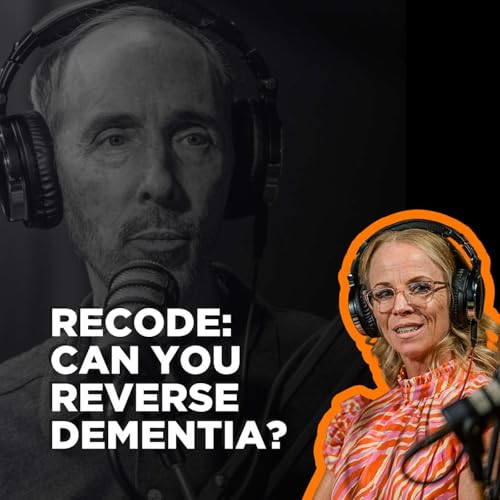
  • Can You Reverse Dementia? Dr. Royce Bargas on Bredesen’s RECODE + Ketosis, Toxins & Testing
    Jan 9 2026

    What if cognitive decline isn’t “one disease”… but dozens of problems happening at once?

    Board-certified cardiologist and functional medicine physician Dr. Royce Bargas breaks down Dr. Dale Bredesen’s RECODE approach (Reversal of Cognitive Decline) — a multi-factor, test-driven protocol aimed at Alzheimer’s, dementia, and prevention (PRECODE).

    In this episode, we cover:

    • The “leaky roof” analogy: why single-drug approaches often fall short
    • The 5 major drivers Bredesen targets: inflammation, glycotoxicity (sugar), toxins, atrophy/nutrients-hormones, and trauma/head injury
    • Test, don’t guess”: labs, toxin panels, hormones, antibodies, and more
    • Volumetric MRI: tracking hippocampus volume over time
    • Why ketosis (measured beta-hydroxybutyrate) is central for many patients
    • Ketoflex 12/3 + time-restricted eating (and what “healthy fats” actually means)
    • Detox basics: exposure reduction + binders + when chelation may matter
    • What Dr. Vargas has seen in real patients — and why compliance + coaching/support can make or break outcomes
    • Bonus: “nootropics” — buzzword or useful? (glutathione, huperzine A, bacopa)

    If you have a loved one showing early signs—or you’re serious about prevention—this conversation is a practical, hope-filled roadmap.

    Listen here or watch the full episode on YouTube: https://youtu.be/KYP0IrAjVn8

    (Educational content only. Not medical advice. Always consult your healthcare provider.)

    Visit UltraBotanica.com to learn more about us and how you can get a free sample of our products.

    Show More Show Less
    38 mins
  • Reverse Heart Risk Without More Meds (Food, Fiber, Stress & “Personalized Cardiology”)
    Jan 2 2026

    Most people think heart disease prevention starts and ends with cholesterol—or a prescription.

    In Part 2 with board-certified cardiologist Dr. Royce Bargas, we go practical: food, fiber, sugar/fructose, exercise, stress, inflammation, and personalized lab markers that help you reduce risk (and in some cases, reduce reliance on meds).

    In this episode:
    * Why fructose can drive cholesterol production
    * The “cholesterol myth” nuance: why eating cholesterol ≠ high cholesterol
    * How fiber and whole foods can shift LDL particle quality
    * The truth about exercise: what it can and can’t change
    * Supplements that may support healthier lipid patterns (and why results are usually “small but real”)
    * The overlooked driver: stress + trauma as inflammation fuel
    * Case examples: how fast people can feel better when they actually do the work
    * Why integrative care is growing… and why the system fights it

    If you want the hopeful episode after the statin conversation—this is it.(For education only; not medical advice.)

    📌 Disclaimer: Educational content only. Not medical advice.

    Listen to the full episode here or watch it on YouTube!: https://youtu.be/nUJWi4l6VWk

    Visit UltraBotanica.com to learn more about us and how you can get a free sample of our products.

    Show More Show Less
    29 mins
  • The Good, The Bad, and the Truth: Cardiologist Explains
    Dec 26 2025

    Are statins really as dangerous as the internet claims—or are they being misunderstood?

    In this episode of Ultra Life Today, board-certified cardiologist Dr. Royce Bargas breaks down the real science behind statin drugs—without fear-mongering or pharmaceutical blind spots.

    We cover:
    * How statins actually work in the body
    * When statins can protect the brain and reduce vascular dementia
    * Why muscle pain happens—and how often it really occurs
    * The critical difference between fat-soluble vs water-soluble statins
    * Why 80 mg atorvastatin is often overused
    * The biomarkers that matter more than LDL alone (ApoB, oxidized LDL, inflammation)
    * When lifestyle, nutrition, and metabolic health may reduce or eliminate the need for statins

    This is a pragmatic, personalized approach to cardiovascular health—from a physician trained in both conventional cardiology and functional medicine.

    Listen to the full episode here or watch it on YouTube!: https://youtu.be/MagZkjPGOh8


    Visit UltraBotanica.com to learn more about us and how you can get a free sample of our products.

    Show More Show Less
    25 mins
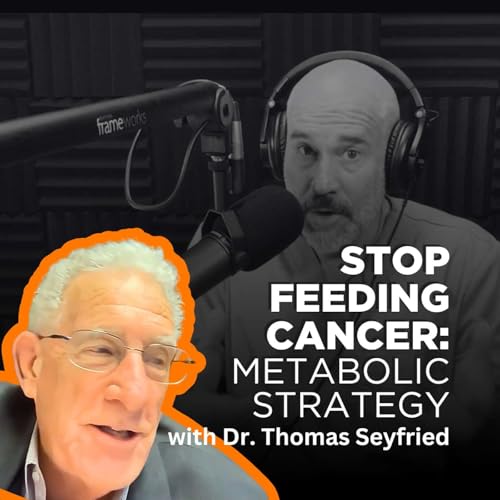
  • Starving Cancer? Dr. Thomas Seyfried on Keto, Fasting & Low-Dose Chemo (Part 2)
    Dec 19 2025

    Dr. Thomas Seyfried returns for Part 2 of our deep dive into the metabolic theory of cancer—and this time we get practical.

    In this episode, Professor Seyfried (Biology, Boston College), author of Cancer as a Metabolic Disease, explains how glucose and glutamine fuel tumor cells and why managing cancer as a mitochondrial metabolic disorder changes everything about prevention and therapy.

    We discuss:
    * Why keeping blood sugar low and ketones elevated (nutritional ketosis) creates a hostile environment for cancer cells
    * How he uses the Glucose Ketone Index (GKI) to guide diet and fasting
    * The idea of “press-pulse” therapy – long-term metabolic pressure plus short, targeted hits
    * Combining ketogenic metabolic therapy with low-dose chemotherapy
    * Why some patients and clinicians are exploring antiparasitic drugs (like mebendazole/fenbendazole) as glutamine-targeting tools
    * The role of exercise, fasting, and evolutionary biology in protecting mitochondria
    * Why he believes the genetic model of cancer is failing patients – and what a future metabolic standard of care could look like

    If you or someone you love is dealing with cancer—or you’re serious about prevention—this conversation is essential listening.

    Listen here or watch the interview on YouTube: https://youtu.be/dp9um-MwMck

    Disclaimer: This discussion is for educational purposes only and does not provide medical advice, diagnosis, treatment, or cures. Always work with your own qualified healthcare professional before making any changes to your diet, medications, or treatment plan.

    Watch Part 1 with Dr. Seyfried for the scientific foundations of the metabolic model of cancer: https://youtu.be/l-_63d2Gkzc

    About Dr. Thomas SeyfriedDr. Seyfried is a professor of biology at Boston College and author of “Cancer as a Metabolic Disease: On the Origin, Management and Prevention of Cancer.” His work builds on and expands the Warburg hypothesis, arguing that mitochondrial dysfunction and fermentation are at the heart of cancer biology.

    Visit UltraBotanica.com to learn more about us and how you can get a free sample of our products.

    Show More Show Less
    29 mins
  • Cancer Is NOT a Genetic Disease? Dr. Thomas Seyfried Explains the Metabolic Theory (Part 1)
    Dec 12 2025

    Is everything we’ve been told about cancer wrong?

    In this episode of UltraLife Today, Boston College biology professor Dr. Thomas Seyfried explains why he believes cancer is not primarily a genetic disease—but a mitochondrial metabolic disease fueled by disordered energy production.

    Dr. Seyfried walks us through:
    * Why the dominant “cancer is a genetic disease” model is breaking down
    * The experiments showing that damaged mitochondria, not mutated DNA, drive tumor growth
    * What Otto Warburg got right (and what he didn’t know) about cancer metabolism
    * How cancer cells ferment glucose and glutamine even in the presence of oxygen
    * Why this shift in understanding could change how we prevent and manage cancer
    * The basics of the Glucose Ketone Index (GKI) and why metabolic health matters for all chronic disease

    If you or someone you love is facing cancer, this conversation is essential viewing.👉 Share this with anyone who has an active diagnosis or is at high risk.

    🔔 Part 2 coming next week – where we get practical about:
    * Metabolic strategies and diet
    * Exercise & mitochondria
    * Supplements & common questions (including “repurposed” drugs)

    🧬 About Dr. Thomas Seyfried
    Dr. Seyfried is a professor of biology at Boston College and author of “Cancer as a Metabolic Disease: On the Origin, Management and Prevention of Cancer.” His work builds on and expands the Warburg hypothesis, arguing that mitochondrial dysfunction and fermentation are at the heart of cancer biology.

    Listen to the full episode here our watch it on YouTube: https://youtu.be/l-_63d2Gkzc


    ⚠️ Important Disclaimer
    This video is for educational purposes only. It is not medical advice, diagnosis, or treatment. Always consult your qualified healthcare provider before making any changes to your diet, medication, or treatment plan.

    🔔 Enjoying Ultra Life Today? Like, subscribe, and share this episode.


    Visit UltraBotanica.com to learn more about us and how you can get a free sample of our products.

    Show More Show Less
    31 mins
  • From Backyard to $200K Farm: How Small-Scale Regenerative Farming Actually Works
    Dec 5 2025

    Can you really make a living (or at least feed your family) on just ONE acre of land?

    In this episode of Ultra Life Today, Josh Bellieu sits down again with Kevin Marshall of Indigo Acres (Guthrie, OK) to unpack the real numbers, methods, and mindset behind high-yield, small-scale regenerative farming.

    Kevin walked away from a 35-year IT career, burned out and unsure of what was next. Today he’s:

    • Growing serious revenue on roughly one acre
    • Turning dead dirt into living, nutrient-rich soil
    • Training new farmers through internships and mentoring
    • Helping launch nonprofit farms that give food away into food deserts

    You’ll learn:

    ⦿ How much food (and money) you can realistically grow on ¼–1 acre
    ⦿ Why Kevin scaled down his growing space and made more
    ⦿ The difference between “organic” and truly nutrient-dense produce
    ⦿ Why most small farms fail in the first 4 years—and how to avoid it
    ⦿ How local, regenerative farms can beat conventional agriculture on profit and nutrition
    ⦿ Simple first steps if you want to start growing food in your backyard or small lot

    Whether you’re dreaming of:

    • A profitable micro-farm,
    • A side hustle homestead, or
    • Just better food for your family…

    …this conversation will give you hope, strategy, and a clear starting point. 🌱


    Listen to the full episode here or watch it on YouTube: https://youtu.be/BU2P4uX3Z20


    Visit UltraBotanica.com to learn more about us and how you can get a free sample of our products.

    Show More Show Less
    20 mins