• 273: Train Like an Olympian, Live Like You're Ageless: The Science of Recovery & Longevity Part 2 with Dr. Jo Brown
    Nov 18 2026
    Welcome back to Part 2 of my conversation with Dr. Jo Brown. Last time, we looked at why the nervous system is the hidden player behind performance and longevity, and how to tell when yours is out of balance. Dr. Jo has spent more than two decades working with some of the world’s greatest athletes, and today she is Head of Human Performance at Nuropod. In Part 2 today, we discuss how to access the “off switch” with vagus nerve stimulation, the five nervous system archetypes, how men and women may differ, and what a resilient nervous system actually looks like in daily life. What a resilient nervous system looks like You wake up feeling rested. You have consistent energy throughout the day. You feel calm under pressure. You can think clearly, consistently. You make good decisions, and making them doesn’t stress you out. You feel connected and present from day to day. Whatever comes your way, you can deal with it. Bio: Dr. Jo Brown is a globally respected performance physiotherapist and high-performance coach with over two decades of experience on the world stage. She has supported athletes across 18 different sports at the highest level — including 'the fastest man on the planet,' Noah Lyles, NBA athletes, Grand Slam tennis stars, the Australian Swim Team, and the legendary Jamaican Bobsleigh team. Dr. Jo is currently Head of Human Performance at Nuropod, where she's bringing nervous system science into the mainstream performance conversation. What makes Dr. Jo's approach so powerful is that she doesn't just treat bodies — she builds complete performance ecosystems, blending science, intuition, and belief to help people perform and feel their absolute best. In this episode: What Nuropod is and how it stimulates the vagus nerve directly at the left ear What the clinical research shows, including a 78% decrease in the inflammatory marker interleukin-6 How Nuropod fits into daily life, and why a session as short as four minutes can make a difference Why nervous system regulation is about flexibility, not just being calm Dr. Brown’s five nervous system archetypes: the Primed, the Prepper, the Lagger, the Burner and the Survivor How nervous system regulation may differ between men and women, and through the menstrual cycle The biggest thing people get wrong about their long-term health, and who should not use Nuropod Links and Resources: ⁠⁠Magnesium Chelate – 120 capsules⁠ ⁠Your Longevity Blueprint Adrenal Calm – 60 capsules⁠⁠⁠ Support the launch by purchasing your copy on September 29th! Available at YourLongevityBlueprint.com, with local copies coming to the Integrative Health and Hormone Clinic in Eastern Iowa this October. Guest Social Media Links: Website Nuropod Dr. Jo on Instagram Nuropod on Instagram Dr. Jo Brown on LinkedIn Relative Links for This Show: Get $45 off Nuropod using this exclusive link: https://link.nuropod.com/DRGRAY Follow Your Longevity Blueprint On Instagram| Facebook| Twitter| YouTube | LinkedIn Get your copy of the Your Longevity Blueprint book and claim your bonuses here Find Dr. Stephanie Gray and Your Longevity Blueprint online Follow Dr. Stephanie Gray On Facebook| Instagram| Youtube | Twitter | LinkedIn Integrative Health and Hormone Clinic Podcast production by Team Podcast
    Show More Show Less
    34 mins
  • 272: Train Like an Olympian, Live Like You're Ageless: The Science of Recovery & Longevity Part 1 with Dr. Jo Brown
    Nov 11 2026
    On this podcast, we often talk about what to eat, how to move, and how to sleep. But what if the key to living longer and feeling better is something most of us have never even considered? I’m excited to have Dr. Jo Brown joining me for a two-part series. She has spent more than two decades working with some of the world’s greatest athletes, In Part 1 today, we discuss the nervous system, how it affects your energy, recovery, resilience, and how long you may actually live. How to know if your nervous system is dysregulated Notice whether you wake up feeling refreshed or fatigued. Pay attention to difficulties in falling asleep or waking during the night Look for irritability, anxiety, or mood changes Do you regularly need extra coffee or sugar to get through the afternoons? Pay attention to brain fog, memory problems, or difficulties in thinking clearly. Notice increased cravings, fatigue, or signs of inflammation Look at how you respond to stress Bio: Dr. Jo Brown is a globally respected performance physiotherapist and high-performance coach with over two decades of experience on the world stage. She has supported athletes across 18 different sports at the highest level — including 'the fastest man on the planet,' Noah Lyles, NBA athletes, Grand Slam tennis stars, the Australian Swim Team, and the legendary Jamaican Bobsleigh team. Dr. Jo is currently Head of Human Performance at Nuropod, where she's bringing nervous system science into the mainstream performance conversation. What makes Dr. Jo's approach so powerful is that she doesn't just treat bodies — she builds complete performance ecosystems, blending science, intuition, and belief to help people perform and feel their absolute best. In this episode: How observing elite athletes changed the way Dr. Brown understood performance How nervous-system regulation helps athletes consistently perform under pressure What we can learn from facing the things we are unwilling, afraid, or anxious to look at Why the nervous system is central to both performance and longevity Dr. Brown explains the relationship between the sympathetic and parasympathetic nervous systems Some common signs of a dysregulated nervous system Why Dr. Brown recommends looking at trends over time instead of becoming obsessed with HRV or sleep scores Links and Resources: Use code BRAINMAG to get 10% off ⁠⁠⁠Neuro Magnesium Support Use code MealShield to get 10% off ⁠⁠⁠MealShield Support the launch by purchasing your copy on September 29th! Available at ⁠⁠⁠⁠⁠⁠⁠⁠⁠⁠YourLongevityBlueprint.com⁠⁠⁠⁠⁠⁠⁠⁠⁠⁠, with local copies coming to the Integrative Health and Hormone Clinic in Eastern Iowa this October. Guest Social Media Links: Website Nuropod Dr. Jo on Instagram Nuropod on Instagram Dr. Jo Brown on LinkedIn Relative Links for This Show: Use this link for $45 off at Nurosym or use code DRGRAY Follow Your Longevity Blueprint On Instagram| Facebook| Twitter| YouTube | LinkedIn Get your copy of the Your Longevity Blueprint book and claim your bonuses here Find Dr. Stephanie Gray and Your Longevity Blueprint online Follow Dr. Stephanie Gray On Facebook| Instagram| Youtube | Twitter | LinkedIn Integrative Health and Hormone Clinic Podcast production by Team Podcast
    Show More Show Less
    35 mins
  • 271: Picky Eating Isn’t About the Food: Raising Kids Who Eat Well for Life Part 2 with Katie Kimball
    Nov 4 2026
    Today, I’m excited to share Part 2 of my conversation with Katie Kimball of Raising Healthy Families. In Part 1, we discussed why kids become picky eaters and how to uncover what's really going on. Today, in Part 2, we explore real-life examples, including dinner battles, kids who refuse to try new foods, and teens who live on carbs, and Katie explains how getting kids into the kitchen helps them take ownership of both their choices and their health for life. If you haven’t done so already, please listen to Part 1 first. Ways to Help Children Take Ownership of Their Food Choices Limit dessert to once a day, and let your child choose when to have it Keep introducing new foods without pressuring your child to eat them Teach children to listen to their body Help children understand how food fuels their bodies Gradually allow older children more responsibility for their food choices Bio: Katie Kimball of Raising Healthy Families is on a mission to connect families around healthy food and teach every child to cook! Her TEDx talk "Picky Eating Isn't About the Food" inspired a membership called The Picky Eating Playbook, and now a book being published in November 2026 through Familius Press. In this episode: Why dessert should not be a reward for eating other foods How to limit sugar without forbidding it entirely How to make conversations about food less stressful for picky eaters Ways to help picky eaters become more familiar with new foods Why children sometimes reject foods they previously enjoyed How to help teenagers become more willing to eat a wider variety of foods The value of teaching children to cook Ways to avoid emotional eating in children Links and Resources: Your Longevity Blueprint Omega 3s – 60 capsules⁠⁠ Use code HEALGUT to get 10% off ⁠⁠⁠GI Support Support the launch by purchasing your copy on September 29th! Available at ⁠⁠⁠⁠⁠⁠⁠⁠⁠YourLongevityBlueprint.com⁠⁠⁠⁠⁠⁠⁠⁠⁠, with local copies coming to the Integrative Health and Hormone Clinic in Eastern Iowa this October. Guest Social Media Links: Katie Kimball on YouTube Raising Healthy Families: Healthy Parenting Handbook Podcast Pre-Order the Book + BonusesGet access to the book landing page and available pre-order bonuses:https://raisinghealthyfamilies.com/PickyGray Knife Skills FreebieAccess the free knife skills resource here:https://raisinghealthyfamilies.com/longevityblueprint Podcast Landing PageLearn more and explore the podcast here:https://sl290.isrefer.com/go/podcast/IHHC2022/ Relative Links for This Show: Free Knife Skills Class For Kids Free Book Bonuses Follow Your Longevity Blueprint On Instagram| Facebook| Twitter| YouTube | LinkedIn Get your copy of the Your Longevity Blueprint book and claim your bonuses here Find Dr. Stephanie Gray and Your Longevity Blueprint online Follow Dr. Stephanie Gray On Facebook| Instagram| Youtube | Twitter | LinkedIn Integrative Health and Hormone Clinic Podcast production by Team Podcast
    Show More Show Less
    38 mins
  • 270: Picky Eating Isn’t About the Food: Raising Kids Who Eat Well for Life Part 1 with Katie Kimball
    Oct 28 2026
    Does your child eat well at breakfast but refuse dinner? Or perhaps they loved veggies last year but won’t even touch them now? I’m excited to have Katie Kimball, who is on a mission to connect families around healthy food and teach children to cook, with me for a two-part series. In Part 1 today, we explore several reasons why your child might be a picky eater, and Katie clarifies how to figure out which one might be affecting your child. How to help picky eaters: Look for patterns in what your child struggles to eat, rather than focusing only on what they refuse to eat Establish regular meal and snack times, keeping meals and snacks at least 90 minutes apart Let children serve themselves as soon as they are able Respond calmly and avoid pressuring your child to eat Avoid power struggles around food Allow children to touch, smell, or explore foods at their own pace Bio: Katie Kimball of Raising Healthy Families is on a mission to connect families around healthy food and teach every child to cook! Her TEDx talk "Picky Eating Isn't About the Food" inspired a membership called The Picky Eating Playbook, and now a book being published in November 2026 through Familius Press. In this episode: What may lie behind a child's refusal to eat certain foods How sensory sensitivities can make some foods difficult to tolerate How to avoid power struggles around food What to do when children ask for snacks outside their regular meal and snack times How to limit snacks and second helpings How learning to cook can help children become more willing to mix foods How to introduce new foods to picky eaters Links and Resources: ⁠⁠⁠⁠⁠Your Longevity Blueprint Omega 3s – 60 capsules⁠Use code HEALGUT to get 10% off ⁠⁠GI Support Guest Social Media Links: Katie Kimball on YouTube Raising Healthy Families: Healthy Parenting Handbook Podcast Relative Links for This Show: Free Knife Skills Class For Kids Free Book Bonuses Follow Your Longevity Blueprint On Instagram| Facebook| Twitter| YouTube | LinkedIn Get your copy of the Your Longevity Blueprint book and claim your bonuses here Find Dr. Stephanie Gray and Your Longevity Blueprint online Follow Dr. Stephanie Gray On Facebook| Instagram| Youtube | Twitter | LinkedIn Integrative Health and Hormone Clinic Podcast production by Team Podcast
    Show More Show Less
    38 mins
  • 269: The Missing Longevity Ingredient: Nervous System Regulation for You and Your Kids - Part 2 with Dr. Roseann Capanna-Hodge
    Oct 21 2026
    Are you having therapy, meditating, and sleeping better, yet still stuck? Dr. Roseann Capanna-Hodge joins me today to share the missing ingredient most of us overlook and explain why learning to regulate yourself and calm your nervous system may be one of the best things you can do for your longevity. Stay tuned to learn what to do when your toddler has a meltdown, how to handle screen-time conflicts, and why you need to regulate yourself in those calm moments too. Some small, daily practices to help you regulate yourself: Practice diaphragmatic belly breathing Use simple somatic practices, like a butterfly tap or a heart hug Try humming Do these practices for one to three minutes, at least five times a day. Use them during calm moments too, to train your nervous system to regulate when you are annoyed, stressed, or dysregulated. Bio: Dr. Roseann Capanna-Hodge is a licensed therapist and certified school psychologist with more than 30 years of experience. She founded The Global Institute of Children’s Mental Health and Dr. Roseann & Associates, and Forbes has called her “a thought leader in children’s mental health.” She hosts the Dysregulated Kids podcast and created Regulation First Parenting™️. Her clinical work uses neurofeedback, biofeedback, psychotherapy, and nutrition. Her newest book, The Dysregulated Kid: The Parenting Playbook for Helping Your Child Find Calm in a Chaotic World, was released on September 22, 2026. Its core message is that kids don’t need fixing; they need nervous system regulation. In this episode: Why younger children may struggle with frustration while older children generally become better at regulating themselves How dysregulation can show up in adults Why rewards, consequences, and timeouts often fail with dysregulated children, and how to help them Why screens should not be used as a coping tool for dysregulated children How parents can prevent and manage screen time conflicts How your child’s nervous system can sync with your nervous system How unresolved stress can continue to affect people later in life Why you should practice regulation when you are already calm Links and Resources: Support the launch by purchasing your copy on September 29th! Available at ⁠⁠⁠⁠⁠⁠⁠⁠YourLongevityBlueprint.com⁠⁠⁠⁠⁠⁠⁠⁠, with local copies coming to the Integrative Health and Hormone Clinic in Eastern Iowa this October. Guest Social Media Links: • Website • Book: The Dysregulated Kid • Newsletter Relative Links for This Show: ⁠Magnesium Chelate – 120 capsules Your Longevity Blueprint Adrenal Calm – 60 capsules⁠⁠ Follow Your Longevity Blueprint On Instagram| Facebook| Twitter| YouTube | LinkedIn Get your copy of the Your Longevity Blueprint book and claim your bonuses here Find Dr. Stephanie Gray and Your Longevity Blueprint online Follow Dr. Stephanie Gray On Facebook| Instagram| Youtube | Twitter | LinkedIn Integrative Health and Hormone Clinic
    Show More Show Less
    35 mins
  • 268: The Missing Longevity Ingredient: Nervous System Regulation for You and Your Kids - Part I with Dr. Roseann Capanna-Hodge
    Oct 14 2026
    Do you ever feel on edge, wired but tired, or just not quite right, even though you're doing all the right things? I’m excited to have Dr. Roseann Capanna-Hodge back on the show today to clarify what this means for you and your kids. Stay tuned to find out what it means to be emotionally regulated. Tips for regulating your nervous system: Do “micro resets” throughout the day Make nervous system regulation part of your normal routine instead of doing it only when you are overwhelmed Choose pleasant and manageable regulation activities to avoid making regulation a chore Focus on consistency to keep your nervous system from returning to the same stressed baseline Regulate yourself first when your child becomes dysregulated Bio: Dr. Roseann Capanna-Hodge is a licensed therapist and certified school psychologist with more than 30 years of experience. She founded The Global Institute of Children’s Mental Health and Dr. Roseann & Associates, and Forbes has called her “a thought leader in children’s mental health.” She hosts the Dysregulated Kids podcast and created Regulation First Parenting™️. Her clinical work uses neurofeedback, biofeedback, psychotherapy, and nutrition. Her newest book, The Dysregulated Kid: The Parenting Playbook for Helping Your Child Find Calm in a Chaotic World, was released on September 22, 2026. Its core message is that kids don’t need fixing; they need nervous system regulation. In this episode: How the autonomic nervous system manages the stress response Why repeated dysregulation could become a habit How the thinking brain can go offline when the nervous system becomes dysregulated How some children can keep on doing well at school, even when dysregulated How parents can avoid escalating the situation when their children become overwhelmed Why only doing the right things occasionally may not be enough to get your nervous system unstuck The difference between feeling calm and being genuinely regulated Links and Resources: Support the launch by purchasing your copy on September 29th! Available at ⁠⁠⁠⁠⁠⁠⁠YourLongevityBlueprint.com⁠⁠⁠⁠⁠⁠⁠, with local copies coming to the Integrative Health and Hormone Clinic in Eastern Iowa this October. Your Longevity Blueprint 5HTP – 90 capsules⁠ Integrative Health and Hormone Clinic (IHH Clinic) 🌐 Website: ⁠⁠⁠https://ihhclinic.com⁠⁠⁠ Learn more about the clinic, services, and patient programs. Guest Social Media Links: • Website • Book: The Dysregulated Kid • Newsletter Relative Links for This Show: Follow Your Longevity Blueprint On Instagram| Facebook| Twitter| YouTube | LinkedIn Get your copy of the Your Longevity Blueprint book and claim your bonuses here Find Dr. Stephanie Gray and Your Longevity Blueprint online Follow Dr. Stephanie Gray On Facebook| Instagram| Youtube | Twitter | LinkedIn Integrative Health and Hormone Clinic Podcast production by Team Podcast
    Show More Show Less
    31 mins
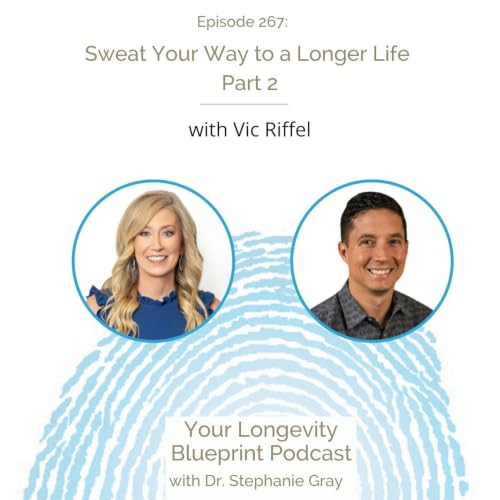
  • 267: Sweat Your Way to a Longer Life Part 2 with Vic Riffel
    Oct 7 2026
    I’m delighted to have Vic Riffel back for the second part of a two-part series. Vic is a central figure in the Partner Team at Sunlighten, a leading producer of infrared saunas. In Part 1, Vic and I covered the what and the why of infrared saunas. Today, in Part 2, we get into the how, exploring the practical aspects, including EMFs and safety. Vic clarifies how high you need to turn the heat, and discusses red light therapy, the materials these saunas are made from, how to shop for one without getting burned, and how to use it when it's in your home. Tips for using a sauna more consistently: Start with a lower temperature and gradually increase it Stay well hydrated before, during, and after your sessions Make your sauna time more productive by doing some stretching, breath work, meditation, or physical therapy Don't let the sauna not being fully heated become a reason to skip your session. You can get in while it’s heating up. Vic Riffel's Bio: Vic Riffel is a central figure on the Partner Team at Sunlighten, a leading producer of infrared saunas. Deeply connected to health and wellness, Vic leads initiatives that widen access to infrared therapy and facilitate collaborations with top wellness experts. These partnerships highlight the significant health benefits of infrared therapy and foster a holistic approach to wellness, delivering expert insights directly to consumers. Beyond work, Vic is dedicated to supporting generational health changes, actively championing projects as board chair of Small Changes Big Shifts to promote whole-person health. In this episode: How some people may do better staying in the sauna longer at a lower temperature Why you should pay attention to how your body responds rather than trying to tolerate more heat in a sauna The importance of staying hydrated when using a sauna Vic describes the materials and construction of Sunlighten's saunas What to look for when evaluating the quality of an infrared sauna or red-light device How to be more consistent in your sauna use Who should be more cautious about using a sauna Links and Resources: Support the launch by purchasing your copy on September 29th! Available at ⁠⁠⁠⁠⁠⁠YourLongevityBlueprint.com⁠⁠⁠⁠⁠⁠, with local copies coming to the Integrative Health and Hormone Clinic in Eastern Iowa this October.Guest Social Media Links: ⁠Vic Riffel⁠ Relative Links for This Show: Use ⁠this link⁠ to get up to $2,100 off + FREE shipping for Sunlighten saunas Use code Immune Support to get 10% off ⁠⁠Immune Support Use code BIND to get 10% off ⁠⁠⁠⁠ENVIROBIND Follow Your Longevity Blueprint On ⁠Instagram⁠| ⁠Facebook⁠| ⁠Twitter⁠| ⁠YouTube⁠ | ⁠LinkedIn⁠ ⁠Get your copy of the Your Longevity Blueprint book and claim your bonuses here⁠ ⁠Find Dr. Stephanie Gray and Your Longevity Blueprint online⁠ Follow Dr. Stephanie Gray On ⁠Facebook⁠| ⁠Instagram⁠| ⁠Youtube⁠ | ⁠Twitter⁠ | ⁠LinkedIn⁠ ⁠Integrative Health and Hormone Clinic⁠ ⁠Podcast production by Team Podcast
    Show More Show Less
    32 mins
  • 266 - Sweat Your Way to a Longer Life Part 1 with Vic Riffel
    Sep 30 2026
    I’m delighted to have Vic Riffel joining me for a two-part series. Vic is a central figure in the Partner Team at Sunlighten, a leading producer of infrared saunas. Infrared saunas have moved from a niche wellness trend to something you’ll find in gyms, spas, and many homes. In Part 1 today, Vic and I discuss the science, exploring what infrared is, how infrared saunas differ from traditional saunas, and what it actually feels like to sit in one. We also discuss the health benefits of infrared saunas, explain which ones are backed by solid science, and which are still being studied. How to start using an infrared sauna: Start slowly, with lower heat Pay attention to how your body responds and adjust the heat intensity accordingly. If you don't sweat easily, build up gradually and give your body time to develop that response Work toward using the sauna two to three times a week, and eventually three to four times a week Bio: Vic Riffel is a central figure on the Partner Team at Sunlighten, a leading producer of infrared saunas. Deeply connected to health and wellness, Vic leads initiatives that widen access to infrared therapy and facilitate collaborations with top wellness experts. These partnerships highlight the significant health benefits of infrared therapy and foster a holistic approach to wellness, delivering expert insights directly to consumers. Beyond work, Vic is dedicated to supporting generational health changes, actively championing projects as board chair of Small Changes Big Shifts to promote whole-person health. In this episode: Why an infrared sauna heats the body differently from a traditional sauna The different infrared wavelengths and what each one does for the body How infrared saunas can provide results similar to a passive cardio workout How infrared sauna use can help reduce inflammation and improve circulation Why consistency matters more than heat intensity when using a sauna What to look for when choosing an infrared sauna Links and Resources: Support the launch by purchasing your copy on September 29th! Available at ⁠⁠⁠⁠⁠YourLongevityBlueprint.com⁠⁠⁠⁠⁠, with local copies coming to the Integrative Health and Hormone Clinic in Eastern Iowa this October.Guest Social Media Links: Vic Riffel Relative Links for This Show: Use this link to get up to $2,100 off + FREE shipping for Sunlighten saunas ⁠⁠⁠⁠⁠⁠Use code CREATINE to get 10% off Creatine ⁠⁠⁠https://yourlongevityblueprint.com/product/glutathione-60-ct/ Follow Your Longevity Blueprint On Instagram| Facebook| Twitter| YouTube | LinkedIn Get your copy of the Your Longevity Blueprint book and claim your bonuses here Find Dr. Stephanie Gray and Your Longevity Blueprint online Follow Dr. Stephanie Gray On Facebook| Instagram| Youtube | Twitter | LinkedIn Integrative Health and Hormone Clinic Podcast production by Team Podcast
    Show More Show Less
    43 mins