Episodes

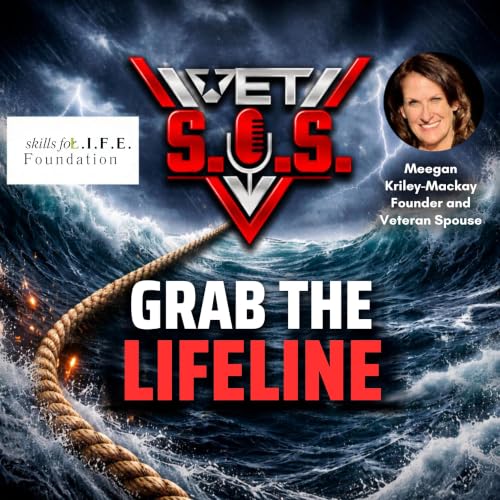
  • Why Veterans Need Human Intelligence in the Age of AI - Skills for L.I.F.E. Foundation
    Oct 7 2026

    Your military skills may qualify you for the job. Your people skills may determine whether you actually get it.

    Meegan Kriley-Mackay knows that distinction firsthand. After watching her former spouse—a highly experienced Air Force C-17 pilot—struggle in civilian job interviews, she realized technical expertise wasn't the problem. He had the skills to do the job but needed the people skills to get the job.

    That experience helped launch the Skills for Life Foundation and a methodology designed to strengthen the human intelligence veterans, military spouses, and families need to communicate, adapt, and lead beyond the uniform.

    In this episode, you'll discover:

    • Translate your military expertise into human connection by understanding why technical qualifications alone may not carry you through a civilian interview.

    • Apply the LIFE methodology—Look and Listen, Imagine, Focus, Empower—to recognize old patterns, assess what's happening now, and deliberately move toward a new goal.

    • Strengthen your human intelligence by developing EQ, SQ, AQ, situational awareness, nonverbal communication, and other people skills that Meegan says can be learned and improved.

    • Understand why AI makes human intelligence even more important, and why Meegan believes developing HI alongside AI will be critical for the future of leadership and work.

    About Meegan Kriley-Mackay

    Meegan Kriley-Mackay is a military spouse, former U.S. Department of Defense Human Intelligence Specialist, certified interrogator, author, leadership strategist, and founder of the Skills for Life Foundation. Her transition work grew from helping her former spouse, an Air Force C-17 pilot, develop the people skills he needed to successfully move into commercial aviation.

    Her work now combines human intelligence, neuroscience, communication, and leadership to help transitioning service members, veterans, military spouses, and families prepare for life beyond the uniform.

    If this episode helped you, please follow the show and leave a 5-star review on Apple Podcasts — open the app, search VET S.O.S., scroll down, and tap "Write a Review." It takes 30 seconds and puts this show in front of a veteran who needs it right now.

    Explore the Full VET S.O.S. Network

    ▶ VET S.O.S. — Flagship Show
    ▶ VET S.O.S. Presents: Operation Startup
    ▶ VET S.O.S. Presents: Learning Lifeline
    ▶ VET S.O.S. Presents: The Scoop
    ▶ VET S.O.S. Presents: Testimony Strong

    Connect with VET S.O.S.

    Website: vetsospodcast.com
    Twitter: @vetsospodcast
    LinkedIn: linkedin.com/company/vetsospodcast
    YouTube: youtube.com/@vetsospodcast
    Facebook: facebook.com/vetsospodcast
    Instagram: instagram.com/vetsospodcast
    TikTok: tiktok.com/@vetsospodcast

    #VETSOS #VeteranPodcast #GrabTheLifeline #HeroesMediaGRP #MilitaryTransition #HumanIntelligence #VeteranCareers #LeadershipDevelopment #ArtificialIntelligence #MilitarySpouse #Podcast #Veterans #MilitaryLife


    Show More Show Less
    25 mins
  • AI Is Changing Veteran Jobs: How to Stay Mission Ready
    Sep 30 2026

    EPISODE PREMISE

    AI is changing the workforce. Veterans can fear the change—or learn how to put it to work.

    AI doesn't have to replace your experience—it can extend what you already know.

    Ted Adair and Kris Saling break down how AI Mission Ready helps veterans, military spouses, and caregivers move beyond AI hype and build practical tools for real problems. The bigger conversation goes deeper than technology: identity after service, rebuilding structure, finding purpose, and preparing yourself for a workforce changing faster than traditional transition programs can keep up.

    In this episode, you'll discover:

    • Learn why Kris says AI takes over tasks—not jobs—and why your experience and domain knowledge still matter when evaluating what AI produces.

    • See how an 82nd Airborne veteran built an AI agent to triage community emails, prioritize issues, and turn hours of administrative work into roughly 15 minutes a day.

    • Recognize why trying to copy and paste the entire military ecosystem into your first civilian job can leave you struggling with identity, structure, community, and purpose.

    • Understand the AI Mission Ready model: practical training, live coaching, small "fire teams," and a requirement to finish with a functional asset—not just another certificate.

    About Ted Adair & Kris Saling

    Ted Adair is a fourth-generation Army combat veteran and former field artillery officer who completed two deployments, including a 14-month combat tour in Iraq. After two decades in federal consulting and growth strategy, he founded Oath & Oak to help veterans, military spouses, and caregivers build economic agency in an AI-enabled world.

    Kris Saling is a people analytics and talent management expert, Director of Workforce Transformation at IBR, author of Data-Driven Talent Management, and founder of the Navigator Foundation. Her experience at the intersection of workforce transformation, data, technology, and people brings an important perspective to understanding what AI can—and cannot—do.

    🎙️ If this episode helped you, please follow the show and leave a 5-star review on Apple Podcasts — open the app, search VET S.O.S., scroll down, and tap "Write a Review." It takes 30 seconds and puts this show in front of a veteran who needs it right now.

    🎧 Explore the Full VET S.O.S. Network

    ▶ VET S.O.S. — Flagship Show
    ▶ VET S.O.S. Presents: Operation Startup
    ▶ VET S.O.S. Presents: Learning Lifeline
    ▶ VET S.O.S. Presents: The Scoop
    ▶ VET S.O.S. Presents: Testimony Strong

    🔗 Connect with VET S.O.S.

    Website: vetsospodcast.com
    Twitter: @vetsospodcast
    LinkedIn: linkedin.com/company/vetsospodcast
    YouTube: youtube.com/@vetsospodcast
    Facebook: facebook.com/vetsospodcast
    Instagram: instagram.com/vetsospodcast
    TikTok: tiktok.com/@vetsospodcast

    #VETSOS #VeteranPodcast #GrabTheLifeline #HeroesMediaGRP #ArtificialIntelligence #AIWorkforce #MilitaryTransition #VeteranEmployment #VeteranTransition #Veterans #MilitaryLife #Podcast #MilitaryCommunity #FutureOfWork


    Show More Show Less
    25 mins
  • The Missing Link in Veteran TBI? Your Neck May Hold the Answer
    Sep 23 2026

    VET S.O.S. — Veteran Transition, Resources & Brain Health

    What if your lingering concussion symptoms aren't coming only from your brain—but from an injury everyone missed?

    A veteran can have clear scans and still battle headaches, brain fog, dizziness, sleep problems, and hypervigilance years after a mild traumatic brain injury. Army veteran Dr. Chris Slininger believes part of the problem may be that we're examining the brain while overlooking what happened to the neck during the same blast, impact, or concussion.

    In this episode, Dr. Slininger breaks down his research into the craniocervical junction and explains why asking "What did the kinetic force do?" may be more useful than simply asking where someone was hit.

    In this episode, you'll discover:

    • Recognize common long-term MTBI symptoms—including headaches, migraines, dizziness, brain fog, cognitive decline, sleep disruption, and persistent fight-or-flight responses.

    • Understand why Dr. Slininger believes the upper cervical spine deserves greater attention after blast exposure, concussions, airborne injuries, vehicle accidents, and other high-force events common in military service.

    • Learn how neurological communication, blood flow, and cerebrospinal fluid flow factor into his theory about the relationship between the upper neck and brain function.

    • Explore the veteran MTBI research he's building—from an initial 10-person pilot to a planned 400-person randomized controlled trial comparing brain-focused and craniocervical interventions, including former NFL players as a comparison group.

    About Dr. Chris Slininger

    Dr. Chris Slininger is a U.S. Army Reserve veteran who deployed to Kuwait in 2004–2005 and served in both the Engineer Corps and Medical Corps. His exposure to service members dealing with blast-related injuries helped drive his focus toward brain health and the invisible wounds associated with MTBI.

    Today, his clinical work focuses on complex neurological conditions and the craniocervical junction. He is leading research examining whether upper cervical correction can affect persistent symptoms associated with mild traumatic brain injury in veterans.

    Learn more:
    cerebralchiropractic.com
    mtbiresearch.com

    Support VET S.O.S.

    If this episode helped you, please follow the show and leave a 5-star review on Apple Podcasts — open the app, search VET S.O.S., scroll down, and tap "Write a Review." It takes 30 seconds and puts this show in front of a veteran who needs it right now.

    Episode Chapters

    00:00 — Introduction: Back Pain, Brain Health & the Invisible Wound
    03:36 — Dr. Slininger's Army Service and Transition
    08:33 — Fighting Red Tape to Continue the Mission
    09:31 — How Does the Spine Affect the Brain?
    15:07 — What a Concussion Can Do to the Neck
    19:38 — Building a Veteran MTBI Research Study
    21:36 — Battlefield vs. Playing Field: Veterans and NFL Players
    24:28 — Precision Upper Cervical Correction Explained
    28:17 — Headaches, Brain Fog, Dizziness & Hypervigilance
    31:12 — Dr. Slininger's Own History of Multiple MTBIs
    33:18 — Research, Resources & How to Get Involved
    35:06 — Closing & Resources

    Explore the Full VET S.O.S. Network

    ▶ VET S.O.S. — Flagship Show
    ▶ VET S.O.S. Presents: Operation Startup
    ▶ VET S.O.S. Presents: Learning Lifeline
    ▶ VET S.O.S. Presents: The Scoop
    ▶ VET S.O.S. Presents: Testimony Strong

    Connect with VET S.O.S.

    Website: vetsospodcast.com
    Twitter: @vetsospodcast
    LinkedIn: linkedin.com/company/vetsospodcast
    YouTube: youtube.com/@vetsospodcast
    Facebook: facebook.com/vetsospodcast
    Instagram: instagram.com/vetsospodcast
    TikTok: tiktok.com/@vetsospodcast

    #VETSOS #VeteranPodcast #GrabTheLifeline #HeroesMediaGRP #VeteranBrainHealth #TBI #MTBI #TraumaticBrainInjury #ConcussionRecovery #InvisibleWounds #VeteranHealth #MilitaryHealth #MilitaryTransition #Veterans #MilitaryLife #Podcast


    Show More Show Less
    36 mins
  • From Veteran Homelessness to Stability: A Recovery Model
    Sep 16 2026

    Getting a veteran off the street solves tonight's problem. Recovery means rebuilding what comes next.

    Five Star Veteran Center CEO John Bear explains why his organization is not a shelter—it's a recovery program designed to help veterans regain stability and independence. After his own transition from a 32-year Navy career, John now leads a team addressing veteran homelessness through three interconnected pillars: mental health, financial stability, and physical health.

    This conversation gets especially powerful when John shares the story of a veteran who arrived battling addiction and anger. Through Veterans Treatment Court, Five Star, and skilled-trades training, he became drug- and alcohol-free, earned three certifications, secured an electrical apprenticeship, found permanent housing, and began rebuilding his relationship with his daughter as he became a grandfather.

    In this episode, you'll discover:

    • Understand why housing alone isn't enough and how Five Star prepares veterans to become self-sustaining rather than simply providing a temporary bed.

    • Recognize the role mental health plays in veteran homelessness, including why John believes professional support for the trauma surrounding housing instability is essential to long-term recovery.

    • See what a complete turnaround can look like through one veteran's journey from addiction and legal trouble to certifications, employment, housing, and renewed family connection.

    • Apply John's military transition lessons, from using Onward Opportunity to earn a project management certification to networking his way through a civilian employment system dominated by online applications and AI resume screening.

    About John Bear

    John Bear retired from the U.S. Navy after 32 years, rising from enlisted nuclear machinist mate to commissioned Surface Warfare Officer through the Seaman to Admiral-21 program. His career culminated in command of the USS St. Louis. Today, he serves as CEO of Five Star Veteran Center, helping veterans facing homelessness and housing instability build independent, stable lives.

    If this episode helped you, please follow the show and leave a 5-star review on Apple Podcasts — open the app, search VET S.O.S., scroll down, and tap “Write a Review.” It takes 30 seconds and puts this show in front of a veteran who needs it right now.

    Episode Chapters

    00:00 - Introduction
    03:08 - Leaving the Navy After 32 Years
    05:00 - AI, Resumes & the Modern Veteran Job Search
    08:38 - Why Networking Still Matters
    10:56 - Five Star Veteran Center: More Than a Shelter
    13:00 - The Three Pillars of Veteran Recovery
    16:18 - Former Residents Helping Other Veterans
    18:28 - Community Partnerships & Food Security
    21:54 - From Addiction and Homelessness to a New Career
    26:07 - Expanding Five Star to Serve Women Veterans
    27:09 - How Veterans Can Find Help
    28:03 - Closing & Resources

    Explore the Full VET S.O.S. Network

    ▶ VET S.O.S. — Flagship Show▶ VET S.O.S. Presents: Operation Startup▶ VET S.O.S. Presents: Learning Lifeline▶ VET S.O.S. Presents: The Scoop▶ VET S.O.S. Presents: Testimony Strong

    Connect with VET S.O.S.

    Website: vetsospodcast.com
    Twitter: @vetsospodcast
    LinkedIn: linkedin.com/company/vetsospodcast
    YouTube: youtube.com/@vetsospodcast
    Facebook: facebook.com/vetsospodcast
    Instagram: instagram.com/vetsospodcast
    TikTok: tiktok.com/@vetsospodcast

    Don't drown in the sea of transition — grab the lifeline.

    #VETSOS #VeteranPodcast #GrabTheLifeline #HeroesMediaGRP #VeteranHomelessness #VeteranSupport #MilitaryTransition #Veterans #MilitaryLife


    Show More Show Less
    29 mins
  • Saving Veterans and Rescue Dogs—On Both Sides of the Leash
    Sep 9 2026

    📻 VET S.O.S. — Veteran Support / Mental Health / Transition

    A service dog can help a veteran with PTSD reclaim places, relationships, and parts of life they thought they'd lost.

    Daniel Bean has seen that transformation happen in a matter of weeks. As CEO, General Counsel, and Board Chair of K9s For Warriors, he explains why pairing a veteran with the right service dog is about far more than companionship—and why the organization says it is "saving lives on both sides of the leash."

    This conversation also takes an unexpected turn into Bean's own military transition, including the remarkable story of suing the United States Navy while serving as a Navy JAG reservist, winning the case, and watching that decision ultimately help propel his civilian legal career.

    In this episode, you'll discover:

    • Understand why a service dog isn't simply a pet—and how it can help a veteran with post-traumatic stress enter environments that previously felt unsafe or overwhelming.

    • Learn how K9s For Warriors matches the dog to the veteran, studying the personalities of both rather than simply assigning the next available animal.

    • Hear what Daniel sees during the three-week training process, from veterans arriving with little eye contact and closed-off body language to beginning to engage, communicate, and rebuild confidence.

    • Discover the story behind K9s For Warriors, beginning with Shari Duval's determination to help her son Brett after he returned from Iraq and seeing the difference their family dog made.

    • Hear why Daniel believes doing the right thing can require professional risk, including his decision to represent a Navy nurse against the Navy—and the unexpected opportunity that followed.

    About Daniel Bean

    Captain Daniel Bean served 25 years in the U.S. Navy, beginning as a Surface Warfare Officer before being selected for the Navy's Law Education Program and continuing his career in the Judge Advocate General's Corps.

    Today, he serves as CEO, General Counsel, and Board Chair of K9s For Warriors, which has paired more than 1,300 veterans with service dogs while rescuing more than 2,500 dogs. Its mission is focused on ending veteran suicide and improving the lives of veterans living with post-traumatic stress.

    Connect with K9s For Warriors

    Website: k9sforwarriors.org

    Whether you're a veteran interested in a service dog or someone looking to support the mission, visit K9s For Warriors to learn more.

    Follow & Review

    If this episode helped you, please follow the show and leave a 5-star review on Apple Podcasts — open the app, search VET S.O.S., scroll down, and tap "Write a Review." It takes 30 seconds and puts this show in front of a veteran who needs it right now.

    Explore the Full VET S.O.S. Network

    ▶ VET S.O.S. — Flagship Show
    ▶ VET S.O.S. Presents: Operation Startup
    ▶ VET S.O.S. Presents: Learning Lifeline
    ▶ VET S.O.S. Presents: The Scoop
    ▶ VET S.O.S. Presents: Testimony Strong

    Connect with VET S.O.S.

    Website: vetsospodcast.com
    Twitter: @vetsospodcast
    LinkedIn: linkedin.com/company/vetsospodcast
    YouTube: youtube.com/@vetsospodcast
    Facebook: facebook.com/vetsospodcast
    Instagram: instagram.com/vetsospodcast
    TikTok: tiktok.com/@vetsospodcast

    Don't drown in the sea of transition — grab the lifeline.

    #VETSOS #VeteranPodcast #GrabTheLifeline #HeroesMediaGRP
    #VeteranMentalHealth #ServiceDogs #PTSD #VeteranSuicidePrevention
    #Veterans #MilitaryLife #VeteranCommunity #Podcast


    Show More Show Less
    21 mins
  • From Military Service to Job Offers: Interview Secrets from Pat Hubbell
    Sep 2 2026
    Veterans don't lose jobs because of experience—they lose them in the interview. Here's how to change that.Landing a civilian job takes more than a great résumé. It takes confidence, preparation, and knowing how to communicate your military experience in a way hiring managers understand.In this episode of VET S.O.S., Shawn Welsh and Keith Cassant welcome Pat Hubbell, Co-Founder and Executive Director of Candorful, to unpack one of the biggest challenges veterans face during transition: interviewing. Pat explains why veterans are often fully qualified for civilian careers but struggle to sell themselves in interviews, and how realistic mock interviews with experienced hiring managers can dramatically improve confidence, performance, and hiring outcomes. In This Episode, You'll Discover:• Learn why practicing three or more mock interviews can dramatically improve your confidence before the real interview. • Understand why veterans are prepared for civilian jobs—but often not prepared for civilian interviews—and how to bridge that gap. • Discover why networking leads to nearly 80% of job opportunities and hear practical advice on building relationships that open doors. • Hear how Candorful connects veterans and military spouses with volunteer hiring managers from companies like Amazon, Oracle, Dell, Verizon, and PwC for real-world interview coaching. • Gain insight into what hiring managers should focus on when interviewing veterans—including why character matters more than assumptions or first impressions. About Pat HubbellPat Hubbell is the Co-Founder and Executive Director of Candorful, a nonprofit organization dedicated to helping transitioning service members, veterans, and military spouses succeed in civilian careers through personalized interview coaching. With more than four decades of experience in engineering, management consulting, higher education, and career development, she has helped thousands navigate career transitions. Pat also serves on the FourBlock Foundation Board, expanding opportunities for veterans across the country. Featured Quote"Veterans are prepared for civilian jobs. They're just not prepared for civilian interviews." If this episode helped you...Please follow VET S.O.S. and leave a 5-star review on Apple Podcasts. Open the Apple Podcasts app, search VET S.O.S., scroll to the Ratings & Reviews section, and tap "Write a Review." It only takes about 30 seconds, and it helps another veteran discover the resources and support they need during transition.Episode Chapters00:00 – Introduction01:29 – Meet Pat Hubbell & the Mission Behind Candorful07:57 – Why Mock Interviews Work12:23 – Building Confidence Through Practice20:32 – FourBlock Partnership & Future Growth21:42 – Why Networking Beats Online Applications25:40 – Advice for Hiring Managers30:09 – How to Get Started with Candorful32:08 – Closing & ResourcesExplore the VET S.O.S. Network▶ VET S.O.S. — Flagship Show▶ VET S.O.S. Presents: Operation Startup▶ VET S.O.S. Presents: Learning Lifeline▶ VET S.O.S. Presents: The Scoop▶ VET S.O.S. Presents: Testimony StrongConnect with VET S.O.S.Website: https://vetsospodcast.comSubstack: https://substack.com/@vetsosYouTube: https://youtube.com/@vetsospodcastLinkedIn: https://linkedin.com/company/vetsospodcastFacebook: https://facebook.com/vetsospodcastInstagram: https://instagram.com/vetsospodcastX: https://x.com/vetsospodcastTikTok: https://tiktok.com/@vetsospodcast#VETSOS #VeteranPodcast #GrabTheLifeline #HeroesMediaGRP #VeteranTransition #MilitaryCareers #CareerDevelopment
    Show More Show Less
    33 mins
  • Can Hunting Help Veterans Heal? Victor Bretting Thinks So
    Aug 26 2026

    The best therapy for some veterans doesn't start in a counselor's office—it starts around a campfire.

    EPISODE PREMISE

    Healing doesn't always happen the way we expect. In this episode of VET S.O.S., Victor Bretting shares how a retirement ranch in North Texas became a mission to serve veterans through the outdoors, conservation, and authentic camaraderie. What veterans often take home isn't just a trophy—it's a renewed sense of connection, purpose, and peace.

    In this episode, you'll discover:

    • Understand why Victor believes the hunt is only the excuse—and healing is the real mission.

    • Learn how Hunting With Soldiers helps veterans rediscover the brotherhood many miss after leaving military service.

    • Experience why campfires, shared meals, and quiet mornings in the field often become more meaningful than harvesting an animal.

    • Hear incredible stories from Victor's dangerous game hunts in Mozambique and how those experiences shaped his perspective on conservation, leadership, and service.

    About Victor Bretting

    Victor Bretting is an eighth-generation Texan, construction executive, conservationist, author, and founder of Bretting Texan Ranch (BTEX Ranch). Although he never served in the military, he has dedicated his ranch to supporting veterans through Hunting With Soldiers by providing donated hunting experiences focused on healing, fellowship, and restoration. He is also the author of The Man That I Would Become and has pursued more than 140 species across five continents.

    "The harvesting of a trophy is a very secondary thing. It's just an avenue to get here so they can have a little peace and quiet... and hopefully find that transition of healing."

    🎙️ If this episode helped you, please follow VET S.O.S. and leave a 5-star review on Apple Podcasts. Open the Apple Podcasts app, search VET S.O.S., scroll down, and tap "Write a Review." It takes less than 30 seconds and helps another veteran discover the resources and community they may need today.

    ⏱️ Episode Chapters

    00:00 – Healing Beyond the Hunt

    02:05 – Meet Victor Bretting

    04:00 – Why BTEX Ranch Exists

    10:22 – Campfires, Brotherhood & Veteran Healing

    16:56 – Hunting With Soldiers

    25:15 – Dangerous Game & Lessons from Mozambique

    29:20 – Closing Thoughts & Resources

    🎧 Explore the VET S.O.S. Network

    ▶ VET S.O.S. – Flagship Show

    ▶ Operation Startup

    ▶ Learning Lifeline

    ▶ The Scoop

    ▶ Testimony Strong

    🔗 Connect with VET S.O.S.

    Website: https://vetsospodcast.com

    YouTube: https://youtube.com/@vetsospodcast

    Apple Podcasts: https://podcasts.apple.com/us/podcast/vet-s-o-s/id1735805548

    Spotify: https://open.spotify.com/show/vetsos

    LinkedIn: https://linkedin.com/company/vetsospodcast

    Facebook: https://facebook.com/vetsospodcast

    Instagram: https://instagram.com/vetsospodcast

    X: https://x.com/vetsospodcast

    TikTok: https://tiktok.com/@vetsospodcast

    #VETSOS #VeteranPodcast #GrabTheLifeline #HeroesMediaGRP #VeteranTransition #VeteranCommunity #MilitaryLife


    Show More Show Less
    30 mins
  • Why Veteran Suicide Prevention Must Start Before Crisis — Dr. Keita Franklin
    Aug 19 2026

    Most veterans who die by suicide never ask for help. This episode explains how to reach them before it's too late.


    Most suicide prevention efforts begin inside hospitals—but Dr. Keita Franklin explains why that's already too late for many veterans. Drawing on decades of leadership at the VA, Marine Corps, and Columbia Lighthouse Project, she shares how a simple six-question screening tool is helping communities identify veterans at risk before a crisis becomes a tragedy.

    This conversation moves beyond awareness and into practical action every veteran, family member, employer, and community leader can take.

    In this episode, you'll discover:

    • Learn the six-question Columbia Protocol and understand why anyone—not just clinicians—can use it.

    • Recognize why the first five years after military transition carry significantly higher suicide risk.

    • Understand how the Marine Corps reduced suicide rates by changing where they looked for veterans in crisis.

    • Discover why directly asking someone about suicide is one of the safest and most effective ways to help.

    About Dr. Keita Franklin

    Dr. Keita Franklin is a nationally recognized leader in suicide prevention with more than 25 years of experience serving military and veteran communities. She helped redesign the Department of Veterans Affairs' suicide prevention strategy into a public health model and now serves as Vice President of Healthcare Strategy at TriWest Healthcare Alliance while co-leading the Columbia Lighthouse Project, expanding evidence-based suicide prevention worldwide.

    If this episode helped you, please follow the show and leave a 5-star review on Apple Podcasts. Search VET S.O.S., scroll down, and tap Write a Review. It takes less than 30 seconds and helps another veteran find the lifeline they may need.

    EPISODE CHAPTERS

    00:00 — Introduction

    03:09 — Military Family Transition

    05:22 — How the Columbia Protocol Was Created

    12:13 — The Six Questions That Save Lives

    18:05 — Rethinking Suicide Prevention

    23:27 — Bringing Prevention Into the Community

    31:46 — Closing & Resources

    Explore the Full VET S.O.S. Network

    ▶ VET S.O.S.

    ▶ VET S.O.S. Presents: Operation Startup

    ▶ VET S.O.S. Presents: Learning Lifeline

    ▶ VET S.O.S. Presents: The Scoop

    ▶ VET S.O.S. Presents: Testimony Strong

    Connect with VET S.O.S.

    Website: vetsospodcast.com

    Twitter/X: @vetsospodcast

    LinkedIn: linkedin.com/company/vetsospodcast

    YouTube: youtube.com/@vetsospodcast

    Facebook: facebook.com/vetsospodcast

    Instagram: instagram.com/vetsospodcast

    TikTok: tiktok.com/@vetsospodcast

    #VETSOS #VeteranPodcast #GrabTheLifeline #HeroesMediaGRP #MilitaryMentalHealth #VeteranTransition #SuicidePrevention #Veterans #MilitaryLife #MentalHealth


    Show More Show Less
    33 mins