• Why Didn’t You Tell Anyone? The Silence Around Domestic Violence.
    Oct 20 2026

    “If something like that were happening, she would tell me.”

    Maybe. But what would happen after she told you? Would you believe her? Confront her partner? Expect her to leave immediately? Would she still feel able to call you if she didn’t?

    For Domestic Violence Awareness Month, Tressa L. Bell—registered nurse with a background in forensic nursing, author, and survivor—explores what someone may be weighing before disclosing abuse.

    We discuss the good days, barriers to leaving, and offering support without taking over.


    🎙️ IN THIS EPISODE
    • Why someone might share only a small part of what’s happening.
    • Fear of judgment, retaliation, and losing privacy.
    • “But they’re not always like that”—acknowledging love without dismissing harm.
    • Why “just leave” doesn’t address children, housing, finances, attachment, or risk.
    • What to say—and avoid—when someone shares a concern.
    • Repairing the conversation if your first response was judgmental or rushed.
    • Using the Interruption Model™ as a supporter: Notice, Name, Regulate, Interrupt, Repair, Repeat.


    💭 REFLECTION
    Would someone feel able to tell me again if they didn’t follow my advice the first time?


    COMING UP
    Social worker Callie Freenock joins Tressa to discuss recognizing concerning relationship behaviors, considering options, safety planning, and resources.


    💜 SUPPORT
    National Domestic Violence Hotline:
    Call 800-799-7233 | Text START to 88788
    Free, confidential support, available 24/7.

    Visit The Hotline
    Explore safety planning

    If someone monitors your devices, consider using one they cannot access. Ask before sending abuse-related resources to someone else; their messages may be monitored.

    For suicidal thoughts or emotional distress in the U.S., call or text 988.


    📖 RESEARCH & GUIDANCE
    Sylaska & Edwards (2014): Review of intimate partner violence disclosure to friends, family, and other informal supporters.
    Read the research

    Heron & Eisma (2021): Review of 34 articles on domestic violence disclosure in healthcare, including concerns about judgment, privacy, retaliation, and children.
    Read the research

    Dworkin, Brill, & Ullman (2019): Meta-analysis of 51 studies on responses to interpersonal violence disclosure and mental health. Findings describe associations, not proof of causation.
    Read the research

    WHO’s LIVES approach: Listen, Inquire, Validate, Enhance safety, Support.
    Explore the guidance


    📚 BOOKS
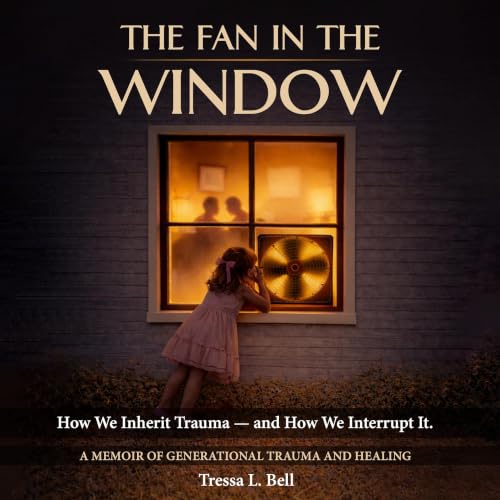
    The Fan in the Window: How We Inherit Trauma—and How We Interrupt It

    You Can Interrupt It: A Practical Guide for the Parent Who Inherited Trauma and Swore They’d Do It Differently

    Find both books on Amazon

    🎧 The memoir is also on Audible, narrated by Tressa. Email Tressa to request a free code while available.


    🪟 FREE RESOURCE
    The First Interruption—a free starter kit and email series.
    Get the free kit


    LISTEN & CONNECT
    The Fan in the Window: Interrupting What We Inherit
    New episodes every other Tuesday. Listen wherever you get your podcasts or watch on YouTube.

    🎙️ Listen or watch
    🌐 Visit the website


    CONTENT NOTE & DISCLAIMER
    Discussion of domestic violence, threats, and barriers to support; no graphic descriptions. Education and personal perspective, not therapy, medical advice, psychological treatment, or individualized safety planning. The Interruption Model™ is an educational framework, not a clinically validated treatment.


    This didn’t start with you…but you can interrupt it.

    Show More Show Less
    42 mins
  • Daddy Issues and Mommy Issues: How Childhood Relationships Affect Adult Love
    Oct 6 2026

    “Daddy issues.” “Mommy issues.”


    People use those phrases as if they explain someone. They rarely picture the child standing at the door, waiting for a parent to say, “I love you,” back.


    In this solo episode of The Fan in the Window: InterruptingWhat We Inherit, Tressa Bell explores how childhood relationships can shape adult love, conflict, approval-seeking, and the way we respond to someone else’s disappointment.


    Drawing from her experiences with her biological and adoptive fathers, Tressa talks about loving a parent who also hurt you, why finding an absent parent doesn’t automatically create a sense of belonging, and how fear of spanking taught her to hide things rather than feel safe telling the truth.


    She also shares experiences her daughters have given herpermission to discuss—and considers what accountability asks of us when our own children tell us something we don’t want to hear.


    The conversation includes research on physical punishment,parental warmth, and recovery after relationship conflict, along with a practical example of the Interruption Model™: Notice, Name, Regulate, Interrupt, Repair, Repeat.


    In this episode: A painful childhood does not make you responsible for someone else’s abuse. And understanding your history doesn’t remove your responsibility for how you treat others now.


    A question to sit with

    When someone important to me seems disappointed or distant, what do I feel I have to do to keep the relationship okay?


    Free Audible codes

    The Fan in the Window memoir is available on Audible,narrated by Tressa. A limited number of free promotional codes are available while supplies last.

    Email tressa@thefaninthewindow.com to request a code.


    Books and a place to begin

    Find both books on Tressa’s Amazon author page:

    Get The First Interruption, a free starter kit and email series to help you recognize your patterns and begin practicing a different response.


    Research discussed

    Heilmann, A., et al. (2021). Physical punishmentand child outcomes: A narrative review of prospective studies. The Lancet, 398, 355–364.

    Lee, S. J., Altschul, I., & Gershoff, E. T. (2013). Does warmth moderate longitudinal associations between maternal spanking and child aggression in early childhood?Developmental Psychology, 49, 2017–2028.

    Salvatore, J. E., et al. (2011). Recovering from conflict inromantic relationships: A developmental perspective. Psychological Science, 22, 376–383.


    Content note and support

    This episode discusses childhood wounds, parental rejection,and physical punishment. It includes a brief, optional grounding practice. Please listen at your own pace.


    This podcast provides education and personal reflection. Itis not therapy, medical advice, or psychological treatment.

    In the U.S., call or text 988 for free, confidential support, available 24/7 through the 988 Suicide & Crisis Lifeline. Outside the U.S., find support at findahelpline.com.


    New episodes every other Tuesday. Follow the show wherever you listen, and visit thefaninthewindow.com to stay connected.


    This didn’t start with you…but you can interrupt it.

    Show More Show Less
    40 mins
  • What Happened To You?
    Sep 22 2026

    There is a question that changed the way I think aboutchildren.

    Not, what’s wrong with you?

    What happened to you?

    Those are two very different questions. And the one you askdetermines everything—what you see, what you miss, what you do next, and what the child in front of you learns about whether they are worth understanding.

    Today’s guest works with children and families every singleday inside a school building in Frederick, Maryland—where she sees what trauma actually looks like in the hallways, the classrooms, and the counselor’s office. This conversation is for every parent who has ever wondered what is really going on with their child. And for every adult who was once that child.


    IN THIS EPISODE

    — What it means clinically when trauma is stored in the body—and what the ACEs research tells us about its long-term impact

    — What a dysregulated nervous system looks like in someone who doesn’t know they have one

    — Why understanding a pattern isn’t enough to change it—and what neuroplasticity actually means for healing

    — What progress in trauma work really looks like, and why it’s so easy to miss

    — What’s actually underneath the child labeled difficult, defiant, or checked out

    — Why parents are often harder to reach than children—and what finally gets through

    — What school social workers can actually do for your family—IEPs, 504s, in-school therapy, and more

    — “Children don’t need a perfect parent. They need a presence that feels reliable and supportive.”


    CONTENT NOTE

    This episode discusses childhood trauma, adverse childhoodexperiences, behavioral presentations at school, and the impact of family dynamics on children’s mental health. Please listen at your own pace. In the U.S., call or text 988—free, confidential, 24/7. Outside the U.S.: findahelpline.com. You do not have to navigate this alone.


    FIND CAROLINE

    malamantiscounseling.com

    LinkedIn: Caroline Kinna Caroline Kinna | LinkedIn


    GET THE BOOKS

    The Fan in the Window: How We Inherit Trauma—And How WeInterrupt It and You Can Interrupt It: A Practical Guide for the Parent Who Inherited Trauma and Swore They’d Do It Differently are both available now on Amazon. If the memoir gave you the story, the companion book gives you theroadmap—built around the Interruption Model™, practical tools for doing the work one pattern at a time.

    amazon.com/author/tressalbell


    FOLLOW TRESSA

    thefaninthewindow.com/podcast

    Instagram, Facebook, TikTok, YouTube: @tressalbell

    Substack: tressalbell.substack.com

    LinkedIn: linkedin.com/in/tressa-l-bell-31830440a

    If this episode resonated, please leave a review on ApplePodcasts—it takes less than two minutes and helps new listeners find this work.

    This didn’t start with you…but you can interrupt it.
    Show More Show Less
    32 mins
  • What Familiar Feels Like
    Sep 8 2026

    Have you ever looked at a relationship and thought—how did Iend up here again?

    Not the same person. But the same feeling. The same dynamic. The same patterns playing out in a slightly different set of circumstances.

    You were not choosing wrong. Your nervous system was choosing familiar. And familiar and safe are not the same thing—but they feel that way when you grew up in a house where familiar meant surviving.

    This episode is about attachment. What it is, where it comes from, how it shapes every relationship you walk into as an adult—and what it means that you can interrupt it.


    IN THIS EPISODE

    — The four attachment styles: secure, anxious, avoidant, and disorganized—what each one looks like and where it comes from

    — The protest polka: why anxious and avoidant partners find each other and what happens between them

    — How the opposite-sex parent shapes a child’s template for romantic love

    — Why your parents weren’t the only ones who shaped your attachment—and what it meant when someone else was in the room

    — How attachment travels into parenting—and what that means for the children watching you now

    — Earned security: why you don’t have to have had a secure childhood to become a securely attached adult

    — The free attachment style quiz at thefaninthewindow.com/attachment-style-quiz


    CONTENT NOTE

    This episode discusses childhood trauma, sexual abuse, volatile caregiving environments, and how early relational experiences shape adult attachment. Please listen at your own pace.

    In the U.S., call or text 988—free, confidential, 24/7. Outside the U.S.: findahelpline.com. You do not have to navigate this alone.


    TAKE THE QUIZ

    Free attachment style quiz—solo or with a partner:

    thefaninthewindow.com/attachment-style-quiz


    GET THE BOOKS

    The Fan in the Window: How We Inherit Trauma—And How WeInterrupt It and You Can Interrupt It: A Practical Guide for the Parent Who Inherited Trauma and Swore They’d Do It Differently are both available now on Amazon. If the memoir gave you the story, the companion book gives you theroadmap—built around the Interruption Model™, practical tools for doing the work one pattern at a time.

    amazon.com/author/tressalbell


    FOLLOW TRESSA

    thefaninthewindow.com/podcast

    Instagram, Facebook, TikTok, YouTube: @tressalbell

    Substack: tressalbell.substack.com

    LinkedIn: linkedin.com/in/tressa-l-bell-31830440a

    If this episode resonated, please leave a review on ApplePodcasts—it takes less than two minutes and helps new listeners find this work.


    This didn’t start with you…but you can interrupt it.

    Show More Show Less
    27 mins
  • Before the Damage Is Done
    Aug 25 2026

    Most of what we talk about on this show is what happens after. After you recognize the pattern. After the damage has already moved through your family line.

    But what happens when you see it coming?

    Dr. Rondalyn Whitney has spent her career studying exactlywhat protects children from the harm trauma causes. When she was widowed in 2020—her husband Bill killed instantly in a car accident—she didn’t just grieve. She applied everything she knew to protect her son Alex before the damage could take hold.

    That is not a story about healing after the fact. That is a story about interruption before the damage is done.


    IN THIS EPISODE

    — Losing her father at 15—and how that loss threaded through every professional choice she made

    — What a protective factor actually is, and why every risk has one on the other side

    — Antonovsky’s sense of coherence: the three things that predict health even in the face of life’s inevitable stressors

    — Why grief is not just an emotion—it is a full physiological insult to the body, and what that means for children

    — The single thing that most reliably protects a child from being permanently shaped by a devastating experience

    — How Rondalyn applied her research in real time with Alex—and what she got wrong

    — “Burnt toast is still toast”—what parents in the middle of something hard actually need to hear


    CONTENT NOTE

    This episode discusses grief, loss, the death of a spouse andparent, adverse childhood experiences, and protective factors in parenting. Please listen at your own pace.

    In the U.S., call or text 988—free, confidential, 24/7. Outside the U.S.: findahelpline.com. You do not have to navigate this alone.


    FIND RONDALYN

    rondalynwhitney.com

    Instagram: @rondalynwhitney

    Facebook: rondalyn.whitney.3

    YouTube: @rondalynwhitney1695

    LinkedIn: Rondalyn Whitney

    X: @DrRDub_writes

    Habits of Widows available on Amazon


    GET THE BOOKS

    The Fan in the Window: How We Inherit Trauma—And How We Interrupt It

    and

    You Can Interrupt It: A Practical Guide for the Parent Who Inherited Trauma and Swore They’d Do It Differently are both available now on Amazon.

    If the memoir gave you the story, the companion book gives you the roadmap—built around the Interruption Model™, practical tools for doing the work one pattern at a time.

    amazon.com/author/tressalbell


    FOLLOW TRESSA

    thefaninthewindow.com

    Instagram, Facebook, TikTok, YouTube: @tressalbell

    Substack: tressalbell.substack.com

    LinkedIn: linkedin.com/in/tressa-l-bell-31830440a

    If this episode resonated, please leave a review on ApplePodcasts—it takes less than two minutes and helps new listeners find this work.

    This didn’t start with you…but you can interrupt it.

    Show More Show Less
    56 mins
  • Before I Had the Words
    Aug 11 2026

    There is a version of healing that happens alone. In therapy.In journals. In the 2 a.m. conversations you have with yourself when something finally clicks.

    And then you go back to your life. Back to the people youlove. And someone does something ordinary—and everything you understood at 2 a.m. disappears. And you are back in the pattern. Again.

    That gap—between what you understand and what you can actually do in the moment with another person—is what this episode is about.

    Because understanding is not the same as changing. And I learned that the hard way, inside my marriage, before I had the words to explain what was happening to me or to ask for what I needed.


    IN THIS EPISODE

    — The fawn-to-flood cycle inside a marriage—and why leaving the room isn’t abandonment, it’s regulation

    — Why your nervous system can’t just “choose better” mid-conflict—and what has to happen first

    — Co-regulation: what it is, why it matters, and how telling Jimmy what I needed changed everything

    — What it looks like when you can hear the words but can’t yet receive them

    — What my children inherited from watching Jimmy and me fight—and what changed when we did the work

    — Why understanding a pattern and interrupting it in real time are two completely different skills


    CONTENT NOTE

    This episode discusses inherited trauma, nervous systemresponses, emotional flooding, conflict in adult relationships, and the impact of parental conflict on children. Please listen at your own pace.

    In the U.S., call or text 988—free, confidential, 24/7.Outside the U.S.: findahelpline.com. You do not have to navigate this alone.


    COMING UP NEXT

    Dr. Rondalyn Whitney—PhD, occupational therapist, Fellow ofthe American Occupational Therapy Association, researcher, writer, and author of fifteen books—joins Tressa for the next guest episode. Her episode is called Before the Damage Is Done. Subscribe so you don’t miss it.


    GET THE BOOK

    The Fan in the Window: How We Inherit Trauma—And How WeInterrupt It

    amazon.com/author/tressalbell

    Coming Soon: You Can Interrupt It: A Practical Guide for theParent Who Inherited Trauma and Swore They’d Do It Differently—If the memoir gave you the story, this book gives you the roadmap. Built around the Interruption Model™—practical tools for doing the work one pattern at a time.Ebook available for preorder now. Paperback and hardcover available August 18th.

    Preorder link: https://www.amazon.com/dp/B0H9P1LYWT


    FOLLOW TRESSA

    thefaninthewindow.com

    Instagram, Facebook, TikTok, YouTube: @tressalbell

    Substack: tressalbell.substack.com

    LinkedIn: linkedin.com/in/tressa-l-bell-31830440a

    If this episode resonated, please leave a review on ApplePodcasts—it takes less than two minutes and helps new listeners find this work.

    This didn’t start with you…but you can interrupt it.

    Show More Show Less
    28 mins
  • The Version of Love We Inherited
    Jul 28 2026

    Start here: thefaninthewindow.com/start

    There’s a version of love that jumps in front of everything so your child never has to feel it. And there’s a version that learns to hang back, to ask what they need instead of deciding, to trust that the feeling won’t break them.

    Most of us were never shown the second one. So, we defaulted to the first one—and called it love. Because it was. It was also something we inherited.

    Today’s guests are two people who figured out the difference—and are doing it in real time, inside their own relationship, in front of three children who are watching everything.

    Lavinia Brown is a trauma-informed psychodynamic coach who supports mothers in becoming the conscious parents and connected partners they want to be through healing their inner child. She holds a master’s from Oxford University and is a certified clinical trauma specialist through the Arizona Trauma Institute.

    Andrew Lynn is a trauma-informed coach and Lavinia’s partner in both life and work. Together they co-host Becoming Untriggered—a podcast in the top 5% globally.


    IN THIS EPISODE — How Lavinia and Andrew went from World War III in year one to doing this work professionally together

    — What shame actually is—and why it sits at the lowest frequency of every human emotion

    — The difference between role modeling and what you bring energetically to your children

    — What attuned leadership looks like when you’re triggered by your own kid

    — Why talk therapy alone may not be enough—and what an integrated approach actually requires

    — What to do if you’ve been doing the work and you’re still stuck


    CONTENT NOTE

    This episode discusses inherited trauma, childhood wounds, volatile conflict, and emotional patterns in adult relationships and parenting. Please listen at your own pace.

    In the U.S., call or text 988—free, confidential, 24/7. Outside the U.S.: findahelpline.com. You do not have to navigate this alone.


    FIND LAVINIA & ANDREW

    Lavinia: laviniabrown.com

    Instagram / Facebook / YouTube: the.innerchild.healing.expert

    Andrew: andrewlynn.net

    Podcast: Becoming Untriggered on Apple Podcasts, Spotify, and YouTube


    GET THE BOOK

    The Fan in the Window: How We Inherit Trauma—And How We Interrupt It amazon.com/author/tressalbell

    Coming Soon: You Can Interrupt It: A Practical Guide for the Parent Who Inherited Trauma and Swore They'd Do It Differently

    If the memoir gave you the story, this book gives you the roadmap. Built around the Interruption Model™—practical tools for doing the work one pattern at a time. Stay connected at thefaninthewindow.com for updates.


    FOLLOW TRESSA

    thefaninthewindow.com

    Instagram, Facebook, TikTok, YouTube: @tressalbell

    Substack: tressalbell.substack.com

    LinkedIn: linkedin.com/in/tressa-l-bell-31830440a

    If this episode resonated, please leave a review on Apple Podcasts.

    This didn’t start with you…but you can interrupt it.

    Show More Show Less
    1 hr and 3 mins
  • Where We Go From Here?
    Jul 14 2026

    Start here: thefaninthewindow.com/start

    Most of us didn’t learn how to be in a relationship. We learned how to survive inside one.

    Season 2 opens with a solo episode—and it goes somewhere personal.

    Tressa shares what conflict used to look like in her own relationships: the fawning, the silence, the collected resentment, the flooding, the cruelty that came out without warning, and the leaving. And then the moment that broke her—seeing fear in her children’s faces and recognizing it. Because she had worn that face herself.


    This episode is about what happens between understanding your patterns and actually changing them. If you’ve done the work—the therapy, the reading, the 2 a.m. conversations with yourself—and you’re still ending up in the same places, this episode is for you.

    It’s not a character flaw. It’s a nervous system doing exactly what it learned. And nervous systems can learn something different.


    IN THIS EPISODE

    — The fawn-to-flood cycle: what it is, why it feels like relief, and why it always catches up with you

    — What flooding actually is neurologically—and why the cruelty, the leaving, and the restarting are all part of the same pattern

    — Why Tressa—a forensic nurse who testified about trauma in courtrooms—didn’t recognize it happening in her own relationships

    — The difference between understanding a pattern (stage one) and what happens in the body when someone you love triggers it (stage two)

    — How the Interruption Model™ works—and why Regulate has to come before choice, not after

    — A grounding practice to close


    CONTENT NOTE

    This episode discusses inherited trauma, nervous system responses, fawning, emotional flooding, and Tressa’s personal experience of yelling at her children and witnessing fear in their faces. Please listen at your own pace.

    In the U.S., call or text 988—free, confidential, 24/7. Outside the U.S.: findahelpline.com. You do not have to navigate this alone.


    COMING UP NEXT

    Lavinia Brown and Andrew Lynn—trauma-informed coaches, partners, and co-hosts of Becoming Untriggered (top 5% globally)—join Tressa for Episode 2. Subscribe so you don’t miss it.


    GET THE BOOK

    The Fan in the Window: How We Inherit Trauma—And How We Interrupt It

    amazon.com/author/tressalbell

    Coming Soon: You Can Interrupt It: A Practical Guide for the Parent Who Inherited Trauma and Swore They'd Do It Differently

    If the memoir gave you the story, this book gives you the roadmap. Built around the Interruption Model™—the practical guide to actually doing the work, one pattern at a time. Stay connected at thefaninthewindow.com for updates.


    FOLLOW TRESSA

    thefaninthewindow.com

    Instagram, Facebook, TikTok, YouTube: @tressalbell

    Substack: tressalbell.substack.com

    LinkedIn: linkedin.com/in/tressa-l-bell-31830440a

    If this episode resonated, please leave a review on Apple Podcasts—it takes less than two minutes and helps new listeners find this work.

    This didn’t start with you…but you can interrupt it.

    Show More Show Less
    20 mins